What Does an Industrial Grain Dryer Do?
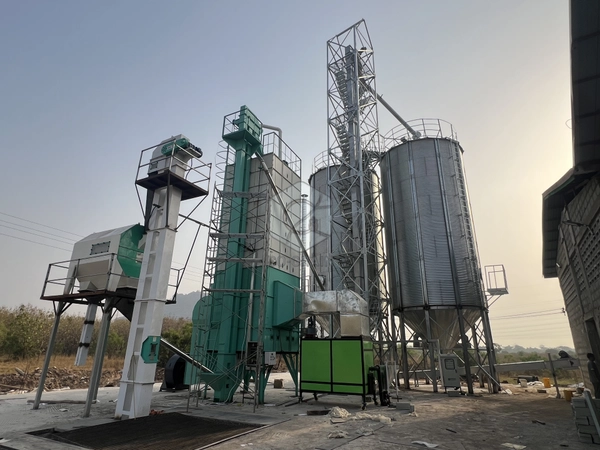
An industrial grain dryer removes excess moisture from harvested grain by passing controlled heated air through a moving or circulating grain layer. Co-Grain selects the dryer structure, capacity, heating system and control package according to the crop, moisture reduction, operating schedule and quality requirements. A suitable dryer must achieve the required moisture reduction while managing grain temperature, moisture uniformity, mechanical damage, fuel use and operating stability.
Key Product Configuration
- Applicable crops: Paddy, corn, wheat, seeds and other confirmed grains
- Dryer structures: Mixed-flow, cross-flow, circulating, batch or continuous
- Process stages: Drying, optional tempering and cooling
- Heat sources: Biomass, rice husk, gas, diesel, steam or another confirmed source
- Control: Temperature, moisture, grain level and discharge control options
- Capacity: Model-specific and condition-dependent
How a Grain Dryer Works
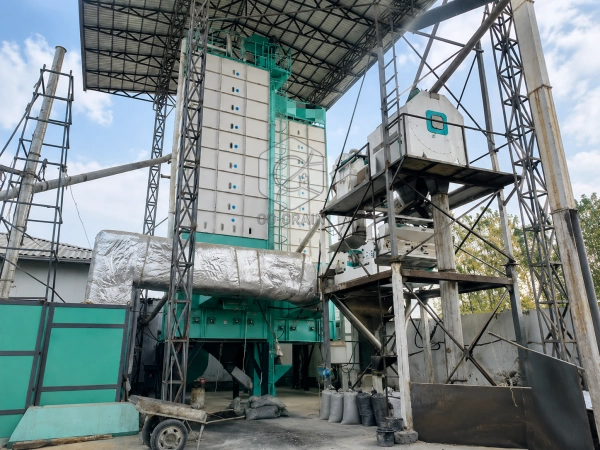
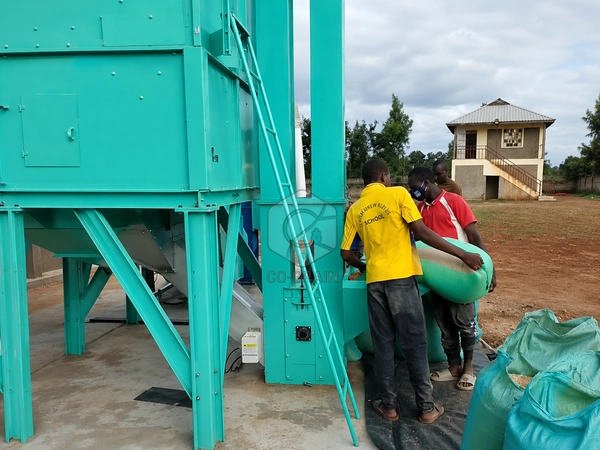
Wet grain enters the dryer through the feeding system. Heated air passes through the grain and absorbs evaporated moisture. The humid exhaust air leaves the drying chamber while the grain moves through the drying section. Depending on the configuration, grain may pass through once, circulate multiple times, or continue through tempering and cooling sections before discharge.
Drying performance depends on the relationship between:
- Grain type and kernel structure
- Initial and target moisture
- Drying-air temperature and actual grain temperature
- Air volume and airflow distribution
- Grain-layer depth
- Residence time or number of circulation cycles
- Ambient temperature and humidity
- Impurity level
- Feeding and discharge stability
Choose the Right Dryer Structure
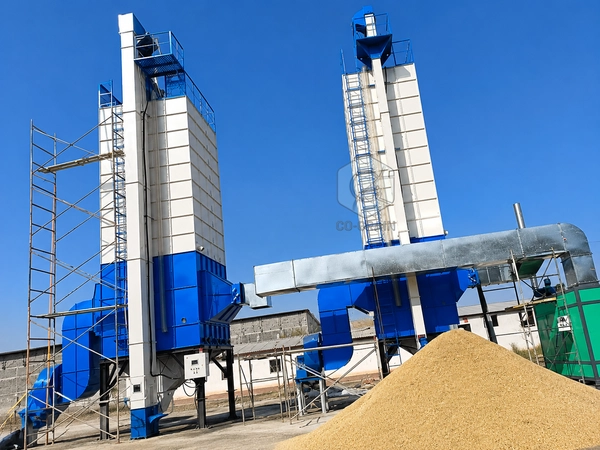
Mixed-Flow Grain Dryer
Staggered air ducts direct air through the grain from different directions. This structure is often considered where multi-crop flexibility and uniform heat transfer are important.
Cross-Flow Grain Dryer
Air passes horizontally through a moving grain column. Grain-column depth, airflow and discharge design must be coordinated to control moisture variation across the column.
Circulating Grain Dryer
Grain passes through the drying section more than once until the target moisture is reached. This arrangement is commonly considered for paddy, seed and projects that prioritize gentler drying.
Continuous-Flow Grain Dryer
Wet grain enters continuously while dry grain is discharged at a controlled rate. It suits projects with stable, high daily intake and coordinated upstream and downstream equipment.
Main Functional Features
- Adjustable drying program for different confirmed grains
- Controlled airflow and drying-air temperature
- Variable discharge or circulation control
- Optional tempering and cooling sections
- Multiple heating-system options
- Moisture and temperature sensing options
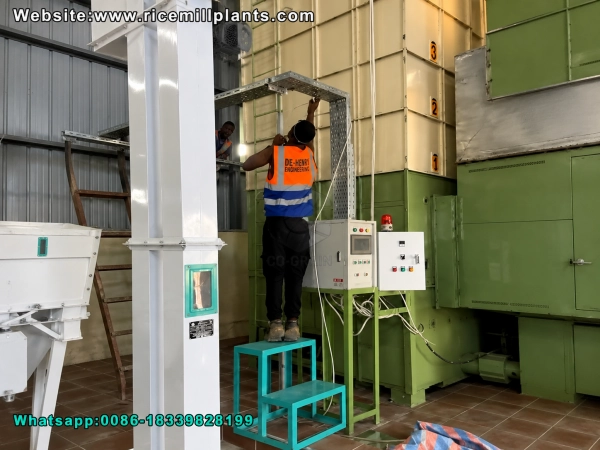
- PLC and touchscreen control options
- Alarm and safety interlock options
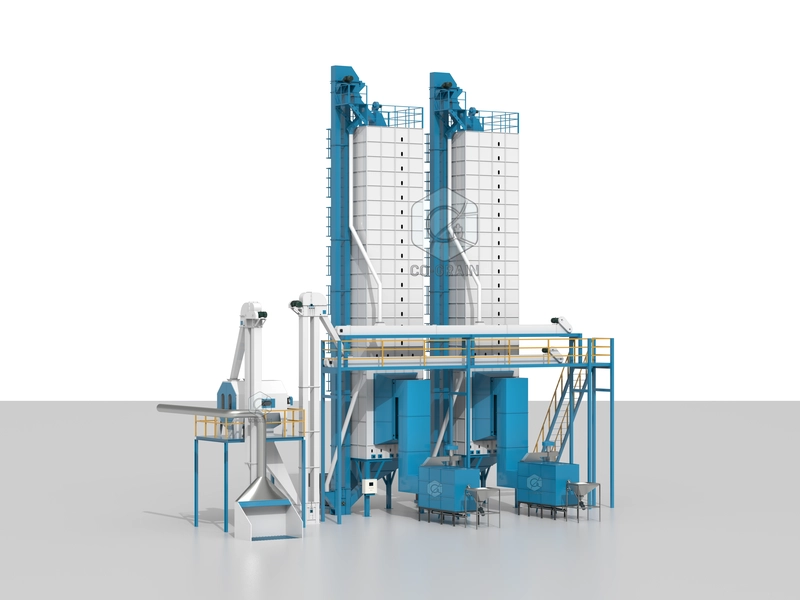
- Integration with cleaning, conveying and silo systems
- Access for inspection, cleaning and maintenance
Only functions included in the selected model and contract should appear in the final published specification.
Performance and Capacity Conditions
Dryer capacity must be published with a complete operating basis. State the crop, initial and target moisture, ambient condition, drying-air condition, operating mode and whether the figure represents batch loading, wet input per hour or daily throughput. Fuel and electricity consumption require the same discipline.
- What moisture reduction is required?: Determines water evaporation and thermal load
- Is the stated capacity wet input or dry output?: Prevents misleading machine comparisons
- Is operation batch, circulating or continuous?: Changes residence time, controls and daily output
- Is cooling included in the capacity figure?: Affects discharge condition and effective throughput
- Which grain has priority?: Influences dryer structure, temperature limits and handling design
Reliable Operation, Maintenance and Safety
- Pre-clean grain and keep air passages, ducts, fans and discharge mechanisms free from blockage.
- Monitor grain temperature separately from drying-air temperature and investigate abnormal trends.
- Confirm heat-source interlocks, airflow proving, over-temperature protection, grain-level control and safe emergency shutdown.
- Control combustible dust and remove accumulated fines according to the site safety plan.
- Verify online moisture readings with representative samples and maintain calibration records.
Applications
- Commercial grain storage facilities
- Rice mills
- Corn handling and feed plants
- Flour mills and wheat storage
- Seed processing plants
- Large farms and cooperatives
- Drying and silo storage projects
Selection Guide
Do not compare dryers by a single tonnage figure. First confirm whether the number means batch loading, wet-grain input per hour or daily throughput. Then compare the same crop and the same initial-to-target moisture condition.
FAQ
Can one grain dryer process rice, corn and wheat?
Some models can process all three, but their capacity, drying-air temperature, residence time and control program are different. Each crop needs a confirmed operating basis.
What is the difference between drying-air temperature and grain temperature?
Drying-air temperature is the temperature of the air entering the grain layer. Grain temperature is the actual temperature of the kernels. They are different measurements and should not be used interchangeably.
Why can actual capacity differ from the brochure?
Actual capacity changes with crop variety, initial and target moisture, impurities, ambient temperature, relative humidity, fuel performance and operating interruptions.
Does automatic moisture control eliminate manual sampling?
No. Online sensors should be checked and calibrated against representative reference samples.