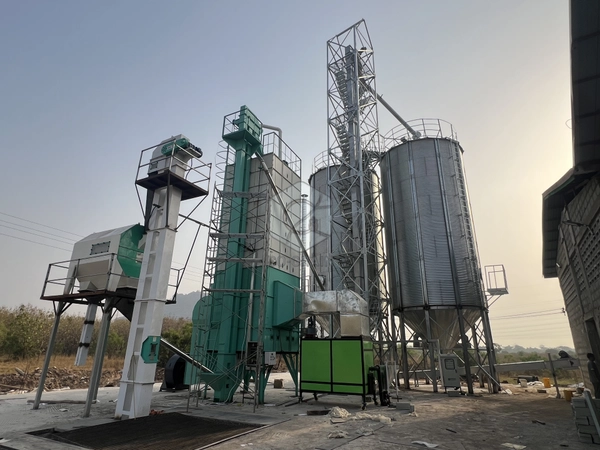
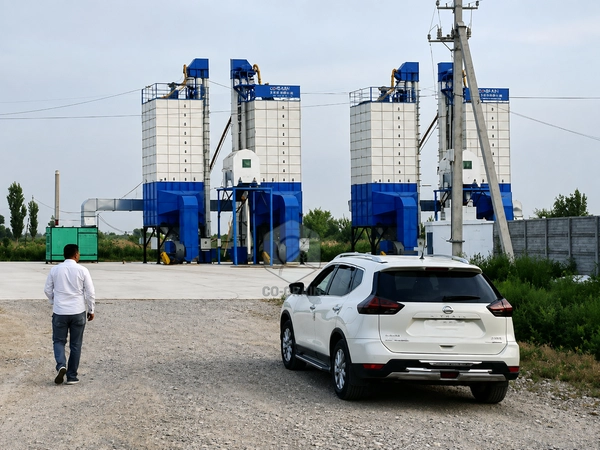
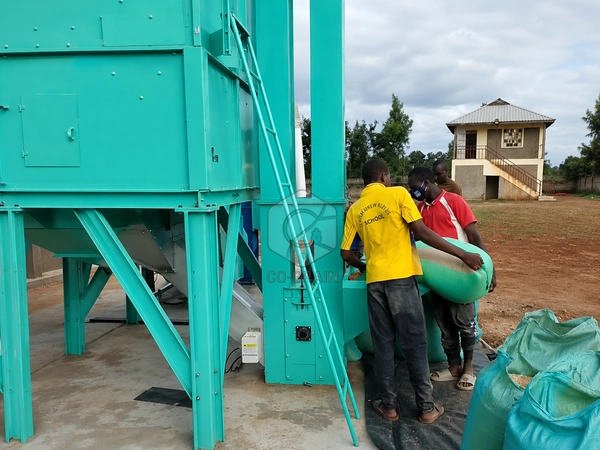
Co-Grain supplied an integrated paddy drying, grain storage and rice milling solution for a commercial rice processing project in Ghana. The plant combines a 60 T/D rice milling line, a 15 T/batch paddy dryer and two 100-ton galvanized steel silos in one coordinated production system.
The project is designed to help the customer manage freshly harvested paddy before milling. High-moisture paddy can be dried under controlled conditions, held temporarily in the storage silos and then supplied to the rice milling line according to the production schedule.
Project at a Glance
| Project Detail | Confirmed Configuration |
| Project Location | Ghana |
| Raw Material | Paddy rice |
| Rice Mill Capacity | 60 T/D |
| Paddy Dryer | 15 T/Batch |
| Grain Storage | 2 x 100 T galvanized steel silos |
| Total Nominal Silo Capacity | 200 T |
| Main System | Paddy drying + grain storage + rice milling |
| Application | Commercial rice processing |
Project Requirement
A rice mill must receive paddy in a condition suitable for stable storage and processing. During the harvesting season, incoming paddy may have variable or excessive moisture, particularly when grain is collected under humid conditions. Sending this material directly to storage or milling can make production planning more difficult and may affect storage stability and milling performance.
For this project, the requirement was therefore broader than installing a rice mill alone. The customer needed a coordinated system that could:
- receive and prepare freshly harvested paddy;
- reduce paddy moisture under controlled batch conditions;
- provide intermediate storage between drying and milling;
- maintain a more consistent supply of raw material to the rice mill; and
- connect the main processing sections through suitable conveying and control arrangements.
Integrated Project Solution
Co-Grain configured the project around three connected sections: paddy drying, grain storage and rice milling. Instead of operating these sections as unrelated machines, the plant uses storage and material transfer as buffers between different processing stages.
Paddy Receiving > Cleaning > Paddy Drying > Silo Storage > Rice Milling > Finished Rice
This arrangement allows the customer to organize incoming paddy by batch, dry it according to its condition and supply the milling line according to the daily production plan.
15 T/Batch Paddy Drying System
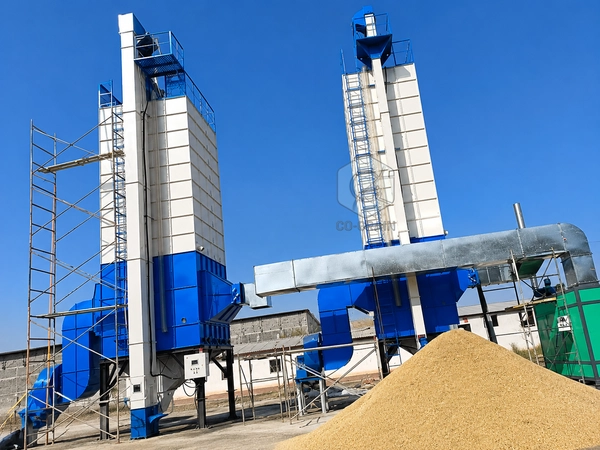
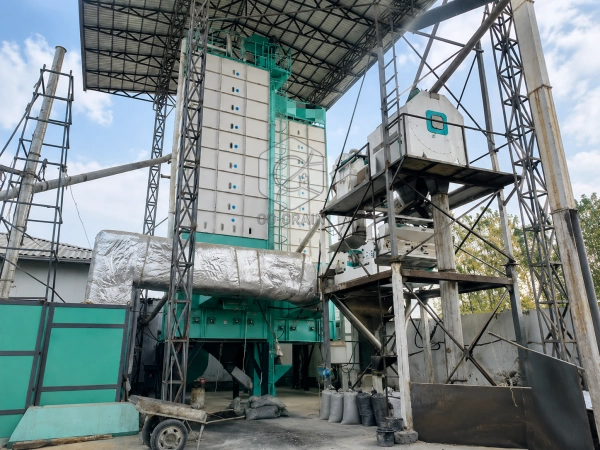
The 15 T/batch paddy dryer is used to reduce moisture in freshly harvested paddy before storage or milling. Batch operation gives the plant flexibility to manage variations in incoming moisture, harvesting volume and operating schedule.
The drying system is configured to support:
- controlled paddy moisture reduction;
- more uniform drying between different grain layers;
- suitable temperature and airflow management;
- reduced risk of unnecessary over-drying;
- preparation for subsequent silo storage; and
- flexible operation according to incoming paddy volume.
The number of daily drying cycles depends on the initial moisture, target moisture, ambient conditions, heat-source performance and operating schedule. These factors should be confirmed during project operation and should not be represented by one fixed daily drying figure.
Two 100-Ton Paddy Storage Silos
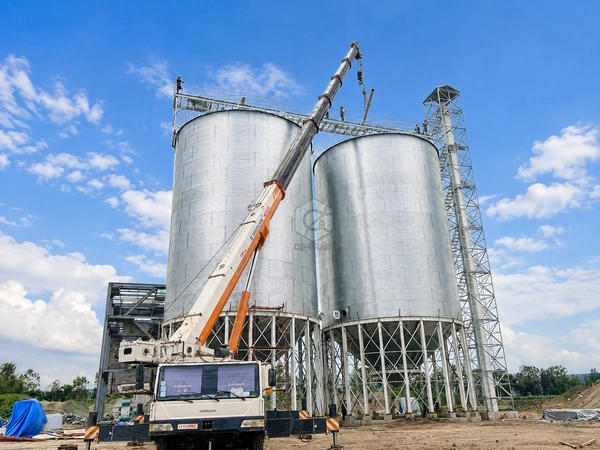
Two galvanized steel silos, each with a nominal capacity of 100 tons, provide a combined nominal storage capacity of 200 tons. The silos create an important buffer between the dryer and the rice milling line.
Using two separate silos provides more operational flexibility than relying on one storage unit. Depending on the customer’s management plan, separate silos can be used to organize different paddy batches or coordinate filling and discharge around the milling schedule.
The storage section is designed to support:
- temporary holding of dried paddy;
- buffering between drying and milling;
- a more continuous supply of paddy to the rice mill;
- separation and management of different grain batches; and
- improved coordination during periods of concentrated paddy intake.
Final storage time and operating conditions depend on the confirmed grain moisture, grain temperature, silo configuration, aeration arrangements and local climate.
60 T/D Rice Milling Line
After drying and storage, paddy is transferred to the 60 T/D rice milling line for further processing. The milling section is planned as the downstream production stage of the complete project rather than as an isolated machine group.
According to the final supplied configuration, a complete rice milling process can include:
Paddy Cleaning > Destoning > Husking > Paddy Separation > Rice Whitening > Grading > Finished Rice
Connecting upstream drying and storage with the milling line helps the plant manage raw paddy from post-harvest treatment through to finished rice production within one coordinated facility.
Why This Configuration Fits the Project
The selected combination establishes a practical relationship between moisture control, production buffering and daily milling:
- Drying manages variable incoming moisture. The batch dryer prepares paddy for the next storage or processing stage.
- Storage separates intake from milling. The two silos provide buffer capacity so the mill is not fully dependent on immediate processing after each drying batch.
- Milling receives a more manageable raw-material supply. Paddy can be discharged from storage according to the production plan.
- The sections operate as one process. Conveying and control interfaces connect drying, storage and milling instead of leaving each section to operate independently.
This project approach is especially relevant to commercial rice processors that need to manage seasonal paddy intake while maintaining a planned milling schedule.
Engineering and Project Support
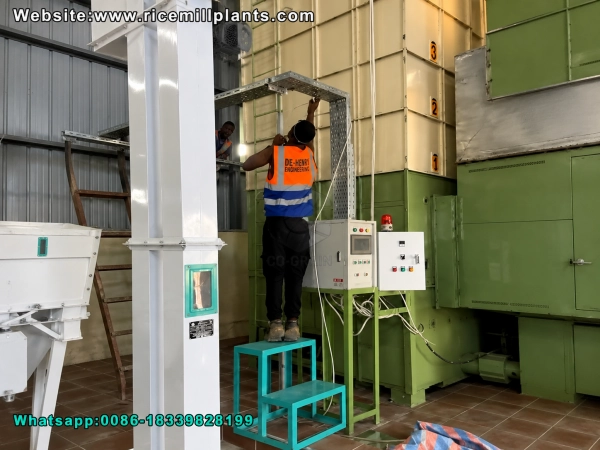
Co-Grain’s scope for integrated rice processing projects can include process planning, equipment configuration, manufacturing, conveying interfaces, electrical control, installation guidance, commissioning assistance and operator training.
For a project combining drying, storage and milling, engineering coordination is important because each section must match the material flow and operating rhythm of the next section. Dryer discharge, silo filling, silo discharge and rice mill feeding should therefore be considered during the initial project design.
Operational Value of the Integrated System
The project is designed to support the following operational objectives:
- better management of variable-moisture paddy;
- reduced dependence on immediate milling after drying;
- more flexible organization of incoming grain batches;
- improved coordination between drying and milling schedules;
- a steadier supply of paddy to the processing line; and
- one engineering interface for the main processing sections.
These are configuration objectives rather than claims of measured project performance. Actual results depend on paddy condition, operating practices, local climate, heat source, maintenance and other site-specific factors.
FAQ
What equipment is included in this Ghana rice mill project?
The confirmed main equipment includes a 60 T/D rice milling line, a 15 T/batch paddy dryer and two 100-ton galvanized steel grain silos. The complete project also requires suitable receiving, cleaning, conveying and control connections between these sections.
Why is a paddy dryer installed before the rice mill?
Freshly harvested paddy may contain more moisture than is suitable for stable storage or milling. Controlled drying helps prepare the grain for intermediate storage and provides more manageable raw-material conditions for the milling line.
Why does the project use two grain silos?
Two silos provide operational flexibility for batch management, filling and discharge. They also create buffer storage between the dryer and the rice mill, allowing the two sections to operate on coordinated but not necessarily identical schedules.
Can the same configuration be customized for another project?
Yes. Dryer capacity, silo capacity, rice mill output, heat source, conveying route and automation level should be selected according to the customer’s paddy condition, daily production target, site layout and local operating requirements.
Plan an Integrated Rice Processing Project
If you are planning a rice mill with paddy drying and grain storage, send Co-Grain your raw-material condition, required milling capacity, incoming and target moisture, preferred heat source, storage requirement and project location. Our engineering team can recommend a coordinated equipment configuration for your project.