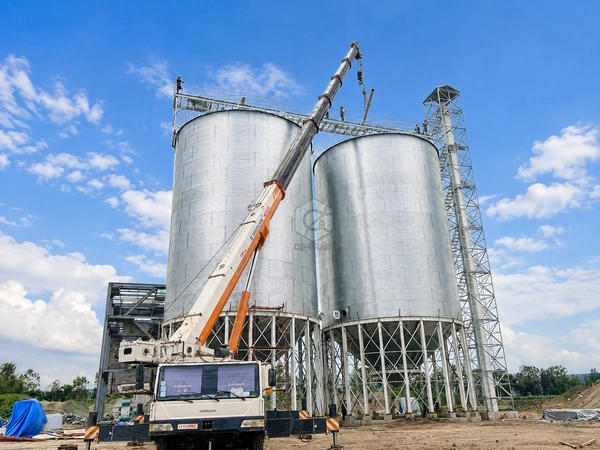
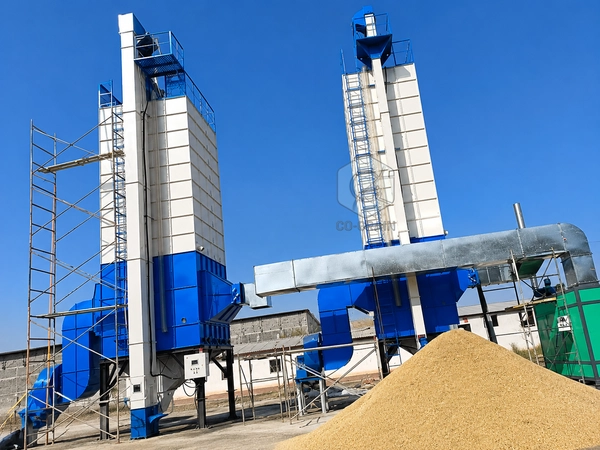
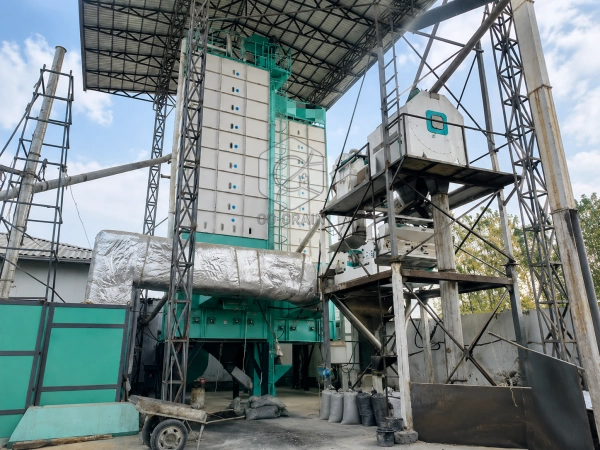
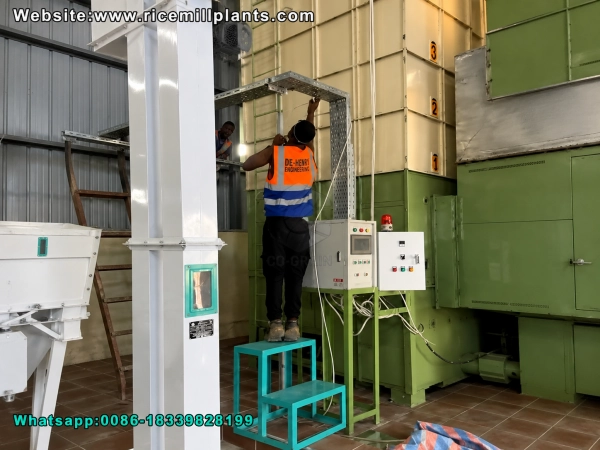
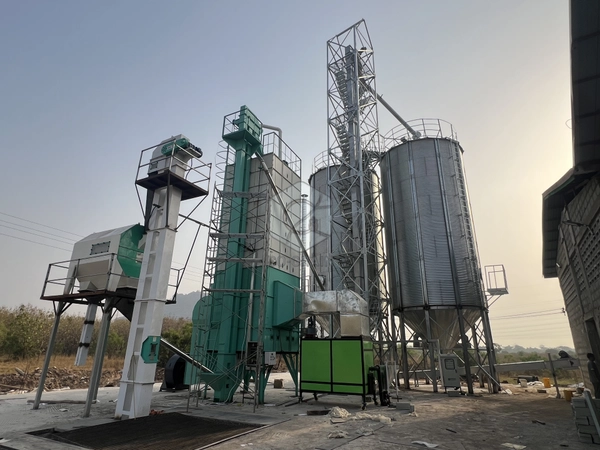
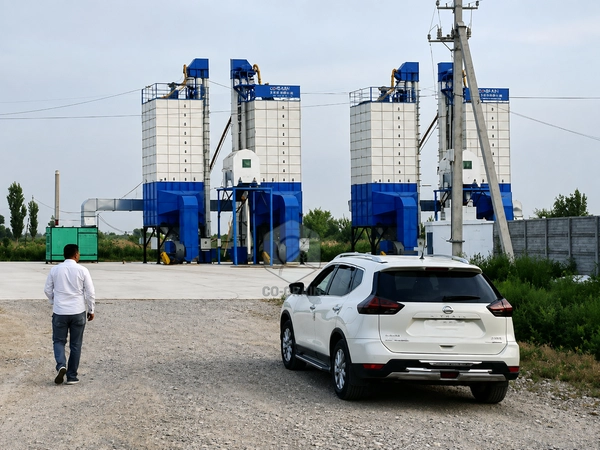
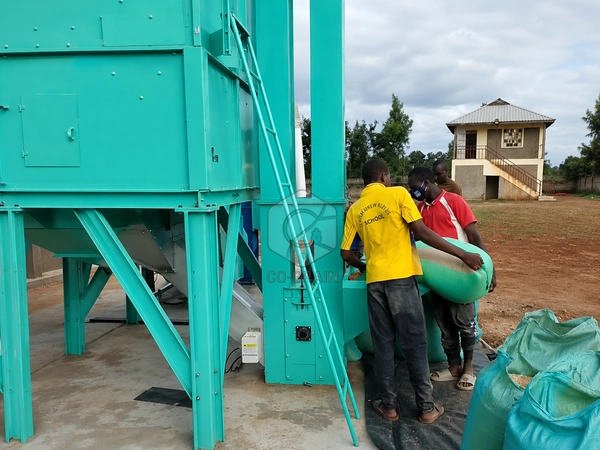
Co-Grain has shipped two batch paddy dryers to Uzbekistan: one 20-ton-per-batch unit and one 30-ton-per-batch unit. The mixed-capacity configuration allows the customer to select a suitable dryer for different quantities of incoming paddy or operate both units for a combined nominal loading of 50 tons per batch.
Designed for harvested paddy, the equipment will provide controlled mechanical drying before the grain enters storage or rice milling. The two independent dryers also give the customer greater flexibility when grain intake and moisture conditions change during the harvest season.
Project Overview
Project Location: Uzbekistan
Application: Paddy / rice drying
Equipment: One 20-ton batch paddy dryer and one 30-ton batch paddy dryer
Combined Nominal Loading: 50 tons per batch when both dryers operate together
Project Type: Paddy drying system
Current Milestone: Equipment shipment
Project Background
Moisture control is an important step between paddy harvesting and subsequent storage or milling. Wet paddy can arrive at a processing facility in different quantities and at different moisture levels, depending on the harvest schedule, weather and field conditions.
Storing high-moisture paddy without suitable drying can reduce storage stability and increase quality risks. The customer therefore required a mechanical drying solution that could manage variable grain intake while providing more direct control of temperature, airflow and moisture reduction.
Rather than selecting two dryers of the same size, the project combines different batch capacities. This gives the customer more ways to organize daily production without requiring every load to follow one fixed batch size.
Why Combine 20-Ton and 30-Ton Batch Dryers?
The mixed-capacity arrangement provides three practical operating options:
- Use the 20-ton dryer for smaller incoming grain quantities.
- Use the 30-ton dryer for a larger individual batch.
- Operate both dryers for a combined nominal loading of 50 tons per batch.
This flexibility helps match dryer operation with actual grain receiving conditions. It can also support separate batch scheduling when paddy from different fields or collection periods arrives with different moisture characteristics.
Actual daily throughput is not determined by batch capacity alone. It also depends on initial moisture, target moisture, ambient conditions, heat-source configuration, drying time and operating schedule.
Controlled Paddy Drying
The purpose of paddy drying is not simply to remove moisture as quickly as possible. Suitable drying should balance processing capacity, moisture uniformity, grain temperature, energy use and preparation for the next process.
During batch operation, heated air passes through the circulating grain. Progressive moisture removal and repeated grain movement help different portions of the batch receive more consistent drying treatment. Operating parameters can be adjusted according to the paddy variety, incoming moisture, required final condition and local environment.
This adjustable process is useful when grain from different harvest periods enters the plant under changing conditions. Each batch can be evaluated and dried according to its actual requirements instead of using one fixed program for all incoming paddy.
Paddy Drying Process
Wet Paddy -> Feeding -> Batch Drying -> Moisture Checking -> Controlled Discharge -> Storage or Rice Milling
Feeding
Wet paddy is transferred into the selected dryer according to the grain quantity and production plan. Correct loading and stable feeding support smooth grain circulation.
Circulation and Heated-Air Drying
The paddy circulates through the drying chamber while controlled heated air passes through the grain layer. Moisture is gradually removed as the grain repeatedly moves through the drying zone.
Moisture Checking
The grain condition is checked during operation. Drying settings may be adjusted according to the initial moisture, target moisture, grain characteristics and ambient conditions.
Discharge and Transfer
When the required moisture condition is reached, the dried paddy is discharged for temporary holding, silo storage or transfer to a rice milling line.
Prepared for Shipment to Uzbekistan
The two dryers were prepared, inspected and packed for shipment to the Uzbekistan project. Equipment packing and dispatch planning considered the machine configuration and the requirements of international transportation.
After delivery, the equipment can be positioned and connected according to the approved site layout. Feeding points, discharge routes, operating access, maintenance space, electrical control and interfaces with supporting equipment should be confirmed before installation and commissioning.
Co-Grain can provide installation guidance, commissioning support and operator training according to the agreed project scope. Final responsibilities and service arrangements should follow the commercial contract.
Integration with a Complete Paddy Drying System
The dryers can operate as individual machines or as the drying section of a larger grain-handling process:
Paddy Receiving -> Pre-Cleaning -> Wet Paddy Buffering -> Conveying -> Batch Drying -> Dried Paddy Storage -> Rice Milling
Depending on project requirements, supporting equipment may include grain cleaners, bucket elevators, conveyors, buffer silos, heating equipment, storage silos and electrical control systems. Coordinating these sections helps maintain stable grain flow and avoids treating the dryer as an isolated machine.
Value of the Mixed-Capacity Configuration
The 20-ton and 30-ton dryers give the customer a practical way to respond to changing paddy intake. Smaller and larger batches can be scheduled separately, while both units can be used when more wet grain needs to be handled.
The configuration also provides a foundation for future integration with receiving, cleaning, conveying, storage or rice-milling equipment. Supporting systems can be planned around the customer’s actual production requirements and expansion strategy.
Paddy Drying Solutions for Uzbekistan and Central Asia
Co-Grain supplies batch grain dryers and integrated drying systems for paddy, wheat, maize and other confirmed grains. Equipment selection should be based on actual material and project conditions rather than nominal capacity alone.
For a suitable drying proposal, the main project inputs include:
- Grain type and variety.
- Initial and target moisture.
- Required batch and daily capacity.
- Harvest pattern and grain-arrival schedule.
- Available heat source and fuel supply.
- Local temperature, humidity and altitude.
- Upstream cleaning and conveying capacity.
- Downstream storage or processing capacity.
- Site layout, power supply and expansion plans.
Send these details to Co-Grain for an equipment recommendation and grain-drying process proposal.
Frequently Asked Questions
What is the combined capacity of the two dryers?
The project includes one 20-ton and one 30-ton batch dryer. When both units operate together, their combined nominal loading is 50 tons per batch. Actual daily throughput depends on the required moisture reduction and site operating conditions.
Why use two dryers with different capacities?
Different capacities allow the customer to select a 20-ton batch, a 30-ton batch or a combined 50-ton nominal batch arrangement according to incoming paddy volume and production scheduling.
Can the dryers operate independently?
They are separate batch units. Final independent operating modes, conveying routes and control logic should be confirmed from the approved project configuration.