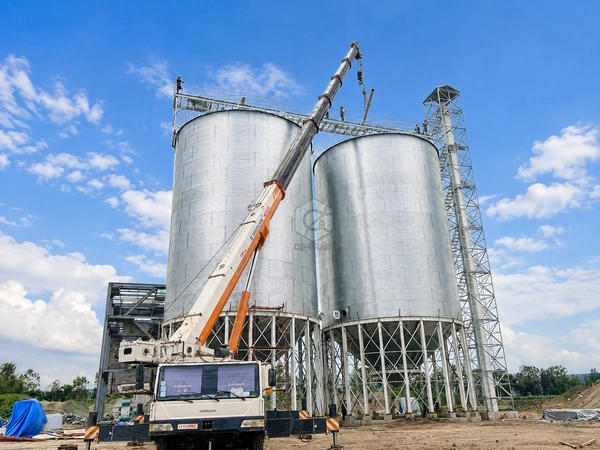
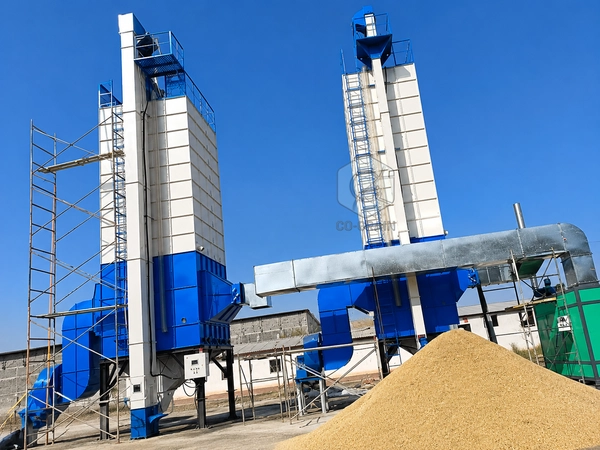
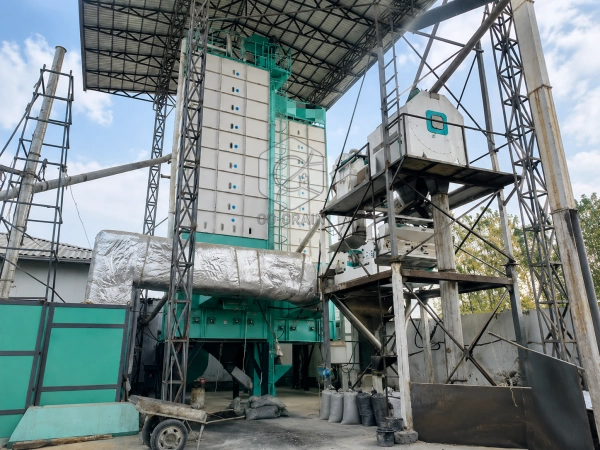
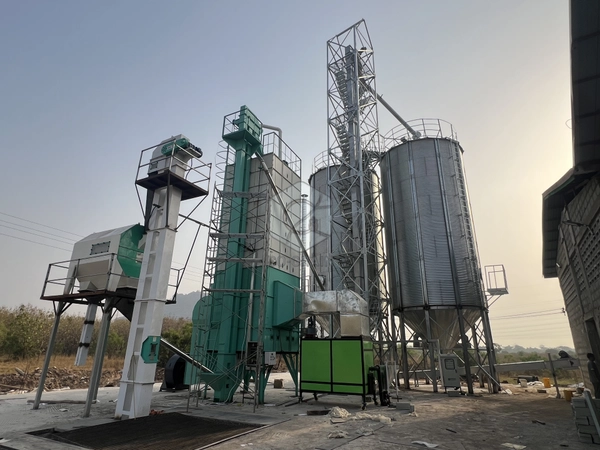
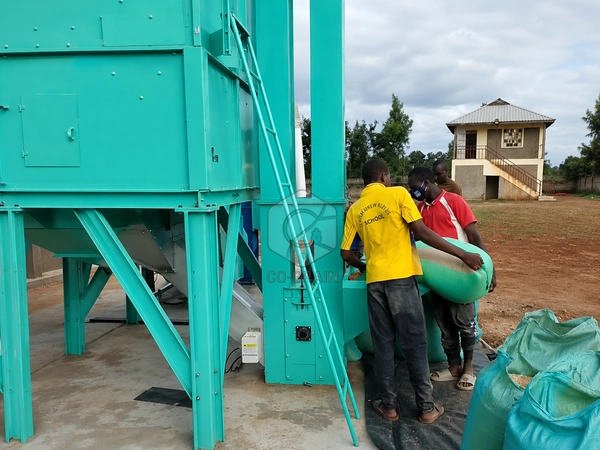
Co-Grain installed two steel grain silos in Ethiopia for corn storage. Each silo has a nominal capacity of 1,200 tons, giving the project a combined nominal storage capacity of approximately 2,400 tons.
The silos are used as part of the customer’s feed production operation. By creating a dedicated storage section between corn receiving and feed processing, the project helps the customer organize raw-material intake and provide a more stable supply of corn to the feed mill.
Project Overview
Project Location: Ethiopia
Stored Material: Corn / maize
Installed Equipment: Two steel grain silos
Nominal Capacity per Silo: 1,200 tons
Combined Nominal Capacity: Approximately 2,400 tons
Application: Raw-material storage for a feed processing plant
Project Status: Installed
Project Background
Corn is an important raw material in many animal-feed formulations. A feed mill must coordinate grain purchasing, receiving, storage and production so that the processing line has sufficient material when required.
Without suitable buffer storage, daily feed production can be affected by irregular grain deliveries, limited receiving time or seasonal procurement. The customer therefore required a dedicated steel-silo system to hold corn before it enters the feed processing line.
The two-silo arrangement creates a storage buffer between incoming grain and feed production. It also gives the customer greater flexibility in organizing grain intake, storage rotation and plant scheduling, subject to the confirmed conveying and control configuration.
Why Two 1,200-Ton Silos Were Selected
Using two silos instead of one larger storage bin can support more flexible grain management. Depending on the operating plan, the customer can receive or discharge grain from a selected silo while coordinating the other silo with storage or production requirements.
The configuration offers several practical advantages:
- Approximately 2,400 tons of combined nominal corn storage.
- A dedicated raw-material buffer for feed production.
- More flexible receiving and discharge scheduling.
- The ability to manage stored batches separately when required.
- Better coordination between grain procurement and feed-mill demand.
- A practical foundation for future handling or processing expansion.
Actual usable capacity depends on corn bulk density, filling level, internal configuration and safe operating limits. The final operating volume should follow the approved silo design and project documentation.
Corn Storage for Feed Production
The purpose of the silo system is not only to hold grain. It must connect receiving, storage and feed production as one coordinated material-flow process.
Corn delivered to the site should be checked for moisture, impurities and general storage condition before entering the silos. Grain that is too wet, heavily contaminated or unsuitable for storage should be treated according to the plant’s quality-control procedure before long-term holding.
Inside the storage system, suitable grain management may include aeration, temperature monitoring, level monitoring and controlled discharge when these functions are included in the confirmed project scope. These measures help operators evaluate grain condition and plan safe storage and transfer.
Recommended Process Connection
Corn Receiving -> Pre-Cleaning -> Conveying -> Silo Filling -> Corn Storage -> Controlled Discharge -> Feed Mill
Grain Receiving and Pre-Cleaning
Incoming corn is received and checked before storage. Pre-cleaning can remove larger impurities, dust and unwanted material that may affect conveying, storage or downstream feed production.
Silo Filling
Conveying equipment lifts and transfers the prepared corn to the selected silo. The filling route should distribute grain according to the plant layout and confirmed operating sequence.
Storage Management
The stored corn is managed according to moisture condition, storage period and feed-production demand. Operators should follow confirmed procedures for inspection, aeration and condition monitoring where these systems are provided.
Silo Discharge and Feed-Mill Supply
Corn is discharged from the selected silo and transferred toward the feed processing plant. The discharge and conveying rate should be coordinated with downstream buffering, weighing, grinding or other confirmed feed-mill processes.
Installation in Ethiopia
The two steel silos were installed in Ethiopia according to the approved project layout and local site conditions. Installation planning considered silo positioning, structural assembly, grain filling and discharge interfaces, operating access and connection with the customer’s feed plant.
A complete silo project requires coordination between the steel structure, foundation interface, conveying routes, electrical control and safe access. Each section must follow the approved technical design and site responsibilities.
Co-Grain can provide equipment supply, layout coordination, installation guidance, commissioning support and operator training according to the agreed project scope. Final service responsibilities should follow the commercial contract and approved project documents.
How the Silos Support the Feed Mill
The installed silos provide a dedicated corn buffer for the customer’s feed production operation. Grain can be received and stored before it is required by the processing line, helping separate the timing of raw-material deliveries from the daily feed-production schedule.
This storage arrangement can support:
- More organized corn procurement and receiving.
- A steadier raw-material supply to the feed mill.
- Reduced dependence on direct truck-to-production feeding.
- Better coordination between storage and processing schedules.
- Future integration with cleaning, conveying, weighing or feed-processing equipment.
These are system functions rather than guaranteed performance results. Actual operating benefits depend on the complete plant configuration and management procedures.
Grain-Condition Management Considerations
Steel silos should receive corn that is suitable for the intended storage period. Moisture, temperature, impurities and damaged kernels can influence storage stability. The operating team should therefore establish grain inspection and storage-management procedures for each incoming lot.
Important considerations include:
- Confirmed storage moisture for the local climate and intended storage period.
- Removal of impurities before silo filling.
- Suitable filling and discharge sequences.
- Aeration and temperature monitoring where included.
- Regular inspection of grain condition and equipment.
- Dust control and safe operating practices.
- Coordination with the feed mill’s raw-material demand.
The exact storage program should be set from actual corn condition, local climate, silo configuration and plant operating requirements.
Value of the Ethiopia Project
The project connects bulk corn storage with feed production. With two 1,200-ton silos installed, the customer has approximately 2,400 tons of nominal storage capacity available as a raw-material buffer for the feed plant.
The two-silo arrangement supports flexible grain handling and gives the customer a practical basis for coordinating receiving, storage and feed processing. Additional cleaning, conveying, weighing, monitoring or automation equipment can be integrated according to future requirements.
Planning a Grain Silo System for a Feed Mill
A suitable feed-mill storage project should be designed around actual raw-material and production conditions. Co-Grain evaluates:
- Grain type and bulk density.
- Required storage capacity and storage period.
- Incoming grain moisture and impurity condition.
- Feed-mill capacity and daily corn consumption.
- Grain receiving method and delivery schedule.
- Silo filling and discharge requirements.
- Conveying capacity and route arrangement.
- Aeration and monitoring requirements.
- Local climate, site conditions and structural design inputs.
- Automation level and future expansion plans.
Send these details to Co-Grain for a silo configuration and grain-handling proposal suited to your feed-processing project.
Frequently Asked Questions
What is the total storage capacity of the Ethiopia project?
The project includes two steel grain silos, each with a nominal capacity of 1,200 tons. Their combined nominal capacity is approximately 2,400 tons. Actual usable storage depends on corn bulk density, filling level and the approved operating limits.
What grain is stored in the silos?
The confirmed material is corn, also called maize. The stored corn is intended to supply the customer’s feed processing plant.
Why does a feed mill need grain silos?
Silos provide buffer storage between grain receiving and production. They allow a feed mill to organize raw-material procurement and supply corn to the processing line according to the production schedule.
Can cleaning and conveying equipment be connected?
Yes. A complete project can connect receiving, pre-cleaning, elevators, conveyors, silo filling, storage, discharge and downstream feed processing. The exact equipment should be selected from the required capacity and site layout.
Are aeration and temperature monitoring required?
These functions are commonly evaluated for bulk grain storage, but the exact configuration depends on storage duration, local climate, grain condition and project scope. Only confirmed equipment should be listed on the published project page.