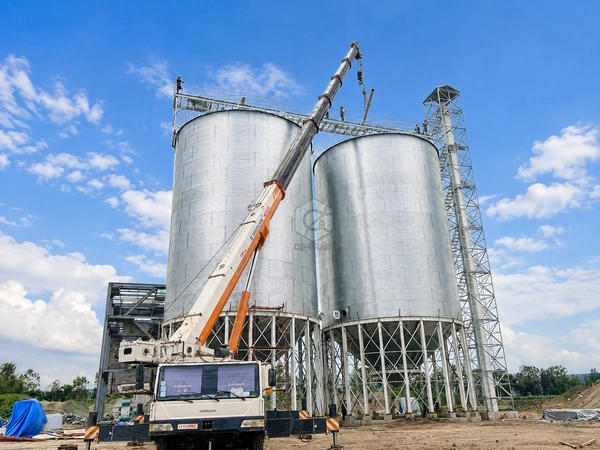
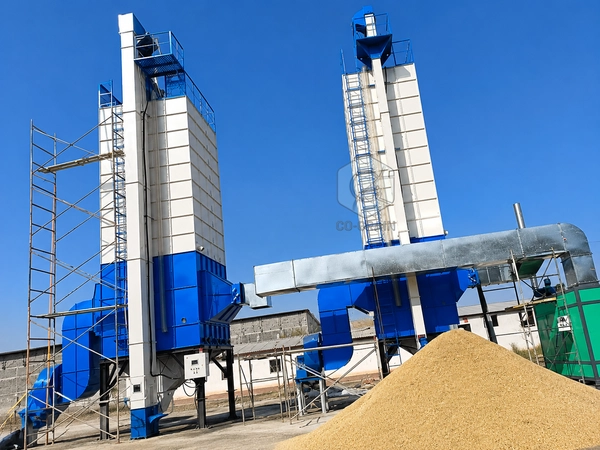
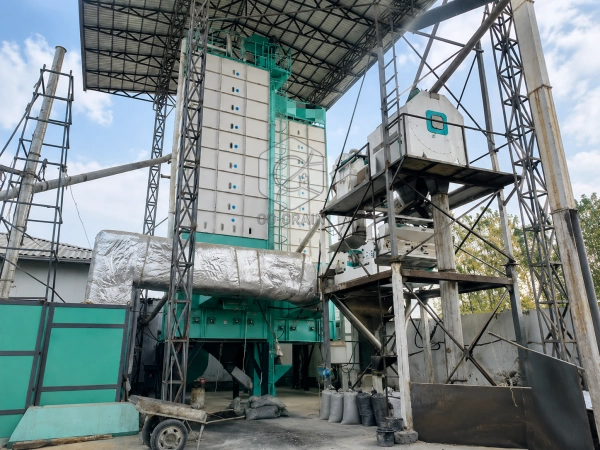
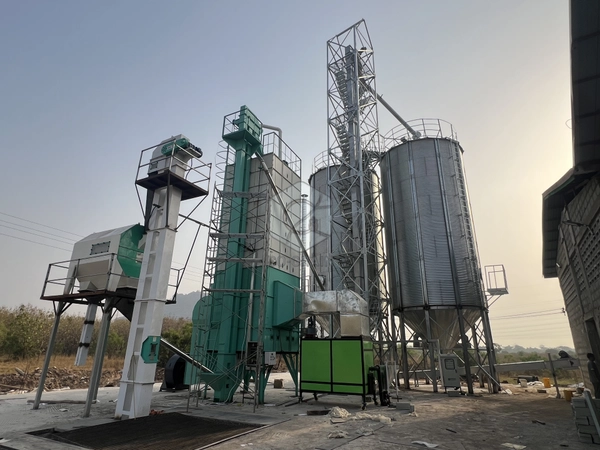
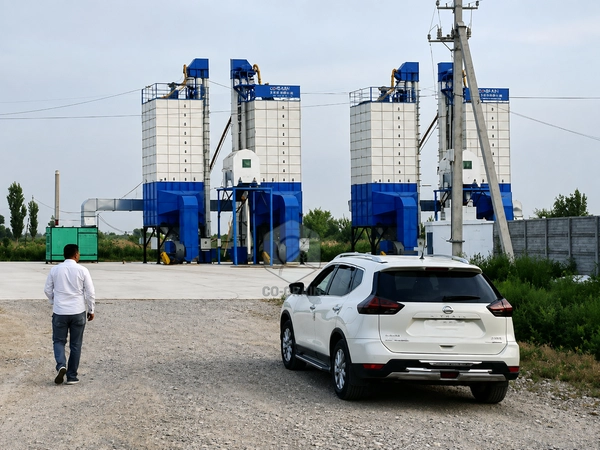
Co-Grain supplied four batch paddy dryers for a commercial rice drying project in Uzbekistan. Each dryer has a nominal loading capacity of 30 tons per batch, giving the installation a combined nominal batch capacity of 120 tons when all four units are operated together.
The multi-dryer configuration supports flexible scheduling, separate batch management and more stable coordination between paddy receiving, drying, cooling and downstream storage or rice milling.
Project at a Glance
| Project Detail | Confirmed Configuration |
| Project Country | Uzbekistan |
| Raw Material | Paddy rice |
| Main Equipment | Four batch paddy dryers |
| Nominal Capacity | 30 tons per batch per dryer |
| Combined Nominal Loading | 120 tons per batch with four dryers operating |
| Operating Arrangement | Parallel or staged batch drying |
| Main Application | Commercial paddy drying |
| Downstream Process | Grain storage or rice milling |
Project Requirement
Harvested paddy must be dried in a controlled and timely process before storage or milling. Variations in incoming moisture, receiving volume and harvest timing can make a single fixed drying sequence difficult to manage.
For this project, the customer required a drying configuration that could handle commercial paddy batches while providing enough flexibility to coordinate intake, drying and discharge. A four-unit arrangement was selected so that production could be distributed among multiple dryers instead of relying on one large drying chamber.
Four-Unit Paddy Drying Solution
The installed solution consists of four 30-ton batch paddy dryers. The dryers can be arranged for parallel operation during higher-volume periods or scheduled in stages according to the quantity and condition of incoming paddy.
Each batch can be managed independently, helping operators respond to differences in moisture condition without unnecessarily mixing grain from separate intake lots. This arrangement also allows loading, drying, cooling and discharge activities to be coordinated across the four machines.
Four dryers provide capacity when required and operating flexibility when intake conditions change.
Why Four Batch Dryers Were Selected
Parallel Drying Capacity
All four dryers can be used together when a larger quantity of wet paddy must be processed. The combined nominal loading capacity reaches 120 tons per batch, subject to the confirmed grain condition, operating configuration and project parameters.
Flexible Staged Operation
The dryers can be started and discharged at different times. This helps the plant match drying activity with paddy arrival, available labor and downstream handling capacity.
Separate Batch Management
Paddy from different intake periods or with different moisture conditions can be assigned to separate dryers. Independent batch control supports more suitable drying decisions for each lot.
Better Production Coordination
Using multiple dryers makes it easier to coordinate receiving, pre-cleaning, conveying, cooling and transfer to storage or milling. The configuration can reduce waiting between process stages when the surrounding equipment is correctly matched.
Maintenance Flexibility
A multi-unit arrangement can retain partial drying capability when one dryer is stopped for inspection or routine maintenance, depending on the operating schedule and condition of the remaining equipment.
Paddy Drying Process
The recommended process sequence for a multi-dryer paddy project is:
Paddy Receiving > Pre-Cleaning > Wet Paddy Buffering > Dryer Distribution > Batch Drying > Cooling > Storage or Rice Milling
Paddy Receiving and Pre-Cleaning
Incoming paddy is received and major impurities are removed before drying. Proper pre-cleaning helps protect conveying equipment, maintain grain flow and reduce unnecessary material entering the dryers.
Buffering and Dryer Distribution
A wet-grain buffer and suitable conveying arrangement can help balance irregular intake. Paddy is then directed to the selected dryer according to batch size, moisture condition and the operating schedule.
Controlled Batch Drying
Heated air passes through the grain layer to reduce moisture under controlled operating conditions. Drying temperature, airflow and cycle management should be selected according to paddy characteristics and the required final condition.
Cooling and Discharge
After drying, the paddy is cooled and discharged in coordination with downstream conveying. The grain can then be transferred to confirmed storage or rice milling equipment.
Coordinated Multi-Dryer Operation
Effective operation depends on more than the nominal capacity of each dryer. The receiving, conveying, heating, cooling and discharge equipment must be matched to the loading and unloading sequence of all four units.
During project planning, Co-Grain considers the paddy type, initial and target moisture, required throughput, local climate, available heat source, site layout and downstream process. These factors determine the final operating schedule and supporting equipment configuration.
Heating-System Considerations
The appropriate heating system should be confirmed according to locally available fuel, energy cost, environmental requirements and the required drying temperature. Air volume, heat output and control response must be matched to the four-dryer operating strategy.
The final heat-source configuration for this Uzbekistan project should be added to the public case page only after it has been confirmed from project records.
Installation in Uzbekistan
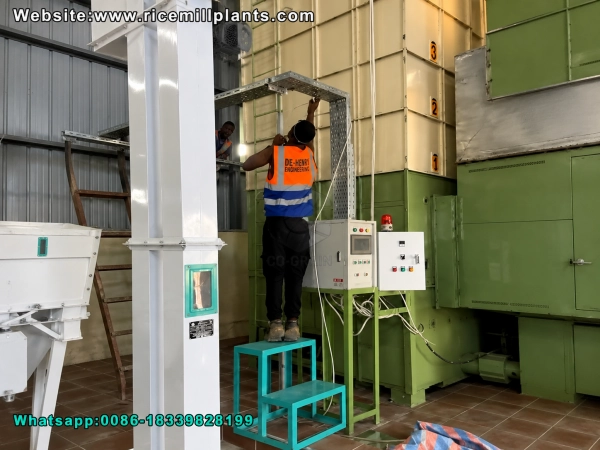
The four dryers were installed for paddy drying in Uzbekistan. Correct equipment positioning, foundation preparation, electrical connection, conveying interfaces and trial operation are important for stable multi-dryer coordination.
Co-Grain can provide layout guidance, equipment documentation, installation support and commissioning assistance according to the agreed project scope. Site-specific details should be verified before publication.
Operational Value
- Four independent drying chambers support flexible batch scheduling.
- Parallel operation provides a combined nominal loading capacity of 120 tons per batch.
- Separate batches can be managed according to paddy condition and intake timing.
- Staged loading and discharge can improve coordination with receiving and downstream equipment.
- The system can connect with grain cleaning, conveying, heating, cooling and storage equipment.
- Multiple units can provide partial operating flexibility during planned inspection or maintenance.
Engineering and Technical Support
Co-Grain provides grain dryers and integrated drying plant solutions for commercial grain storage and rice processing projects. The engineering scope can include process planning, equipment selection, layout coordination, manufacturing, installation guidance, commissioning support and operator training.
For a four-dryer project, the design should be based on the actual paddy condition, required daily throughput, energy source, site arrangement and connection with upstream and downstream equipment.
FAQ
What is the total capacity of the four paddy dryers?
Each dryer has a nominal loading capacity of 30 tons per batch. When all four dryers operate together, the combined nominal loading capacity is 120 tons per batch. Actual throughput depends on moisture reduction, drying time, paddy characteristics and operating conditions.
Can the four dryers operate independently?
Yes. A multi-unit arrangement can support independent, parallel or staged operation, subject to the confirmed control, conveying and heating configuration.
Why use several batch dryers instead of one large dryer?
Multiple dryers provide greater scheduling flexibility and allow different paddy batches to be managed separately. They can also make it easier to coordinate variable grain intake and downstream production.
What information is needed to design a similar project?
Key information includes grain type, initial and target moisture, required daily capacity, local climate, available heat source, working hours, site dimensions and the planned storage or milling process.
Can the dryers be integrated with other grain equipment?
Yes. A complete system can include receiving, pre-cleaning, wet-grain buffering, bucket elevators, conveyors, heating, cooling, moisture control, storage silos and electrical automation according to the confirmed project scope.
Plan a Paddy Drying Project
Need a flexible paddy drying system for commercial storage or rice processing? Send Co-Grain your grain type, moisture range, required capacity, heat source and site information. Our engineers can recommend a suitable dryer quantity, process layout and supporting equipment configuration.