Why Does Paddy Need a Dedicated Drying Program?
Paddy can fissure when drying is too rapid, kernel temperature is too high, moisture gradients are large or cooling is poorly controlled. Co-Grain configures the paddy dryer according to paddy variety, incoming moisture, capacity, heat source and downstream storage or rice milling. The process uses a crop-specific combination of temperature, airflow, residence time, tempering and gentle grain movement instead of relying on maximum heat.
Key Product Configuration
- Raw material: Long-grain or short-grain paddy
- Main objective: Controlled final moisture with limited heat and handling stress
- Dryer options: Circulating, batch, mixed-flow or continuous
- Important stages: Pre-cleaning, drying, tempering, cooling and moisture verification
- Downstream: Paddy silo or rice milling line
- Key project input: Paddy variety, moisture range and required milling quality
Paddy Drying Process
Paddy Receiving > Pre-Cleaning > Wet Paddy Buffer > Controlled Drying > Tempering > Cooling > Moisture Verification > Paddy Storage or Rice Milling
Pre-Cleaning Protects the Dryer
Straw, chaff, dust and other impurities restrict airflow and can increase blockage and fire risk. The pre-cleaner should be sized for the peak wet-paddy intake.
Controlled Heat Removes Moisture
Drying-air temperature and airflow are set according to paddy variety, initial moisture, dryer structure and quality target. Actual kernel temperature should be monitored independently from hot-air temperature.
Tempering Reduces the Moisture Gradient
During tempering, moisture inside the kernel redistributes toward the surface. This can make the next drying stage more uniform and reduce excessive surface drying.
Cooling Prepares Paddy for Storage or Milling
Paddy should reach a suitable discharge temperature and stable moisture condition before entering a silo or milling process. Required resting time must be confirmed from the actual process rather than treated as a universal fixed value.
Long-Grain and Short-Grain Paddy
Paddy varieties do not respond identically to heat and mechanical handling. Long-grain paddy may require a more conservative program where fissuring is a concern. The selected dryer and controls should allow separate recipes or operating settings for confirmed varieties.
Recommended System Configuration
- Paddy intake and pre-cleaner
- Wet-paddy buffer bin
- Low-impact bucket elevator or conveyor
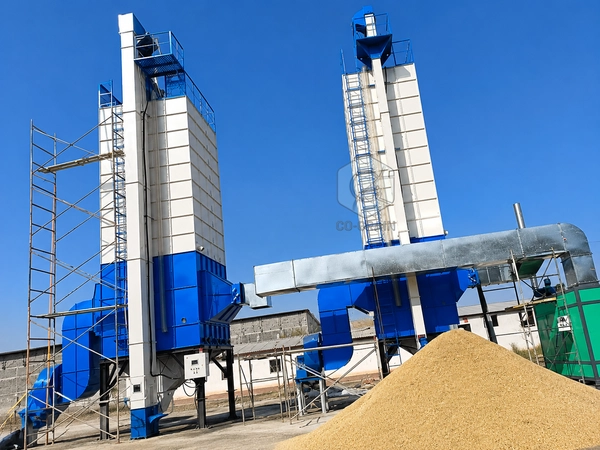
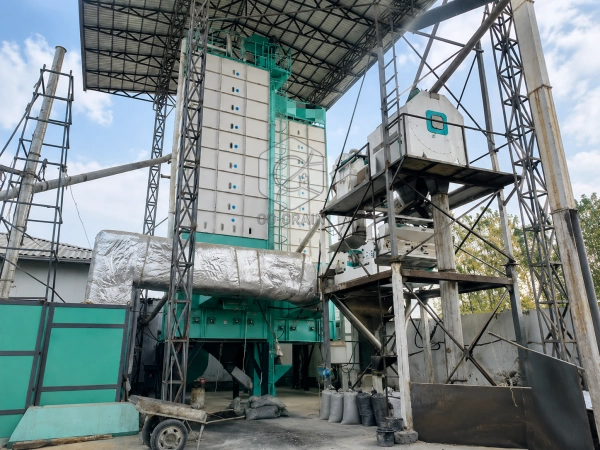
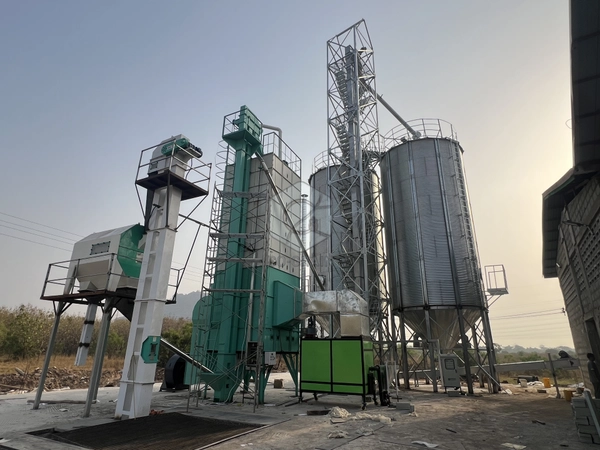
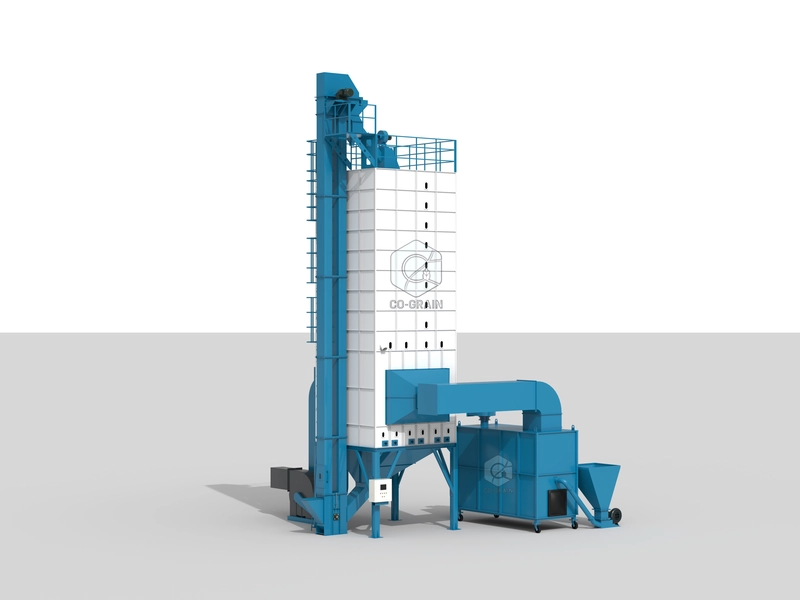
- Paddy dryer
- Selected heating system
- Tempering and cooling arrangement
- Moisture and temperature monitoring
- Dry-paddy bin or silo
- Connection to the rice mill
Main Product Features
- Paddy-specific drying program
- Adjustable airflow and temperature
- Tempering and cooling options
- Controlled discharge or circulation
- Low-impact conveying options
- Automatic moisture and temperature control options
- Rice husk, biomass, gas, diesel or steam heating options
- Connection with paddy storage and rice milling
Paddy Quality and Milling Outcome
Drying should be evaluated by more than final moisture. Kernel fissuring, moisture uniformity, grain temperature, mechanical handling and the time before milling can influence head-rice yield. The acceptable operating program should be agreed around paddy variety, harvest condition and the buyer’s storage or milling objective.
- Variety and kernel type: Confirm long-grain, short-grain or named variety
- Maximum kernel temperature: Confirm for the variety and final use
- Tempering strategy: Confirm number and duration of stages from the selected process
- Mechanical handling: Select low-impact elevators, conveyors and discharge routes where required
- Final condition: Confirm target moisture, temperature and resting/storage plan before milling
Reliable Operation, Maintenance and Safety
- Remove straw, chaff and fines before drying to protect airflow and reduce blockage and fire risk.
- Monitor drying-air temperature, actual grain temperature, exhaust condition and moisture trend rather than one isolated reading.
- Confirm safe heat-source start-up, airflow proving, over-temperature protection and shutdown/cooling logic.
- Clean grain passages and transfer points, and inspect for leakage, buildup or uneven discharge.
- Use representative moisture sampling and record the drying recipe for each confirmed paddy variety.
FAQ
What temperature should be used to dry paddy?
There is no single safe temperature for every paddy. The setting depends on variety, initial moisture, dryer structure, airflow, residence time and final use. Kernel temperature must be controlled separately.
Can a paddy dryer use rice husk as fuel?
Yes, when a correctly sized rice-husk furnace, fuel-feeding system, ash handling, heat exchange and temperature control package are provided.
Can dried paddy go directly to the rice mill?
The paddy should first meet the required moisture and temperature conditions. Cooling and moisture equalization may be required before milling.
How can broken rice risk be reduced?
Use an appropriate drying program, tempering, controlled kernel temperature and low-impact conveying. Actual results also depend on variety, harvest condition and initial fissures.