What Is a Hopper Bottom Grain Silo?
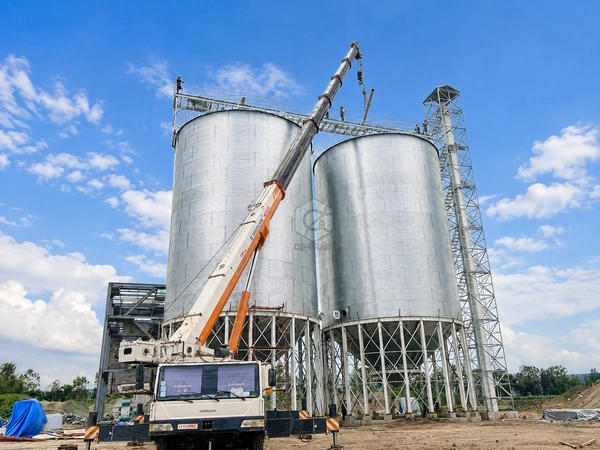
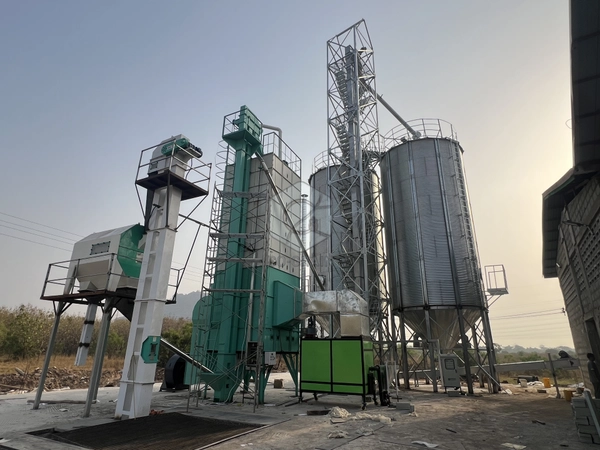
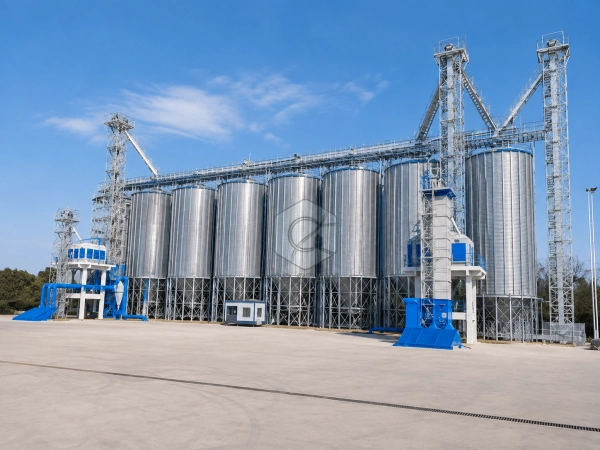
A hopper bottom grain silo stores grain above a sloped steel hopper supported by columns or another engineered structure. Grain normally leaves through the bottom outlet by gravity, making this silo suitable for frequent turnover, buffering and controlled feeding.
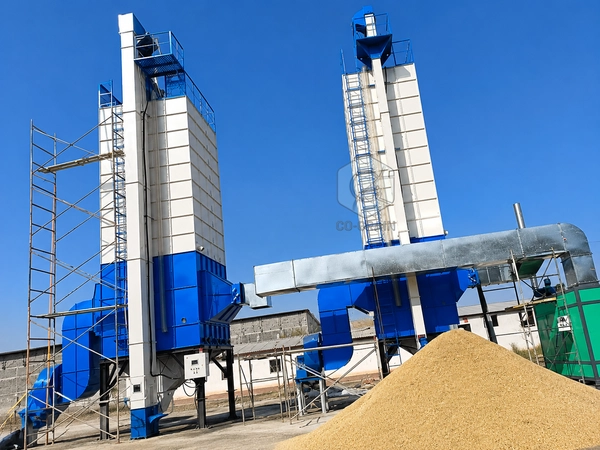
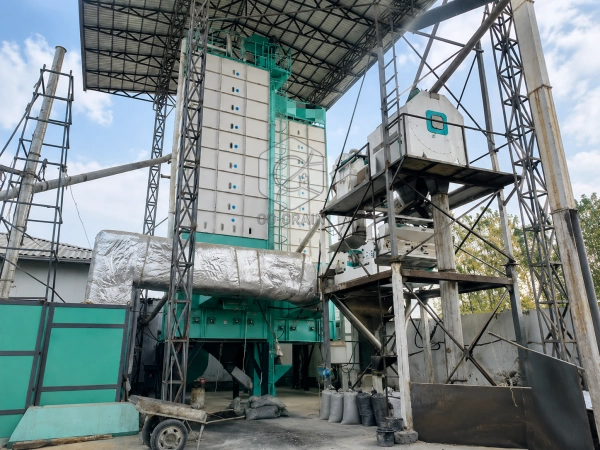
Typical applications include wet-grain buffering before a dryer, tempering between drying stages, dry-grain day storage and process feeding. The structure is selected according to grain flowability, capacity, outlet requirement, support height, site loads and connected equipment.
Typical Applications
- Wet grain buffer before drying
- Dryer feed or day bin
- Tempering and intermediate storage
- Dry grain short-term storage
- Rice, flour or feed-plant raw-grain feeding
- Seed or specialty grain lot storage after review
- Multi-bin systems requiring frequent product change
How Gravity Discharge Works
Grain flows down the hopper walls toward the outlet when the gate opens. Hopper angle, surface, outlet size and grain condition influence whether flow is uniform or forms stagnant zones and bridging.
High-moisture grain, chaff and fines can reduce flowability. The hopper should not be selected from nominal capacity alone. Co-Grain reviews material behavior and the required discharge rate before confirming geometry.
Main Product Advantages
Frequent and Controlled Turnover
Gravity discharge supports repeated filling and emptying cycles in buffer and process applications.
Reduced Need for Internal Sweep Equipment
The sloped bottom directs most free-flowing grain toward the outlet. Practical residual material depends on grain and geometry, so a zero-residual claim should not be made.
Compact Connection with Process Equipment
The elevated outlet can connect with gates, feeders, screw or chain conveyors, weighing equipment and dryer-feeding routes.
Suitable for Multiple Small or Medium Bins
Several hopper silos can separate grains, grades, batches or process routes when the project requires operational flexibility.
Integrated Grain-Condition Monitoring
Level, temperature, venting and selected aeration provisions can be included according to the holding condition and duration.
Main Structural Components
- Bolted cylindrical steel shell
- Roof, inlet and vents
- Conical or project-specific hopper bottom
- Support columns, ring beams and bracing
- Anchor and foundation interfaces
- Bottom outlet and gate connection
- Access ladder, platform and inspection openings
- Level and temperature instruments where specified
- Protective coating or galvanization
The hopper and supporting structure carry substantial vertical and horizontal loads. Design must use confirmed material and site conditions.
Functional Boundary with Conveying Equipment
This page covers the silo, hopper, outlet and structural interfaces. It does not duplicate the working principles of dryer-feeding conveyors, silo discharge conveyors or PLC route control.
Related conveying systems determine how grain reaches the silo, how outlet flow is regulated and how material moves to the dryer, processing line or loading station.
Design Information Required
- Grain, bulk density, moisture and impurities
- Required nominal and usable capacity
- Filling and discharge frequency
- Required discharge rate
- Flowability, bridging and segregation concerns
- Hopper outlet size and downstream equipment
- Required clearance below the outlet
- Site wind, snow, seismic and corrosion conditions
- Foundation and soil information
- Temperature, level and ventilation requirements
- Access, platform and maintenance requirements
- Future expansion and delivery scope
Wet-Grain and Process Applications
When used for wet grain, the silo should minimize uncontrolled residence time and support practical cleanout. Ventilation may be included, but it does not replace timely drying.
When used as a tempering or process bin, volume and flow pattern should match the required residence time and batch sequence. When used for dry grain, monitoring and storage duration determine the required accessories.
Safety and Maintenance
Operators should inspect the shell, hopper, support columns, bracing, bolts, anchors, outlet, gate, corrosion, roof and access components. Uneven settlement, damaged supports or unauthorized modifications require engineering review.
Personnel must not enter the silo or work beneath uncontrolled discharge. Filling and outlet equipment must be isolated according to the approved procedure.
FAQ
What is the main difference from a flat-bottom silo?
A hopper-bottom silo uses a sloped elevated bottom for gravity discharge. A flat-bottom silo normally provides larger economical storage but requires residual cleanout planning.
Is a hopper silo suitable for wet grain?
It can be suitable for short-term wet-grain buffering after confirming flowability, holding time, ventilation and cleanout.
How is hopper angle selected?
It depends on grain type, moisture, impurities, wall surface, outlet size and required flow. One angle is not suitable for every material.
Are discharge conveyors part of the silo?
The silo provides the confirmed outlet and support interface. Conveyors, feeders and route controls are specified under the related conveying-system scope.
Can multiple hopper silos feed several dryers?
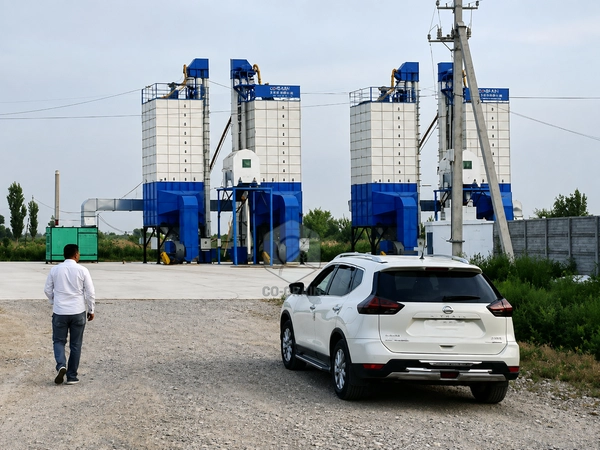
Yes, when capacities, outlets, distribution equipment and dryer-feeding logic are designed as one system.