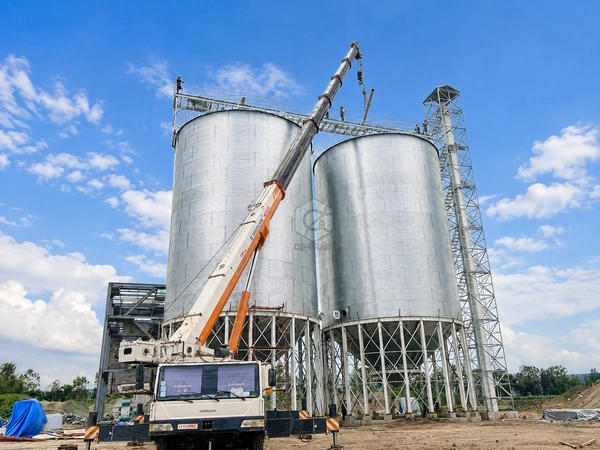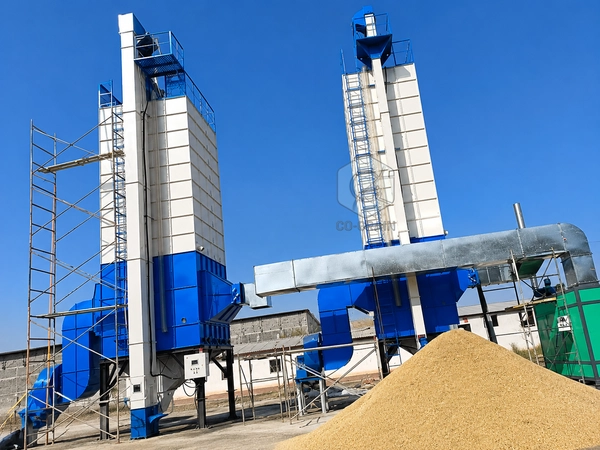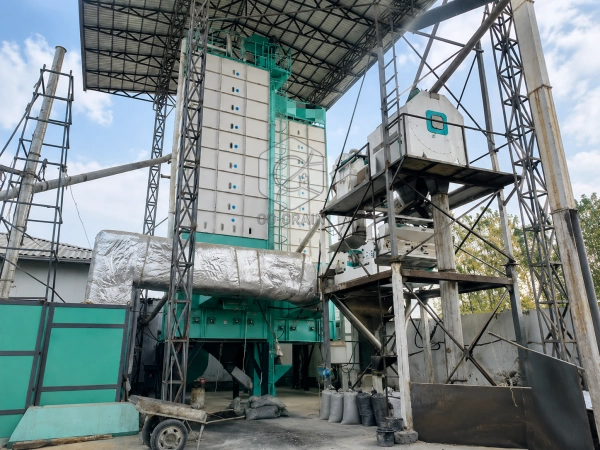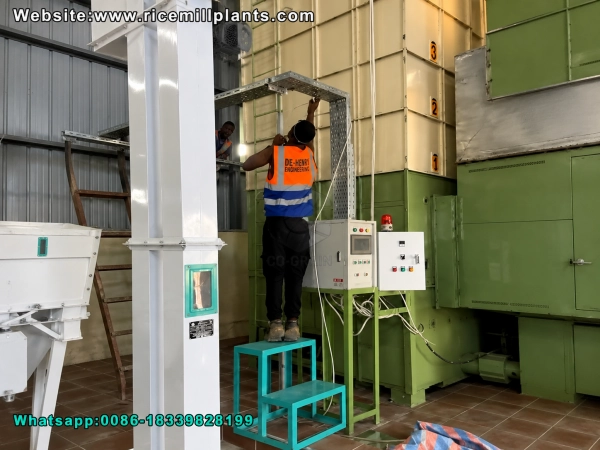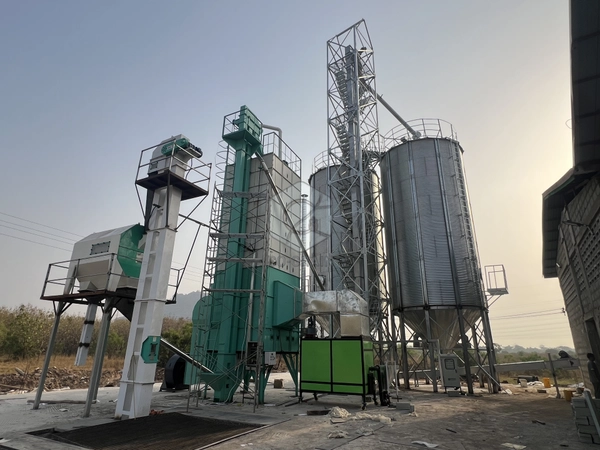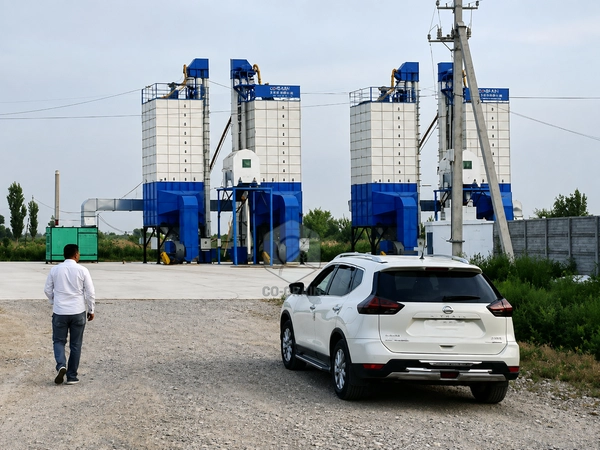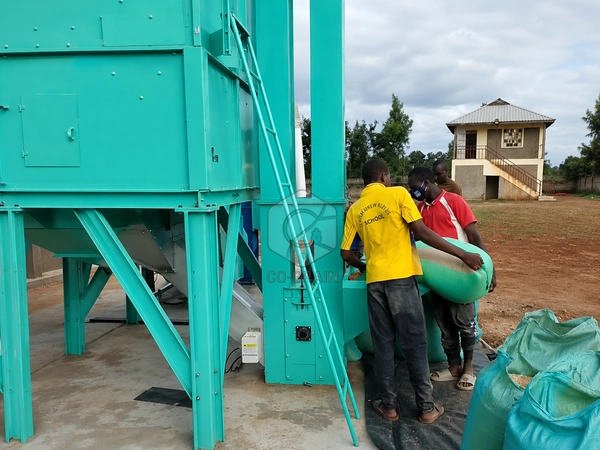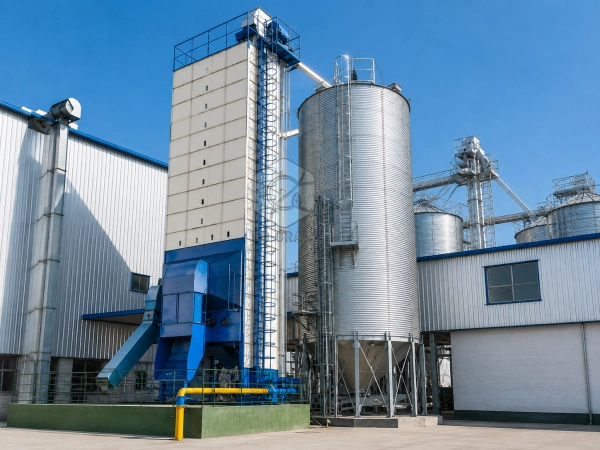
What Is a Tempering and Intermediate Silo?
A tempering and intermediate silo holds grain for a controlled period between drying stages or other process steps. During tempering, moisture inside the kernel can redistribute from wetter internal areas toward the surface. The next drying stage can then remove additional moisture under a coordinated program.
The silo may also buffer differences between dryer discharge, cooling and downstream storage. It is a process vessel, not automatically a long-term storage silo. Co-Grain configures the structure, volume, flow pattern and monitoring around the crop, moisture reduction, grain temperature, tempering time and plant operating schedule.
Position in the Drying Process
Process Flow: First Drying Stage > Tempering & Intermediate Silo > Second Drying Stage > Cooling > Dry Grain Storage
Another confirmed route may be:
Process Flow: Grain Dryer > Intermediate Buffer > Cooling / Moisture Verification > Dry Grain Storage
The required route depends on dryer type and crop. Not every grain-drying project requires a separate tempering silo.
Main Functions
Support Moisture Equalization
Tempering gives moisture within the kernel time to redistribute. The practical result depends on crop, moisture, grain temperature and holding time.
Connect Staged Drying Operations
The silo provides a controlled reserve between drying passes and helps coordinate equipment that operates at different cycle times.
Reduce Process Interruptions
Intermediate capacity allows one process stage to continue briefly when the next stage is changing batches or completing a controlled cycle.
Maintain Batch and Lot Control
Where product identity matters, separate silos or operating sequences can keep crops, varieties or seed lots from unacceptable mixing.
Provide Monitored Holding Conditions
Level and temperature instruments can help operators verify fill condition and grain-temperature trends before the next step.
Suitable Applications
- Staged paddy drying
- Multi-pass corn or wheat drying after engineering review
- Parboiled paddy drying and intermediate holding
- Low-temperature seed drying
- Batch dryer systems requiring process buffering
- Cooling and storage interface buffering
Each crop requires a separate confirmed process program. Tempering time and temperature should not be copied from another grain without evaluation.
Configuration Considerations
- Hopper-bottom or project-specific process bin
- Capacity matched with dryer batch or hourly output
- Grain-flow design suitable for the material condition
- High- and low-level instruments
- Grain-temperature monitoring
- Venting and selected insulation where required
- Controlled inlet and outlet interfaces
- Cleanout access for crop or lot changes
- Weather-protected outdoor or indoor installation
- Structural support and service platforms
For hot or steamed parboiled paddy, flowability, condensation, hygiene and drainage require additional attention.
Grain Flow and Residence Time
Silo volume alone does not guarantee the intended residence time. Grain-flow pattern, inlet distribution, outlet geometry and operating sequence determine whether the material moves uniformly or forms stagnant zones.
The process should define minimum, target and maximum holding conditions. Operators should have a clear response when grain remains in the silo longer than planned.
Monitoring and Control Boundary
The silo may provide level, temperature and selected process signals. Conveyors, elevators, gates and full route interlocks are designed under the corresponding Conveying Equipment system.
Where automatic timing is included, the control system should identify the batch, filling time, holding time, discharge status and abnormal alarms.
Safety, Hygiene and Maintenance
Operators should inspect grain accumulation, condensation, outlet condition, vents, sensors, seals and access components. Wet, hot or steamed grain may create difficult flow and hygiene risks.
Silo entry requires isolation of all filling, discharge and sweep equipment. Confined-space and engulfment procedures remain mandatory.
FAQ
Why is grain tempered between drying stages?
Tempering allows internal moisture to redistribute before the next drying pass. The required time depends on crop and process conditions.
Does every grain dryer need a tempering silo?
No. Some dryers include tempering sections or use a different process. A separate silo is selected only when the complete drying program requires it.
Can the silo store grain for several days?
It is intended mainly for controlled intermediate holding. Longer storage requires a separate review of moisture, temperature, ventilation and grain safety.
Is this the same as a wet grain buffer silo?
No. A wet grain buffer silo balances receiving and dryer demand before drying. A tempering silo is positioned between or after controlled process stages.
Can it be used for parboiled paddy?
Yes, after confirming hot wet grain flow, holding time, condensation, hygiene, structure and downstream drying requirements.