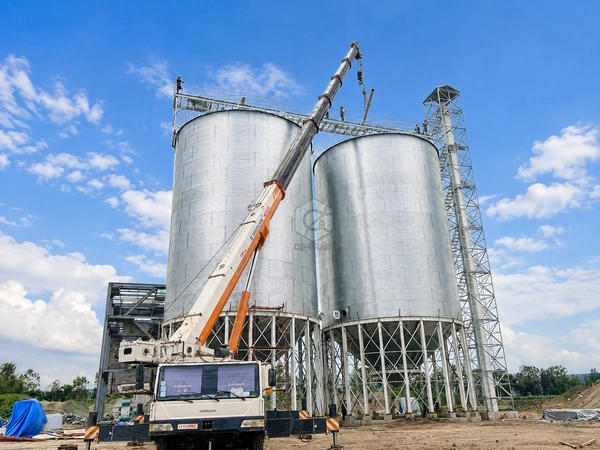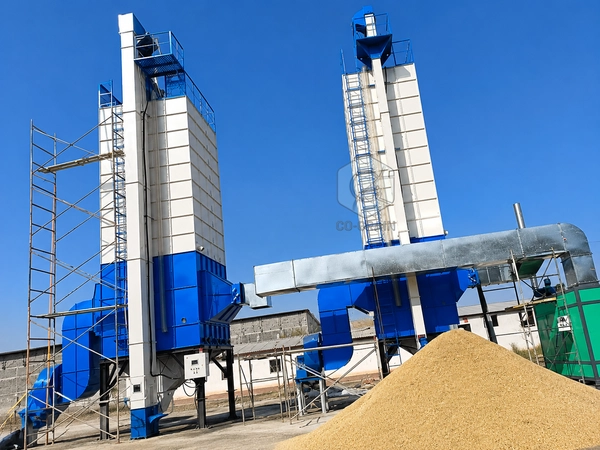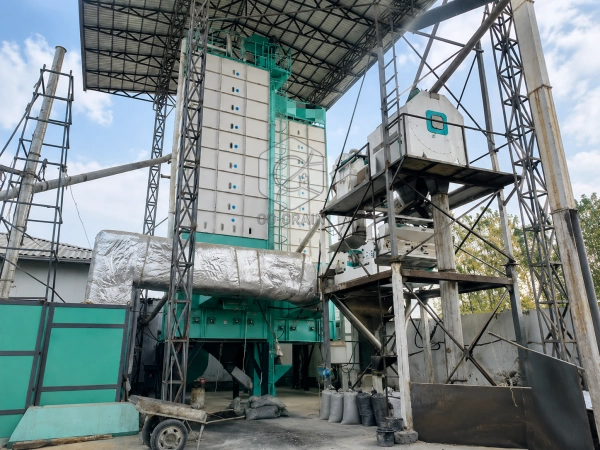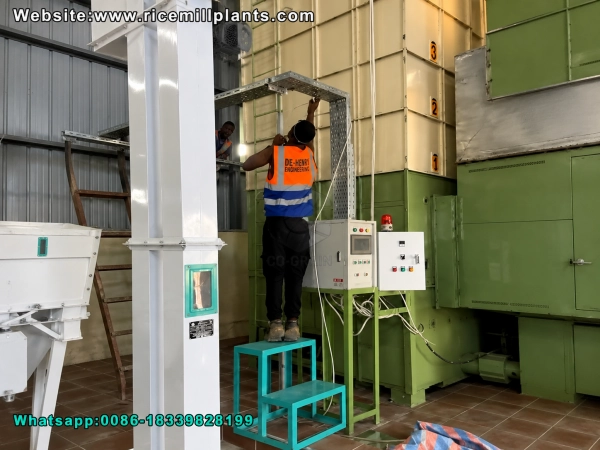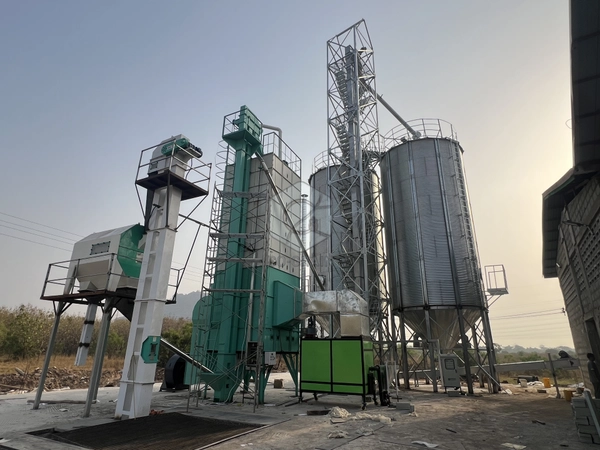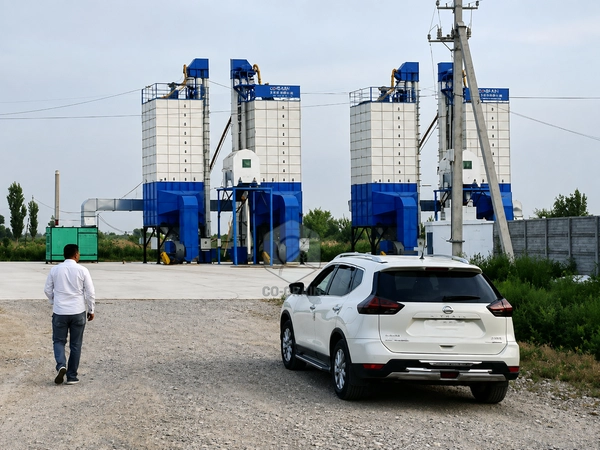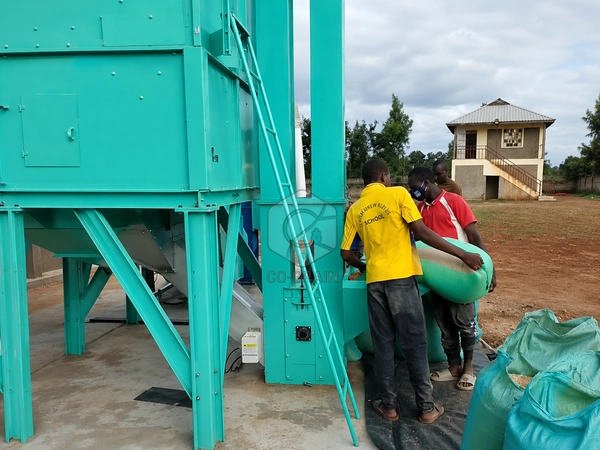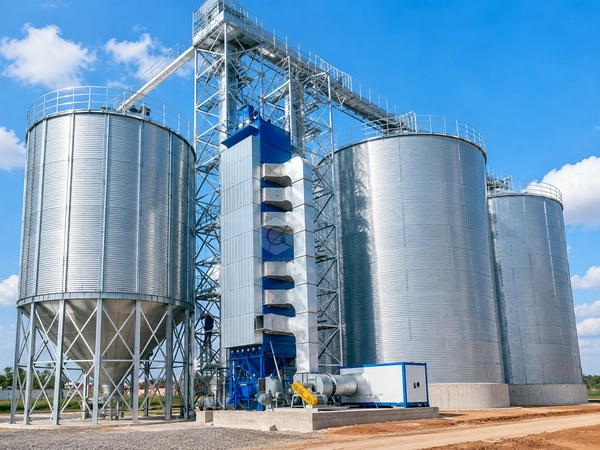
What Is a Wet Grain Buffer Silo?
A wet grain buffer silo provides temporary storage between grain receiving and the dryer. It absorbs fluctuations in truck arrivals, pre-cleaning output and dryer cycles so the drying plant can operate more steadily. Co-Grain designs the silo around the crop, initial moisture, grain temperature, impurity level, peak intake, dryer capacity and allowable holding time.
This is not a long-term storage silo. High-moisture grain can heat, bridge, spoil or lose quality when held too long. The operating plan must define how quickly each batch should enter the dryer and what ventilation or circulation is required while it waits.
Position in the Drying Process
Process Flow: Grain Receiving > Pre-Cleaning > Wet Grain Buffer Silo > Dryer Feeding System > Grain Dryer
The silo page covers temporary storage, grain condition, vessel structure, level monitoring and the inlet/outlet interfaces. Receiving conveyors, elevators and dryer-feeding routes are covered under the related conveying-system page.
Main Functions
Balance Receiving and Drying Capacity
Truck unloading often occurs in peaks, while a dryer operates at a more stable rate or batch cycle. Buffer capacity separates these two operating patterns and reduces avoidable dryer interruptions.
Maintain a Controlled Wet-Grain Reserve
The silo provides enough material for planned dryer operation without encouraging excessive wet-grain residence time. Required volume should be based on peak arrivals, dryer demand, operating hours and harvest logistics.
Support First-In, First-Out Planning
Inlet, outlet and operating sequence should reduce uncontrolled mixing of old and newly received wet grain. Complete first-in, first-out behavior depends on silo geometry and flow pattern and should not be claimed without engineering confirmation.
Monitor Grain and Available Capacity
High- and low-level instruments help coordinate receiving and discharge. Temperature monitoring and selected ventilation can support wet-grain management where included in the project.
Connect Safely with the Dryer Route
The outlet, gate and supporting structure are designed to connect with a controlled dryer-feeding system. Detailed conveyors and route interlocks remain within the Conveying Equipment scope.
Recommended Silo Configuration
A hopper-bottom structure is commonly considered because it supports frequent gravity discharge and reduces manual cleanout. The actual cone angle, outlet size and internal flow depend on grain variety, moisture, impurities and flowability.
Possible configuration directions include:
- Hopper-bottom steel silo or project-specific buffer bin
- High- and low-level monitoring
- Selected grain-temperature monitoring
- Ventilation or aeration provision where justified
- Roof venting and access openings
- Controlled inlet and outlet connections
- Weather protection and corrosion system
- External ladder, platform and maintenance access
- Structural supports designed for confirmed loads
Wet-Grain Management Considerations
Holding Time
No universal safe holding time should be published. Acceptable time changes with crop, moisture, grain temperature, ambient condition, impurities and biological activity.
Grain Flow
Wet grain containing chaff or fines may bridge, form stagnant zones or discharge unevenly. Silo geometry, outlet size and pre-cleaning quality must be reviewed together.
Temperature and Ventilation
Ventilation may help manage localized heating, but it is not a substitute for timely drying. Airflow, climate and grain resistance determine the practical result.
Cleanout
Residual wet grain can deteriorate quickly. The outlet, access and operating procedure should support complete practical cleanout between harvest lots where required.
Automation and Grain-Condition Monitoring
The silo control scope may include high-level, low-level and grain-temperature signals. These signals can be shared with the receiving and dryer-feeding control system, but the conveyor route logic belongs to the conveying-system design.
Alarm settings and operating responses should be defined. A high-temperature signal should trigger inspection and corrective action rather than being treated as proof of safe grain condition.
Safety and Maintenance
Wet grain may generate dust, biological heat and difficult flow conditions. Operators should inspect grain condition, vents, level devices, outlet gates, seals and structural supports. The silo must be isolated before internal inspection.
Silo entry presents engulfment and confined-space risks. Entry, atmosphere testing, rescue planning and lockout must follow local regulations and the site safety procedure.
FAQ
How large should a wet grain buffer silo be?
Capacity should be calculated from peak receiving, dryer throughput, operating hours and acceptable wet-grain holding time. A larger silo is not automatically safer.
Can wet grain remain in the silo overnight?
That depends on crop, moisture, temperature, impurities and climate. The operating plan should be confirmed by the project’s grain-management team.
Is a hopper-bottom silo always required?
It is commonly preferred for frequent discharge, but the final structure depends on capacity, site, grain flow and project economics.
Does the buffer silo include dryer-feeding conveyors?
The silo includes confirmed inlet and outlet interfaces. Elevators, conveyors and route controls are configured under the Grain Receiving & Dryer Feeding System.
Can one buffer silo serve several dryers?
Yes, when the silo capacity, outlets, distribution route and dryer-feeding controls are designed for the selected dryer arrangement.