What Is a Complete Grain Drying System?
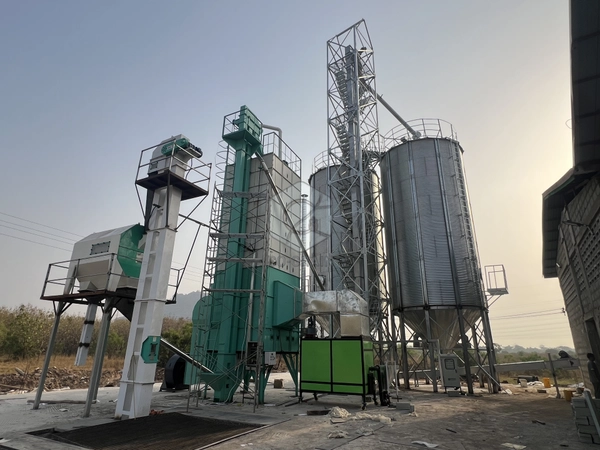
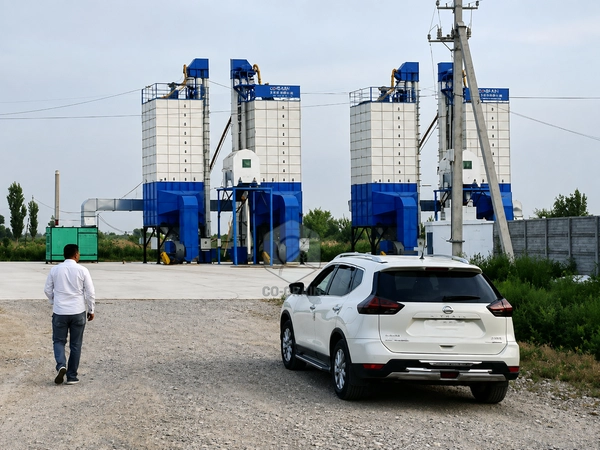
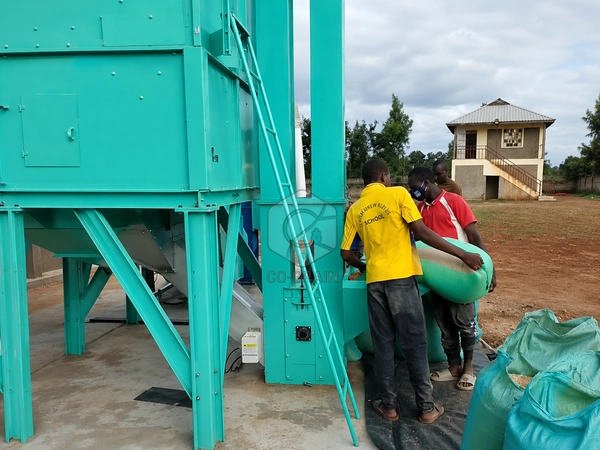
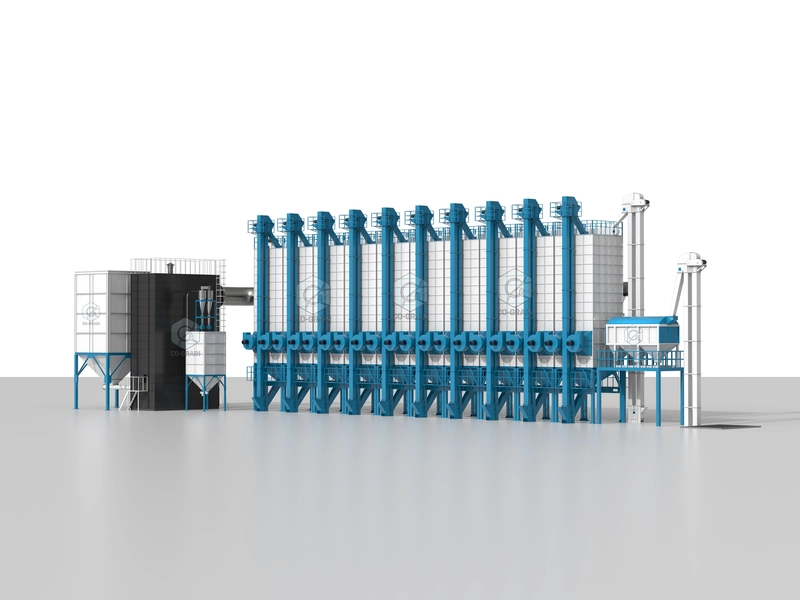
A complete grain drying system is an integrated plant that moves wet grain from intake to a controlled final moisture and temperature before storage or processing. Co-Grain engineers these systems for paddy, corn, wheat, seeds and other confirmed grains according to the crop, moisture conditions, capacity, fuel and site. A complete solution includes more than a dryer: the cleaning capacity, wet-grain buffer, conveying route, heat source, airflow, discharge control, cooling and storage must work as one coordinated process.
Key System Configuration
- Applicable grains: Paddy, corn, wheat, seeds and other technically confirmed grains
- Operating mode: Batch, circulating, continuous or combined
- Capacity basis: Wet grain t/batch, t/h or t/day under stated moisture conditions
- Heating options: Biomass, rice husk, natural gas, LPG, diesel, steam or another confirmed source
- Main output: Grain at the agreed target moisture and discharge condition
- Typical users: Grain depots, rice mills, commercial farms, cooperatives and processing plants
One Process, Coordinated from Intake to Storage
Wet Grain Receiving > Pre-Cleaning > Wet Grain Buffer > Conveying > Grain Drying > Tempering > Cooling > Moisture Verification > Dry Grain Storage or Processing
Wet Grain Receiving
The intake system is sized for the peak delivery rate, vehicle type and daily harvest volume. Stable feeding prevents repeated dryer interruptions and helps maintain consistent operation.
Pre-Cleaning
Large impurities, light material and part of the dust are removed before drying. Proper cleaning improves airflow, protects conveyors and reduces blockage, uneven drying and fire risk.
Wet Grain Buffer
A wet-grain bin or buffer section separates the fluctuating truck intake from the more stable drying process. Its capacity should be coordinated with harvest peaks and dryer throughput.
Drying and Tempering
Heated air supplies the energy needed to remove moisture. One or more tempering stages allow moisture inside the kernel to redistribute, reducing the moisture gradient created during drying.
Cooling and Verification
The dried grain is cooled according to its final destination. Moisture and grain temperature are checked before the material enters a silo, warehouse or processing line.
Main Equipment
- Grain intake hopper and feeding conveyor
- Rotary, vibrating or air-screen pre-cleaner
- Wet-grain buffer or storage bin
- Bucket elevators, drag conveyors or belt conveyors
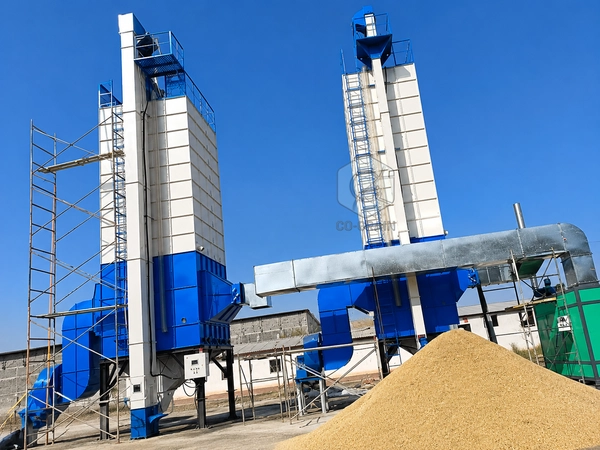
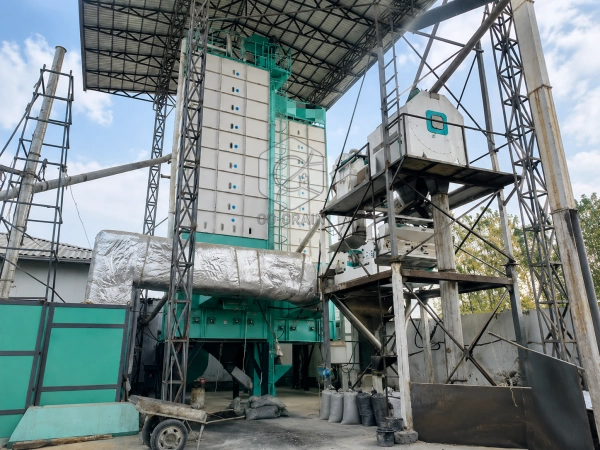
- Selected grain dryer
- Burner, hot-air furnace or heat exchanger
- Tempering and cooling section
- Dust and exhaust management
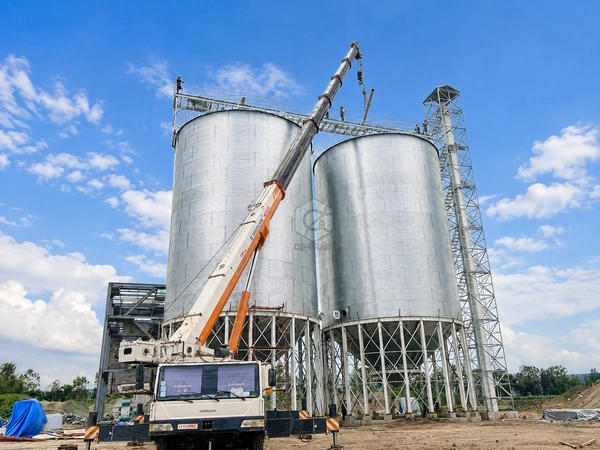
- Dry-grain bin or steel silo
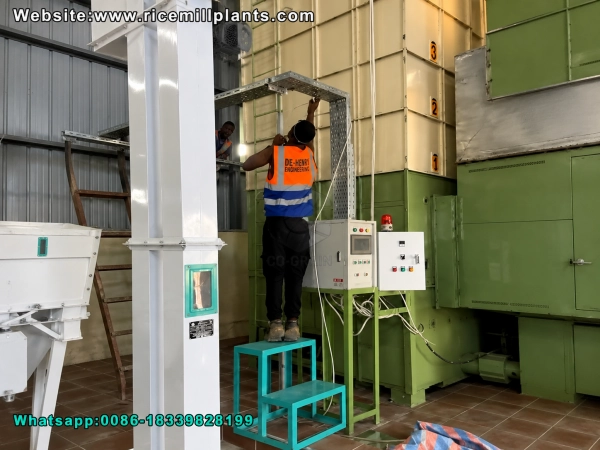
- PLC, touchscreen, sensors and safety interlocks
The final equipment list is determined during process and layout design.
Dryer and Heat Source Matching
The dryer and heat source must be selected together. Required heat depends on wet-grain input, crop, initial moisture, target moisture, ambient conditions, airflow and system efficiency. Fuel consumption cannot be responsibly quoted from dryer tonnage alone.
Where food-grade air cleanliness is required, an indirect heating system may be selected so that combustion gases do not contact the grain. Direct heating may be considered only when the fuel, product and applicable standards allow it.
Moisture and Temperature Control
Depending on the control package, the system can monitor:
- Incoming and outgoing grain moisture
- Drying-air, exhaust-air and grain temperature
- Grain level and feeding status
- Fan, burner and conveying equipment status
- Discharge speed and residence time
- Flame, air-pressure, overload and over-temperature alarms
- Historical operating data and remote status
Online moisture instruments require regular comparison with reference samples. Sensor location, grain temperature and sample stability can affect readings.
Engineering and Delivery Scope
Co-Grain can provide the following services according to the agreed contract:
- Project consultation and requirement review
- Process flow and equipment selection
- Site layout and equipment arrangement
- Equipment manufacturing and supply
- Electrical and automation integration
- Installation and commissioning support
- Operator training
- Spare parts and lifecycle technical support
Civil works, foundations, local utilities and installation responsibilities must be clearly defined in the proposal.
Information Required for a Proposal
- Grain type and intended use
- Initial moisture, variation and target moisture
- Peak hourly and daily wet-grain volume
- Operating hours and harvest period
- Available fuel, fuel quality and local price
- Project country, altitude and ambient conditions
- Site size, building and installation conditions
- Voltage, frequency and available power
- Required connection with silos or processing equipment
- Required automation and delivery scope
System Design and Capacity Basis
A complete plant must be balanced around the peak wet-grain intake and the required moisture removal. Receiving capacity, pre-cleaning, buffer storage, dryer throughput, heat-source duty, conveying, cooling and dry storage should be checked as one material-and-energy balance. Increasing one machine’s nominal capacity does not increase plant output if another section becomes the bottleneck.
- Wet-grain basis: Crop, bulk density, initial moisture range, temperature and impurity level
- Required output: Target moisture, discharge temperature, hourly/day throughput and final use
- Harvest logistics: Vehicle type, peak deliveries, working hours and harvest duration
- Thermal system: Fuel, fuel quality, available supply, heating method and emissions requirement
- Storage interface: Wet buffer, dry buffer, silo size, aeration and downstream processing
- Site conditions: Country, altitude, ambient design condition, utilities, access and layout limits
Reliable Operation, Maintenance and Safety
- Define cleaning access, inspection routes and safe isolation for the dryer, fans, heat source, elevators and conveyors.
- Control accumulated grain dust, chaff and combustible material around intake, transfer and heating areas.
- Confirm flame, temperature, pressure, airflow, grain-level, motor-overload and emergency-stop protection for the supplied scope.
- Keep moisture-sampling, sensor-calibration, cleaning, lubrication and alarm records as part of routine operation.
- Establish an approved shutdown and cooling sequence before personnel enter equipment or maintenance areas.
FAQ
How is the capacity of a complete grain drying plant determined?
Capacity is calculated from wet-grain input under a stated crop, initial moisture, target moisture, ambient condition and operating schedule. Batch capacity, hourly capacity and daily throughput are different values.
Can the same system dry several grains?
Some systems can process multiple crops, but the loading capacity, drying temperature, airflow and operating program may change. Each crop must be listed in the technical proposal.
Is a wet-grain bin necessary?
It is recommended when truck intake is faster or more variable than dryer throughput. The buffer helps maintain stable dryer operation.
Can the plant connect directly to grain silos?
Yes. Co-Grain can coordinate dry-grain conveying, silo storage, aeration, temperature monitoring and downstream discharge.