What Is a Drag Chain Conveyor?
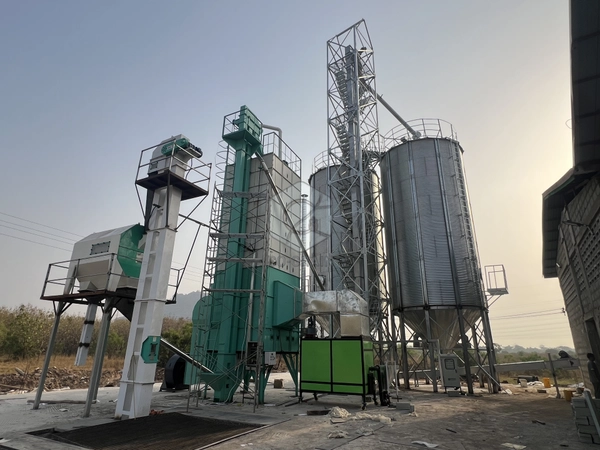
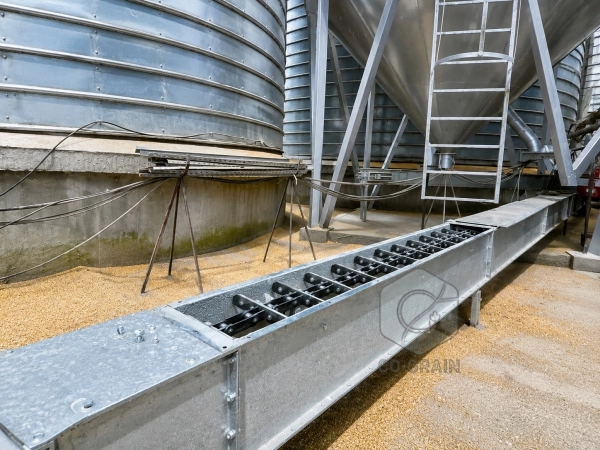
A drag chain conveyor moves bulk grain through an enclosed casing using a continuous chain fitted with flights or scrapers. It is commonly used for horizontal or slight-incline transfer at grain receiving areas, dryer plants, silo tops, silo bottoms and processing facilities.
Co-Grain selects the casing section, chain, flight arrangement, speed, inlet and outlet positions, wear protection and drive according to the material, capacity, distance, operating time and route. The product is especially useful where enclosed transfer, multiple inlets or outlets, and compact integration with silos are important.
Typical Process Positions
- Receiving pit discharge and transfer to a bucket elevator
- Cleaner discharge to wet-grain buffer or dryer
- Silo-top conveying and multi-silo filling
- Silo-bottom collecting conveyor
- Dryer discharge to storage
- Grain transfer to truck loading or a processing line
Typical route:
Process Flow: Feeding Point > Enclosed Chain Conveyor > Elevator / Distributor / Silo / Loading Equipment
How It Works
The drive unit pulls the chain through the conveyor casing. Flights move the grain along the bottom section toward the discharge. At the head, grain leaves through the selected outlet while the chain returns through the upper section.
The chain speed and casing filling condition must be coordinated. Excessive speed or poor feeding can increase wear, grain damage and power demand. Poor outlet design can cause material carryback or accumulation. The inlet, outlet, return section and cleanout arrangement therefore require project-specific design.
Main Product Advantages
Enclosed Conveying Route
The casing supports controlled grain transfer and can reduce exposure to rain, wind and open dust release compared with an uncovered route. Dust performance still depends on sealing and transfer-point aspiration.
Suitable for Silo Integration
The conveyor can run along silo roofs, beneath silo outlets or between process buildings. Multiple inlet or outlet positions can be considered where the selected structure allows them.
Compact Layout
The enclosed casing can be arranged in constrained areas and connected directly with valves, chutes, elevators and distributors.
Configurable Wear Protection
Selected casing floors, chain guides, bends and discharge zones can use replaceable wear-resistant materials according to the grain, impurities and operating duty.
Automation and Interlocking
The conveyor can be connected to route-selection controls, upstream feeding equipment and downstream receiving equipment for sequenced start, stop and fault response.
Configuration Options
- Horizontal or confirmed slight-incline arrangement
- Single or multiple feed points
- Single or multiple discharge points
- Standard or self-cleaning direction after technical confirmation
- Carbon-steel, galvanized or specified protective finish
- Selected chain, flight and guide construction
- Wear liners at confirmed high-wear locations
- Inspection doors and cleanout openings
- Indoor or outdoor weather-protected configuration
- Local control, variable-speed drive or plant PLC integration
Applicable Materials and Applications
The conveyor can be reviewed for paddy, corn, wheat, soybeans, seeds and other compatible granular materials. It is commonly used in grain storage depots, drying plants, rice mills, flour mills, feed plants and commercial silo systems.
High moisture, high impurity content, abrasive material and treated seed may require specific chain, casing, sealing and cleaning decisions.
Selection Information Required
- Grain and bulk density
- Moisture, impurities and flowability
- Required normal and peak capacity
- Horizontal distance and confirmed inclination
- Number and position of inlets and outlets
- Silo arrangement and route selection
- Continuous operating hours and start frequency
- Full-load starting requirement
- Indoor or outdoor environment
- Dust, cleanout and cross-contamination requirements
- Available voltage, automation and safety standard
Safety, Inspection and Maintenance
Typical monitoring options include chain speed, blockage, motor overload and bearing temperature. Inspection covers, guards, emergency stops and safe isolation points should be positioned around the actual layout. Chain tension, flight condition, guide wear, casing accumulation and drive alignment require routine inspection.
The conveyor must be stopped and isolated before internal inspection or cleanout.
FAQ
Is a drag chain conveyor suitable for silo-top conveying?
Yes, it is commonly considered for enclosed silo-top transfer and multiple silo inlets. The support structure, outlet positions and weather protection must be designed with the silo layout.
Can it convey grain on an incline?
Small inclines may be possible, but capacity, chain load and grain behavior change with angle. For a larger lift, an inclined chain conveyor or bucket elevator may be more suitable.
Can one conveyor fill several silos?
Multiple discharge points may be configured where the selected conveyor and route-control system allow them. Valves and interlocks must prevent incorrect routing.
How is carryback reduced?
Chain, flight, outlet and return-section design, correct speed and routine cleanout all affect carryback. A universal zero-residual claim should not be made.
What is the main maintenance focus?
Operators should monitor chain tension, flight wear, guides, bearings, drive alignment, casing buildup and safety devices.