What Is an Enclosed Belt Conveyor?
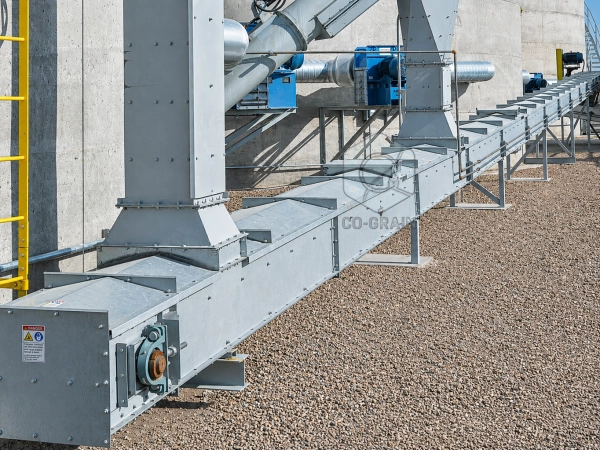
An enclosed belt conveyor moves grain on a continuous belt inside a protective casing or housing. It combines the relatively gentle conveying action of a belt with improved protection from weather and uncontrolled dust release. It is commonly considered for silo corridors, grain depots, drying plants and processing facilities where an open belt route is not suitable.
“Enclosed” does not automatically mean dust-free. Effective dust management depends on casing seals, loading and discharge design, belt cleaning, air pressure and aspiration at transfer points.
Typical Applications
- Outdoor transfer between receiving, drying and storage areas
- Silo-top or plant-gallery grain conveying
- Long horizontal routes requiring weather protection
- Grain processing facilities with controlled transfer points
- Multi-point discharge routes after technical confirmation
- Paddy and seed routes requiring relatively gentle handling
Typical flow:
Process Flow: Upstream Conveyor / Elevator > Enclosed Belt Conveyor > Silo / Distributor / Processing Intake
How It Works
Grain is fed onto a moving belt through a sealed loading chute. The casing surrounds the carrying and return sections according to the selected structure. At the discharge, grain enters a chute, distributor, silo or downstream conveyor.
The enclosure changes inspection, ventilation and cleanout requirements. Loading must remain centered, the belt must track correctly, and accumulated material must be removed from the casing. Inspection doors, belt-cleaning devices and access space are therefore part of the design-not optional afterthoughts.
Main Product Advantages
Weather and Material Protection
The casing helps protect grain from rain, wind and external contamination when designed for the site climate.
Controlled Dust Connection
Enclosed loading and discharge points can be connected to an aspiration or dust-collection system. The required air volume and pressure balance must be confirmed by the dust-control design.
Gentle Continuous Transfer
The belt supports continuous grain movement with limited internal dragging. Loading and discharge drops still need to be controlled.
Cleaner Plant Layout
The enclosed appearance organizes the conveying route and can reduce exposed grain and spilled material around normal operation.
Configurable Maintenance Access
The final design can include external bearing arrangements, observation points, cleanout doors, walkways and removable covers according to the structure.
Configuration Directions
- Fully enclosed or covered construction
- Roller-supported or other confirmed belt-support system
- Carbon-steel, galvanized or specified protective finish
- Horizontal or technically confirmed inclined route
- Head discharge and selected intermediate discharge options
- Sealed loading and transfer chutes
- Belt cleaners and casing cleanout arrangement
- Aspiration connection at selected transfer points
- Fixed-speed or variable-speed drive
- Outdoor walkway, platform and weather protection
Selection Information Required
- Grain, bulk density, moisture and impurity level
- Capacity and conveying distance
- Elevation difference and inclination
- Indoor or outdoor installation
- Rain, wind, ambient temperature and corrosion conditions
- Dust-control and aspiration target
- Number of loading and discharge points
- Acceptable grain damage and residual material
- Inspection and maintenance access
- Route control and safety-monitoring scope
Cleaning, Safety and Maintenance
Operators should inspect belt tracking, tension, pulley and roller condition, cleaner performance, casing accumulation, seals and transfer chutes. Misalignment, speed, blockage and pull-cord emergency-stop devices may be included in the confirmed control package.
The enclosed casing must have safe access and isolation procedures. Personnel must never enter or open hazardous sections during operation.
FAQ
What is the difference between a covered and fully enclosed conveyor?
A covered conveyor mainly protects the carrying side, while a fully enclosed arrangement surrounds more of the route. The exact structure, sealing and maintenance method should be shown in the proposal.
Does the enclosure eliminate the need for dust collection?
No. Air displaced by incoming grain and dust generated at transfer points may still require aspiration and filtration.
Can the conveyor have multiple discharge points?
Selected structures may support intermediate discharge devices. Outlet sealing, belt cleaning and route interlocks must be reviewed.
Is an enclosed belt conveyor suitable outdoors?
Yes, when the housing, supports, finish, drainage, electrical equipment and access system are designed for local weather.
How is internal grain accumulation controlled?
Correct loading, belt tracking, skirting, cleaners, tail design, cleanout openings and routine inspection all contribute. No universal zero-residual claim should be made.