What Is a TQLZ Vibratory Cleaning Sieve?
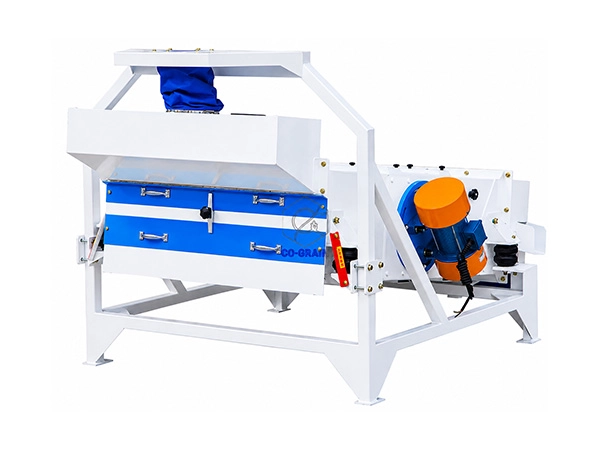
The TQLZ Vibratory Cleaning Sieve is a compact grain pre-cleaner for paddy, wheat, corn and other technically confirmed granular materials. It uses a vibrating screen body and selected screen layers to remove coarse impurities, small impurities and fines before the material enters storage, drying or processing equipment. When connected to a suitable aspiration system, it can also help remove light impurities and dust.
The machine separates primarily by particle size. The final screen perforation, feed setting and vibration configuration must be selected according to the actual material, moisture, impurity composition, bulk density and required cleaning result. It is not a substitute for a destoner, magnetic separator, paddy separator or color sorter.
Key Features
Multi-Layer Screening
Selected screen layers remove large impurities, small impurities and fines in one continuous process.
Uniform Feeding
The feeding system distributes grain across the screen width for stable screening and efficient use of the available screen area.
Flexible Screen Selection
Screen perforations can be selected according to grain size, impurity condition and the required cleaning result.
Optional Aspiration
The machine can connect to an aspiration and dust-collection system for light impurity and dust removal.
Compact System Integration
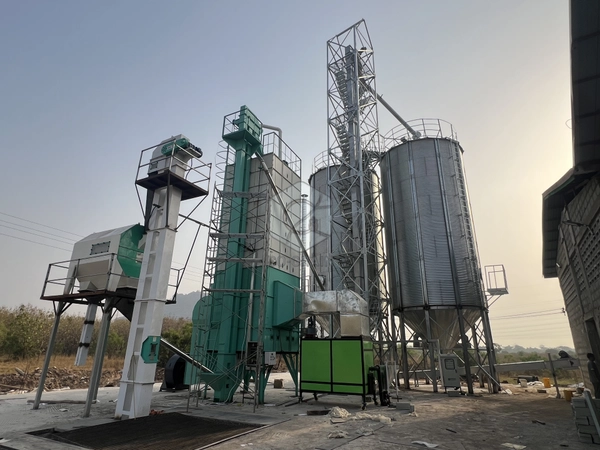
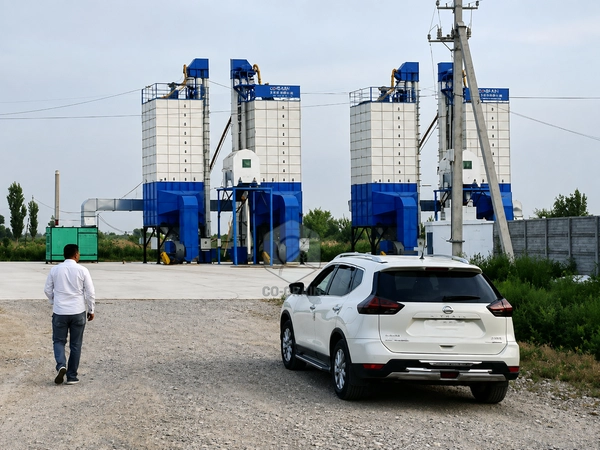
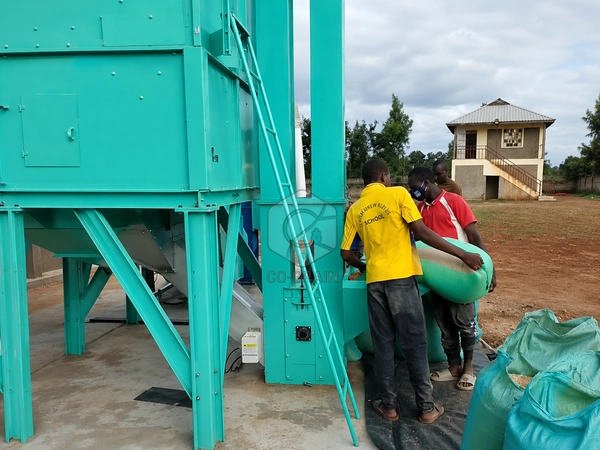
Its compact structure makes it suitable for rice mills, grain dryer lines, silo intake systems and other grain-processing projects.
How the Vibratory Cleaning Sieve Works
Grain enters the feeding section and is distributed evenly across the screen surface. Vibratory motion moves the material forward through multiple screen layers.
The upper screen removes stalks and oversized foreign materials. Lower screens separate small impurities and fines, while clean grain moves to the next process through a separate outlet.
Process Flow:
Grain Feeding → Vibratory Screening → Impurity Separation → Clean Grain Discharge
Vibratory Cleaning Sieve Application
The TQLZ Vibratory Cleaning Sieve can be used in:
- Rice mills before destoning and husking
- Grain drying plants before the buffer bin or dryer
- Grain silo intake and storage systems
- Wheat and corn processing lines
- Grain receiving and conveying systems
Typical System Flow
Grain Receiving → TQLZ Pre-Cleaning → Destoning or Magnetic Separation → Drying, Storage or Processing
The TQLZ mainly separates material by particle size. A destoner, magnetic separator or other cleaning equipment should be added when the project requires the removal of stones, metals or other specific contaminants.
Reference Technical Parameters
| Model | Capacity(t/h) | Power(kw) | Dimension(mm) | Weight(kg) |
| TQLZ100 | 20 | 0.37*2 | 2100*1500*1500 | 650 |
| TQLZ125 | 40 | 0.55*2 | 2640*1860*1500 | 800 |
| TQLZ150 | 50 | 0.55*2 | 2640*2160*1500 | 900 |
| TQLZ180 | 80 | 0.75*2 | 2640*2460*1500 | 980 |
Technical data are reference values. Final capacity and configuration depend on grain type, moisture, impurity level, screen selection and required cleaning result.
FAQ
What impurities can the TQLZ remove?
The TQLZ is designed to remove large impurities, small impurities and fines according to particle size. With an aspiration connection, it can also help remove light impurities and dust.
Is it suitable for paddy, wheat and corn?
Yes. It can process paddy, wheat, corn and other compatible granular materials when equipped with the appropriate screen configuration.
Can it be installed before a grain dryer?
Yes. It can be installed before a wet-grain buffer or dryer to reduce impurities that may affect conveying, grain flow and downstream equipment cleanliness.
Can the TQLZ remove stones?
It may remove stones that differ significantly in size from the grain, but it cannot reliably separate stones with a similar particle size. A destoner is recommended when heavy mineral impurity removal is required.
How is the correct model selected?
Model selection depends on grain type, hourly intake, moisture, impurity condition, screen configuration and required cleaning result. The cleaner should match the capacity of the receiving and downstream systems.
Can it connect to a dust-removal system?
Yes. The machine can be connected to an aspiration channel, fan, ducting and dust collector. The required airflow should be calculated as part of the complete system.