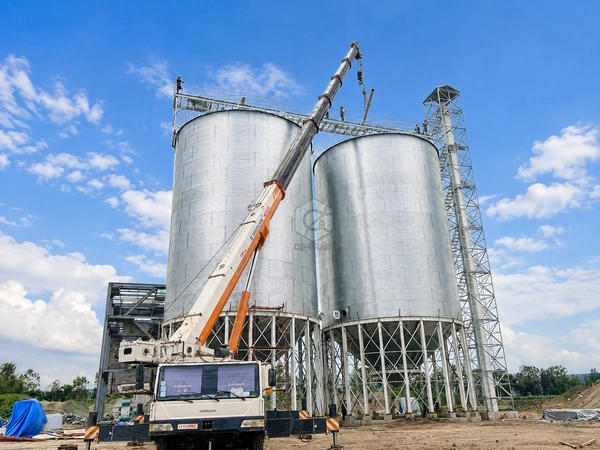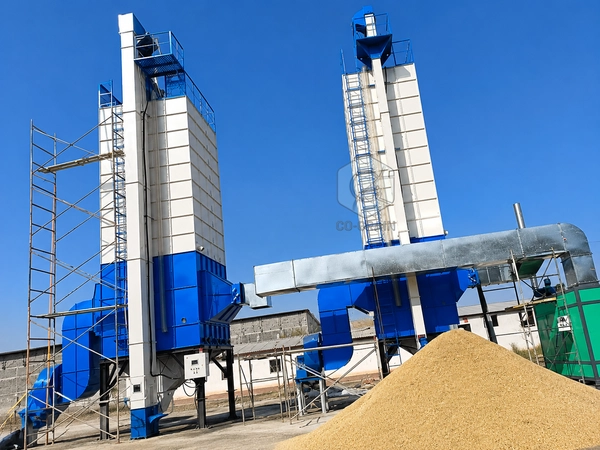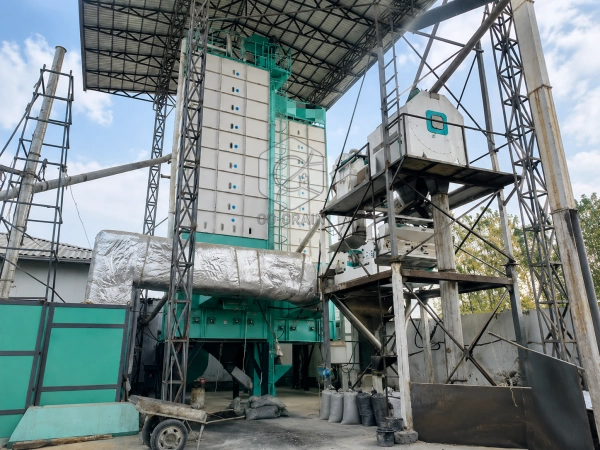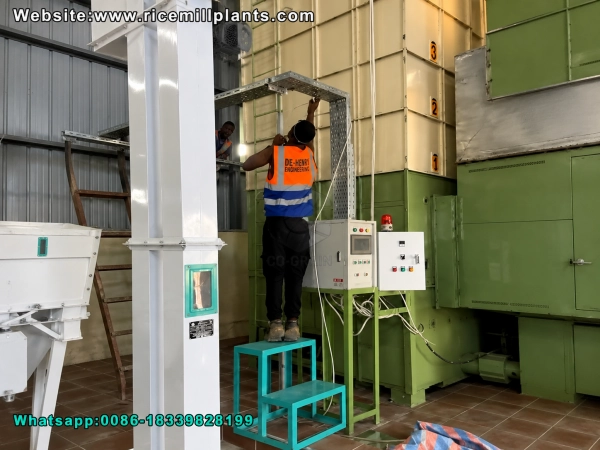
What Is a Grain Silo Aeration and Monitoring System?
A grain silo aeration and condition-monitoring system combines airflow equipment with instruments that help operators observe stored-grain conditions. Aeration fans move ambient or conditioned air through floor ducts or channels, while temperature cables, level instruments and alarms provide information for storage management.
The system does not guarantee grain quality. Safe storage also depends on grain moisture, cleanliness, temperature at filling, climate, storage duration, sampling, pest management and operator response.
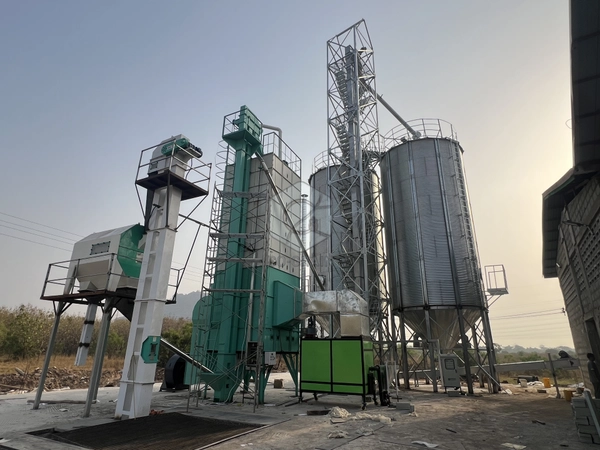
Position in the Storage Process
Process Flow: Drying and Cooling > Moisture Verification > Silo Filling > Temperature and Level Monitoring > Planned Aeration > Storage Inspection > Discharge
For wet-grain buffer silos, ventilation and monitoring may support short-term holding, but they do not replace timely drying.
Aeration System Functions
Distribute Air Through the Grain Mass
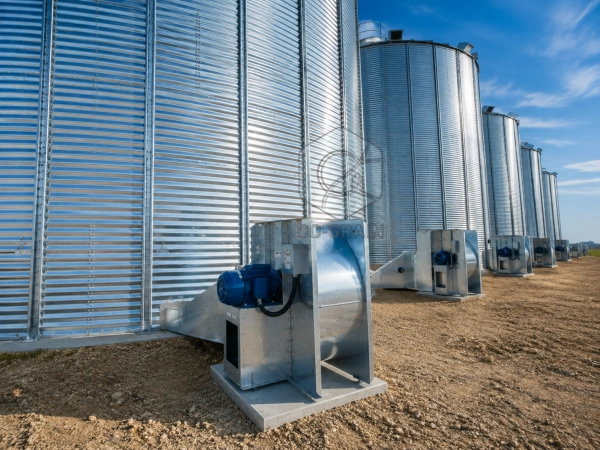
Fans supply air to floor channels, ducts or perforated panels. The air passes through the stored grain and exits through roof vents or other confirmed outlets.
Manage Grain Temperature
Operators use suitable ambient conditions to cool or equalize stored grain. Actual cooling time and uniformity depend on airflow, static pressure, grain depth and climate.
Reduce Localized Temperature Differences
Planned aeration can help reduce temperature gradients that contribute to moisture migration. It cannot correct severely wet or spoiled grain.
Support Seasonal Storage Management
The operating plan may use temperature trends and weather conditions to schedule fan operation. Intelligent control should be offered only when the required sensors, software and logic are confirmed.
Grain Temperature Monitoring
Temperature cables or selected probes measure temperature at defined vertical and horizontal positions. The system can display current values, trends and high-temperature alarms.
Sensor readings represent their locations, not every kernel in the silo. Operators should compare trends, inspect abnormal zones and continue representative sampling.
Silo Level Measurement
Possible functions include:
- High-level alarm to help prevent overfilling
- Low-level indication for discharge planning
- Continuous-level measurement where required
- Display of approximate filling condition
- Interface with silo-filling route controls
Level measurement should not be marketed as exact inventory weight unless the measurement and calibration method support that claim.
Optional Condition Signals
Depending on the project, the system may include fan status, duct pressure, ambient temperature and humidity, roof-vent status, grain-moisture sampling records and aeration runtime.
Moisture sensing inside a large grain mass requires careful method selection. Any online value should be checked against representative samples.
Main Components
- Aeration fans and inlet guards
- Floor ducts, channels or perforated aeration floor
- Air-distribution connections and dampers
- Roof vents or exhaust provisions
- Grain-temperature cables and junction boxes
- High-level and selected continuous-level instruments
- Local control panel, PLC or monitoring interface
- Alarm display and optional historical records
- Electrical and communication cables within scope
- Access provisions for inspection and maintenance
Design Information Required
- Grain type, bulk density and storage moisture
- Silo type, diameter, grain depth and capacity
- Storage period and seasonal climate
- Target aeration purpose and airflow basis
- Duct or floor configuration
- Fan location, static pressure and power supply
- Number and position of temperature cables
- Required level functions and accuracy expectation
- Local control or central monitoring requirement
- Alarm, data history and communication requirements
- Roof venting and weather-protection conditions
- Installation, calibration and commissioning scope
Control Boundary with Conveying Equipment
Silo monitoring focuses on grain temperature, level, aeration and storage condition. Conveyor monitoring focuses on speed, misalignment, blockage, motor load and route status.
The two control systems may exchange high-level, destination-available and filling-status signals, but their functions should remain clearly identified in the control specification.
Operation and Maintenance
Operators should inspect fan rotation, guards, dampers, ducts, perforated floors, vents, cables, sensors and alarm communication. Ducts and floor openings must be kept free of grain buildup and obstruction.
Temperature trends require interpretation. A rising temperature should trigger confirmation, sampling and an approved response-not automatic assumptions.
FAQ
Does silo aeration dry grain?
Its primary role is temperature and condition management. Moisture change depends on air conditions and should not replace a properly selected grain dryer.
How many temperature cables are needed?
Quantity and location depend on silo diameter, grain depth, monitoring objective and project standard.
Can the system start fans automatically?
Yes, if the confirmed package includes suitable ambient and grain sensors, control logic, interlocks and manual override.
Is continuous level measurement accurate enough for inventory?
It can support inventory estimation, but grain surface shape, bulk density and instrument accuracy affect the result. Certified weight requires an appropriate weighing method.
Does temperature monitoring replace grain sampling?
No. Monitoring identifies trends at sensor locations. Sampling, inspection and moisture testing remain important.