What Is a Silo Filling and Distribution System?
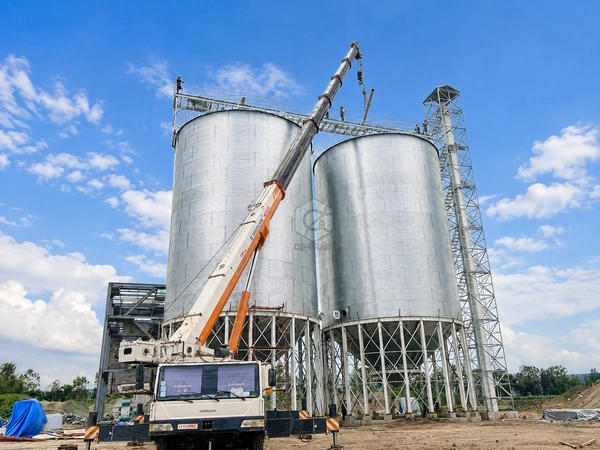
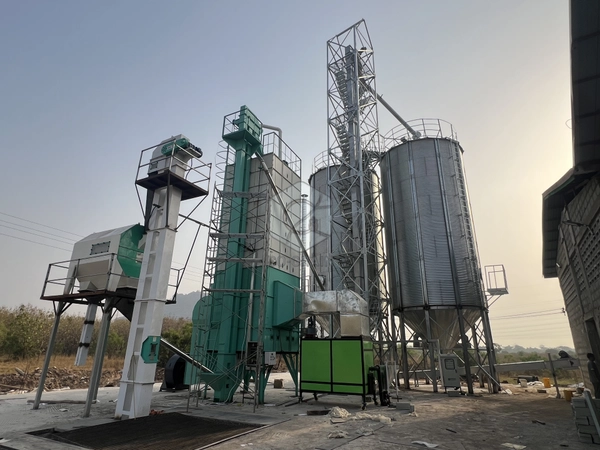
A silo filling and distribution system moves cleaned or dried grain to the top of a storage complex and directs it into the selected silo. It normally combines vertical lifting, horizontal silo-top conveying, distributors or route valves, inlet chutes, level monitoring and interlocked controls.
The system is designed around the number and arrangement of silos, grain types, filling capacity, allowable grain damage, route flexibility, roof loads and maintenance access. A silo-top conveyor is not a separate generic machine: it may be a drag chain, enclosed belt or other confirmed conveyor selected for the project.
Typical Process Flow
Process Flow: Cleaning / Drying > Bucket Elevator > Silo-Top Conveyor > Grain Distributor / Route Valve > Selected Silo Inlet
For larger complexes, the route may include multiple elevators, cross conveyors or reversible conveyors. Every route should be shown on the approved process diagram.
Main System Functions
Vertical Lifting to Silo Level
The bucket elevator raises grain from ground-level processing equipment to the required silo-top elevation. Lifting height, head discharge and outlet chute must match the roof conveyor.
Horizontal Silo-Top Transfer
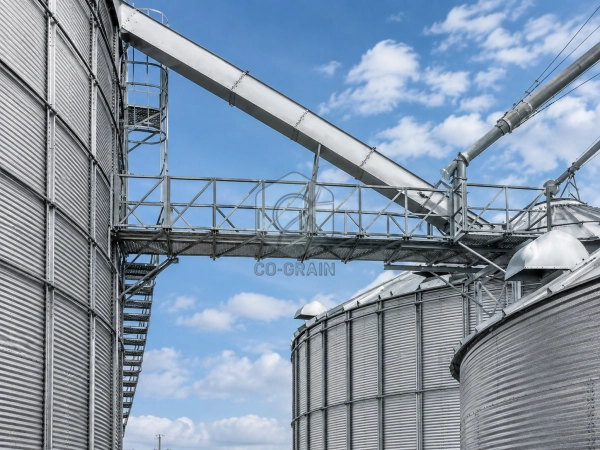
An enclosed chain or belt conveyor moves grain along the silo row. The conveyor structure, supports and access system must coordinate with silo roof loads and gallery design.
Multi-Silo Distribution
Distributors, diverter valves, gates or multiple outlets direct grain to the selected silo. Position feedback and control logic help prevent incorrect routing or cross-filling.
Controlled Silo Entry
Inlet chutes and grain spread arrangements should control drop height and direct grain into the silo. The effect on segregation, dust and grain damage should be reviewed.
Route Confirmation and Interlocking
The control system can verify valve position, destination availability, conveyor status and silo level before starting the route.
Typical Equipment Scope
- Grain feed conveyor from cleaning or drying
- Bucket elevator
- Silo-top drag chain, enclosed belt or confirmed conveyor
- Grain distributor, diverter or slide gates
- Inlet chutes and connection pieces
- Silo high-level and continuous-level instruments where specified
- Dust aspiration connections
- Roof supports, galleries, platforms and access systems within scope
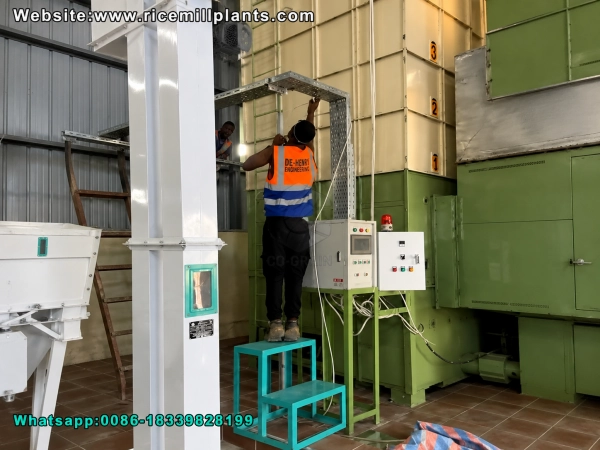
- Local panels, PLC and route-selection interface
- Speed, misalignment, blockage and bearing-temperature monitoring as confirmed
Conveyor Selection for Silo Tops
A drag chain conveyor is often selected for enclosed multi-outlet silo filling. An enclosed belt conveyor may be considered for longer routes or gentler transfer. An air cushion belt conveyor may suit selected larger and longer installations when its fan, chamber and enclosure are justified. The correct choice depends on the route and verified Co-Grain equipment range.
Automation, Safety and Grain Protection
The route should start from downstream to upstream only after the destination silo and valve position are confirmed. High-level alarms help prevent overfilling. Conveyor status and blockage protection should trigger a controlled stop that reduces grain accumulation.
Roof access, fall protection, guards, emergency stops, maintenance platforms and safe isolation are essential. Dust-control points should be located at elevator discharge, conveyor transfer and silo inlets as required.
Scope and Project Interfaces
The proposal must define silo supply, roof structures, galleries, access ladders, civil foundations, chutes, electrical cabling, controls, dust system and installation responsibility. Expansion provisions should be agreed during layout design rather than added after equipment manufacture.
FAQ
Can one filling system serve several silos?
Yes. A silo-top conveyor with multiple outlets or a grain distributor can route grain to several silos when valves and controls are correctly configured.
How is the destination silo selected?
The operator selects an approved route through the control system. Valve position, silo level and downstream availability can be checked before conveying starts.
Which conveyor is best for the silo roof?
Drag chain and enclosed belt conveyors are common options. Distance, capacity, number of outlets, grain protection, roof loads and maintenance determine the selection.
How is silo overfilling prevented?
High-level instruments, route interlocks, visual verification and operating procedures work together. A single level sensor should not be the only safeguard in a critical project.
Can the system be expanded later?
Future silos can be considered if the initial elevator capacity, conveyor route, supports, outlets and control system include defined expansion provisions.