What Is a Dry Grain Storage Silo?
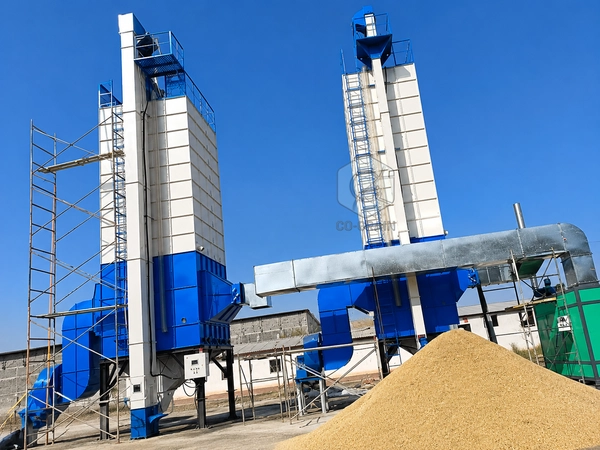
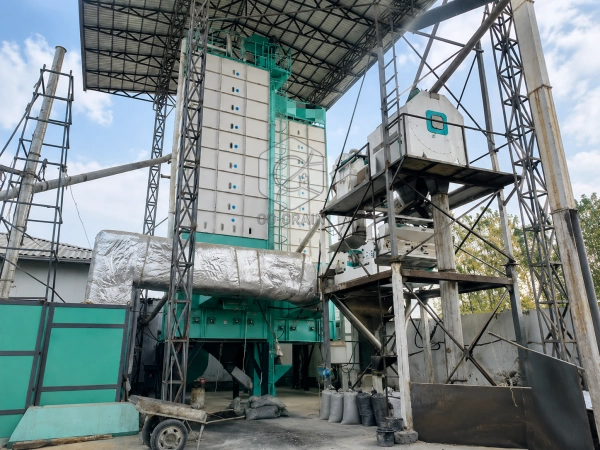
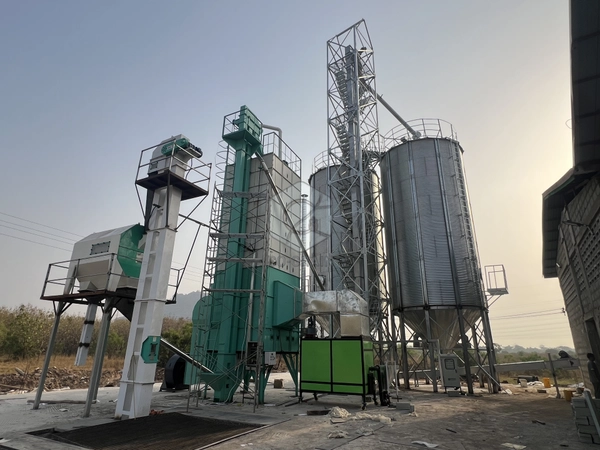
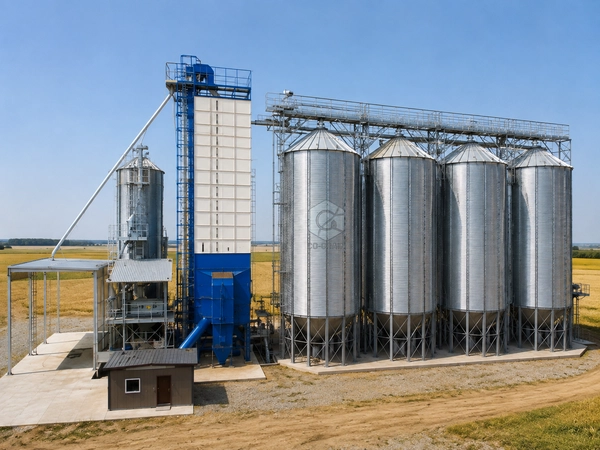
A dry grain storage silo receives grain after drying, required cooling and moisture verification. It provides short- or long-term storage with a selected combination of aeration, temperature monitoring, level measurement, access and discharge interfaces.
“Dry grain” must be defined for the crop, final use, climate and storage period. Grain should not enter storage solely because it has left the dryer. Moisture variation and grain temperature must be checked before filling the silo.
Position in the Drying and Storage Process
Process Flow: Grain Dryer > Cooling > Moisture and Temperature Verification > Dry Grain Storage Silo > Discharge to Processing or Bulk Loading
The silo page covers storage condition, vessel selection, grain management and structural interfaces. Silo filling, distribution, bottom conveying, sweep and truck loading are handled by the related conveying-system pages.
Main Functions
Store Grain After Controlled Drying
The silo protects dried grain from weather and supports planned storage before processing or dispatch.
Manage Grain Temperature
Aeration and temperature monitoring help operators identify and respond to temperature trends. They do not correct excessive moisture or severely uneven drying.
Monitor Available Storage Capacity
High-level alarms and selected continuous-level instruments support filling control and inventory planning. Level data should not be described as certified weight without a suitable measurement system.
Maintain Product Identity
Multiple silos can separate crops, grades, varieties or harvest lots according to the plant’s storage plan.
Connect with Filling and Discharge Systems
The roof inlet, outlet arrangement, supports and access points are coordinated with silo filling and discharge equipment without duplicating the conveying-system design.
Selecting the Silo Structure
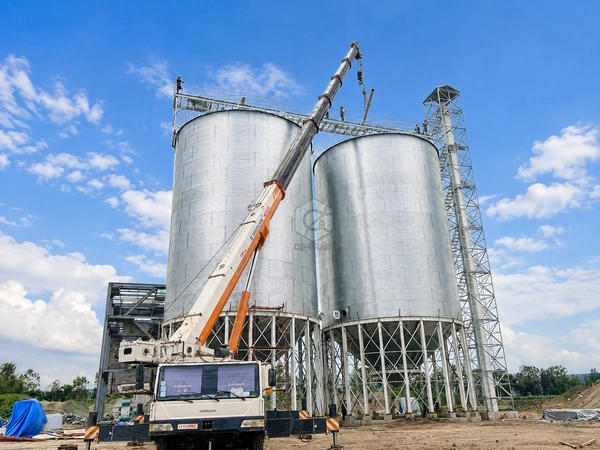
Flat Bottom Grain Silo
Commonly considered for larger capacity and longer storage. It requires a planned main-discharge and residual-cleanout method.
Hopper Bottom Grain Silo
Commonly considered for smaller or medium buffer capacity, frequent turnover and gravity discharge. Cone structure and support loads influence cost and layout.
The choice depends on capacity, turnover, grain, site, discharge requirement and future expansion-not on a single capacity threshold.
Storage System Components
- Flat-bottom or hopper-bottom steel silo
- Roof inlet and venting
- Aeration floor, ducts and fans where required
- Grain-temperature monitoring
- High-level and selected continuous-level measurement
- Fumigation connections where included
- Access doors, ladders, platforms and roof safety components
- Inlet and outlet interfaces
- Sampling and inspection provisions
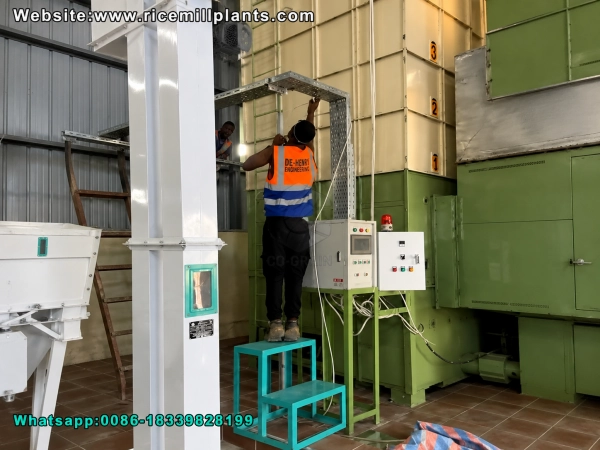
- Grain-condition alarms and control interface
Design Information Required
- Grain and intended final use
- Confirmed storage moisture range
- Grain temperature entering storage
- Required single-silo and total capacity
- Storage duration and turnover rate
- Bulk density and impurity condition
- Local temperature, humidity and rainfall
- Wind, snow, seismic and geotechnical conditions
- Aeration and monitoring objectives
- Fumigation and hygiene requirements
- Filling and discharge capacities
- Future expansion and project-delivery scope
Grain Management Before and During Storage
Operators should verify representative moisture and temperature before filling. If grain is too warm, contains wet pockets or has not been cleaned sufficiently, storage risk increases.
During storage, temperature trends, odors, insects, moisture, fan operation and visible conditions should be checked according to the site management plan. Automatic monitoring supports these checks but does not replace sampling and inspection.
Filling and Discharge Interfaces
Silo filling equipment may include elevators, silo-top conveyors, distributors and inlet chutes. Discharge equipment may include outlet gates, collecting conveyors, sweep systems and dispatch routes. These are linked from this page rather than repeated in detail.
The silo supplier and conveying-system designer must agree on loads, openings, supports, chute positions and maintenance access.
Safety and Maintenance
Routine inspection covers the silo shell, roof, bolts, seals, vents, doors, aeration equipment, cables, level instruments and structural supports. Corrosion, water entry and damaged seals require timely correction.
Silo entry is a confined-space and engulfment hazard. Filling and discharge equipment must be isolated under an approved procedure before entry.
FAQ
Can hot grain enter the storage silo directly from the dryer?
Only when the approved process confirms an acceptable grain temperature. Cooling and verification are normally required before longer storage.
Which is better, a flat-bottom or hopper-bottom silo?
Flat-bottom silos commonly suit larger long-term storage. Hopper-bottom silos commonly suit faster turnover. The final selection depends on the project.
Does aeration dry the grain?
Aeration is primarily used to manage temperature and storage condition. Any moisture change depends on airflow and climate and should not replace the required drying process.
Are filling and discharge conveyors included?
They may be included in the project scope, but detailed conveying equipment is defined under the Silo Filling & Distribution and Silo Discharge & Sweep systems.
Can one silo store different grains at different times?
Yes, after confirming structural design, aeration, cleanout, cross-contamination and operating requirements for every intended grain.