What Is a Silo Discharge and Sweep System?
A silo discharge and sweep system removes stored grain through the main outlets, collects it beneath or beside the silo, and clears residual grain that does not leave by gravity. It connects storage with truck loading, processing or another conveying route.
Flat-bottom and hopper-bottom silos require different solutions. Hopper-bottom silos may discharge most grain by gravity, while flat-bottom silos normally require a sweep auger or other confirmed cleanout machine after the main gravity flow is complete.
Typical Process Flow
Process Flow: Silo Outlet > Flow-Control Gate > Bottom Collecting Conveyor > Bucket Elevator / Loading / Processing
For a flat-bottom silo:
Process Flow: Main Gravity Discharge > Residual Grain Remains > Sweep Equipment Starts Under Approved Procedure > Collecting Conveyor > Final Transfer
Main System Functions
Controlled Main Discharge
Center and intermediate outlets release grain in an approved sequence. Correct gate operation helps control conveyor loading and structural discharge conditions.
Grain Collection and Transfer
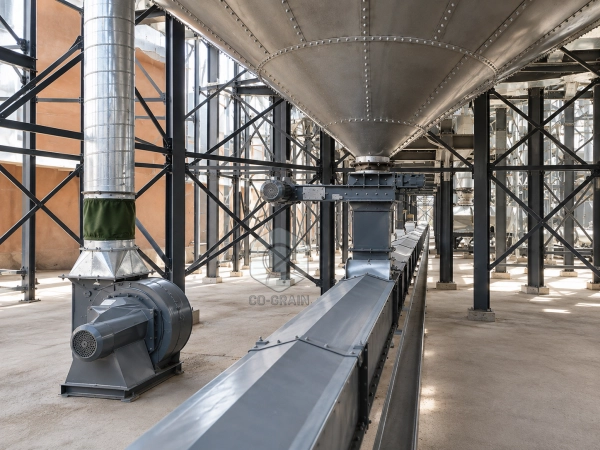
A drag chain, screw or belt conveyor collects grain from one or more outlets and transfers it to the next elevator, conveyor, scale or loading point.
Residual Grain Cleanout
After gravity discharge, a sweep auger or other confirmed cleanout machine moves remaining grain toward the collection point. Selection depends on silo diameter, floor, grain, residual depth and operating procedure.
Flow and Route Control
Gates, feeders and variable-speed drives may regulate discharge so downstream equipment is not overloaded.
Safe Operating Sequence
The control logic and written procedure must define when main outlets, intermediate outlets and sweep equipment can operate. Personnel-entry rules are critical.
Typical Equipment Scope
- Silo center and intermediate discharge outlets
- Manual, pneumatic or motorized slide gates
- Flow-control or feeder equipment where required
- Silo-bottom drag chain, screw or belt conveyor
- Sweep auger or confirmed cleanout equipment for flat-bottom silos
- Chutes, wear liners and connection pieces
- Conveyor speed, blockage and overload monitoring
- Local and remote controls
- Access, guards and safety signage within scope
- Connection to loading, weighing or processing equipment
Flat-Bottom and Hopper-Bottom Applications
For a hopper-bottom silo, the design focuses on gravity flow, outlet control and collection. For a flat-bottom silo, the main discharge pattern must be coordinated with silo structural rules, and residual cleanout must use approved equipment and procedures.
Residual grain can be minimized through proper silo floor design, suitable sweep equipment and correct operation. Actual cleanout performance varies with the silo configuration and material characteristics.
Automation and Safety
The system can interlock gates, conveyors and sweep equipment with downstream readiness. Blockage, overload and speed-loss alarms support controlled shutdown.
Silo entry is a high-risk activity. The design and operating manual must address energy isolation, engulfment risk, atmosphere, dust, rescue and local confined-space rules. Sweep equipment must never be operated around personnel unless the approved equipment and site procedure expressly allow it.
Maintenance Focus
Operators should inspect gates, outlet liners, conveyor chains or screws, bearings, sweep drive components, electrical cables, guards and accumulated grain. Wear areas around silo outlets and high-load conveyor sections require planned replacement.
FAQ
Does every silo require a sweep auger?
No. Hopper-bottom silos normally discharge by gravity. Flat-bottom silos usually require a sweep or another cleanout method for residual grain.
Can the sweep start while the silo is full?
Operation must follow the equipment and silo procedure. Sweep equipment is generally associated with the residual stage after approved main discharge, not unrestricted full-silo starting.
Which conveyor should be installed below the silo?
Drag chain conveyors are common for multi-outlet collection. Screw or belt conveyors may suit selected layouts. Capacity, tunnel space, grain protection and cleanout determine the choice.
How is discharge rate controlled?
Gate opening, feeders, conveyor speed and downstream availability can be coordinated through the control system.
Can one discharge line serve several silos?
Yes, a collecting conveyor can receive from several silos, but outlet sequencing and route interlocks must prevent overload or incorrect mixing.