What Is an Inclined Chain Conveyor?
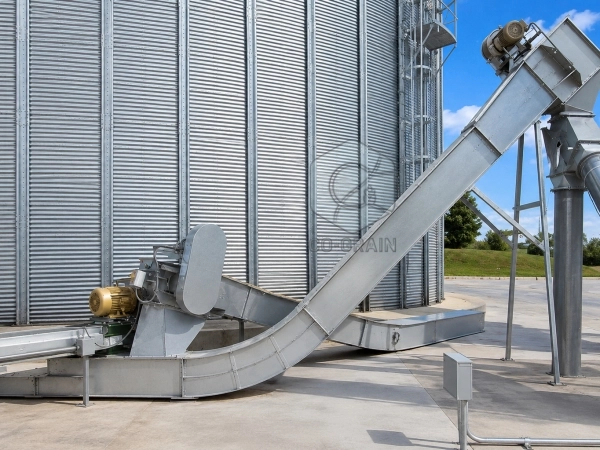
An inclined chain conveyor moves grain along an upward route using a chain and flights inside an enclosed casing. Depending on the confirmed structure, the route may be continuously inclined or combine a horizontal receiving section with an inclined discharge section.
It can be considered where a conventional horizontal conveyor and separate vertical elevator would create additional transfer points, or where the building layout requires moderate elevation in a limited footprint. It does not replace a bucket elevator in every high-lift application; the correct choice depends on inclination, height, capacity, grain condition and available space.
Typical Applications
- Receiving-pit discharge to an elevated pre-cleaner
- Grain transfer to a dryer feed bin
- Short elevation between conveyors at different levels
- Silo or warehouse routes with limited space
- Process-line feeding where a combined route reduces transfers
Typical route:
Process Flow: Grain Receiving > Horizontal Feed Section > Inclined Conveying Section > Cleaner / Dryer / Buffer Bin
How It Works
Grain enters the lower section and is captured by flights fixed to the moving chain. The flights carry the material through the inclined casing to the upper discharge. In a bent or combined arrangement, the chain passes through a transition section between horizontal and inclined parts.
The inclination changes material load on the flights and chain. As the angle increases, the design must control back-sliding, filling ratio, chain tension, guide wear and power demand. The transition geometry is especially important for stable movement and service life.
Main Product Advantages
Combined Transfer and Elevation
The conveyor can complete horizontal feeding and moderate lifting in one enclosed route when the selected structure permits it.
Fewer Transfer Points
Replacing two separate machines in a suitable layout may reduce chutes and transfer interfaces. The final equipment comparison should still consider maintenance, power and project risk.
Enclosed Structure
The casing protects the grain route and supports connection to dust-control points at feeding and discharge positions.
Compact Plant Layout
The conveyor can fit receiving buildings, dryer feed areas and process plants where height changes occur over a limited horizontal distance.
Integrated Controls
Speed, blockage and motor-load signals can be linked with upstream and downstream equipment for controlled start, stop and fault response.
Configuration Directions
- Straight inclined or combined horizontal-and-inclined route
- Confirmed inclination based on grain and duty
- Single inlet and discharge, with additional points only after review
- Selected chain, flight and guide materials
- Replaceable wear liners at transition and high-load areas
- Inspection and cleanout openings
- Indoor or weather-protected outdoor finish
- Fixed-speed or variable-speed drive
- PLC and safety-monitoring integration
When to Choose Another Conveyor
A bucket elevator is generally more suitable for major vertical lifting. A belt conveyor may be preferred for longer, gentler inclined transfer within its confirmed angle. A screw conveyor may suit short, compact feeding duties where grain damage and residual material are acceptable. Co-Grain compares these options using the complete route rather than selecting by a single machine price.
Selection Information Required
- Grain, bulk density, moisture and impurities
- Required capacity and operating schedule
- Total horizontal distance
- Required elevation difference
- Proposed inclination and transition geometry
- Inlet and outlet positions
- Available building space and support conditions
- Acceptable grain damage and residual-material requirement
- Full-load start or frequent-start requirement
- Dust, weather, corrosion and safety requirements
- Connected equipment and control scope
Safety and Maintenance
The chain, guides, transition section, flights, bearings and drive require planned inspection. Blockage, speed loss and overload monitoring can be included in the confirmed control package. Access covers must be guarded, and the equipment must be isolated before internal maintenance.
FAQ
What is the difference between an inclined chain conveyor and a bucket elevator?
An inclined chain conveyor moves grain along a sloped or combined route. A bucket elevator is designed primarily for vertical lifting. Required lift, route, capacity and grain protection determine the better option.
Can it use any inclination angle?
No. Capacity, back-sliding, chain load and wear change with angle. The maximum suitable inclination must be confirmed for the selected structure and grain.
Does one machine always save cost compared with two conveyors?
Not necessarily. Fewer transfer points may simplify the route, but equipment size, drive duty, wear and maintenance access must be compared for the complete project.
Can it feed a grain dryer?
It can be considered for dryer feeding when the capacity, elevation, grain moisture, buffer arrangement and inlet control are coordinated.
Which area requires the most maintenance attention?
The transition or bend, chain guides, flights, tensioning components and high-load casing areas normally require careful inspection.