What Is a Corn Dryer?
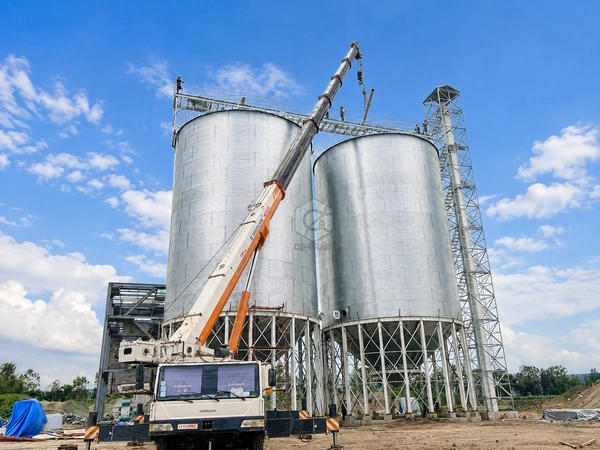
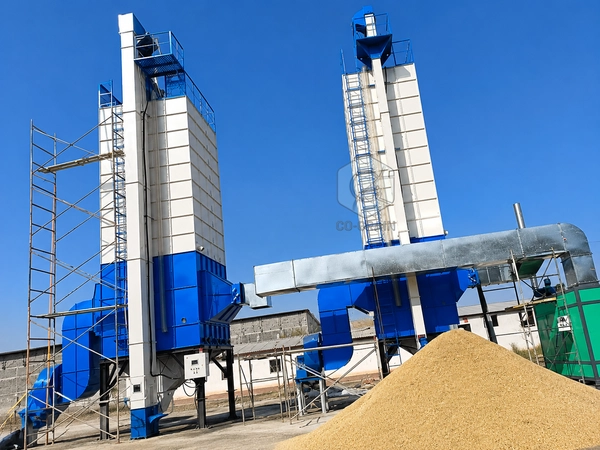
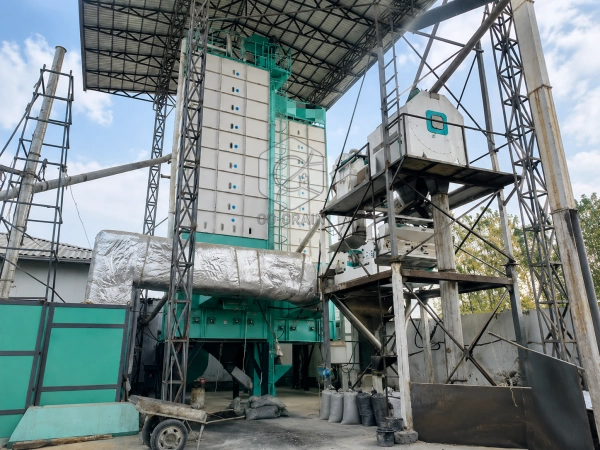
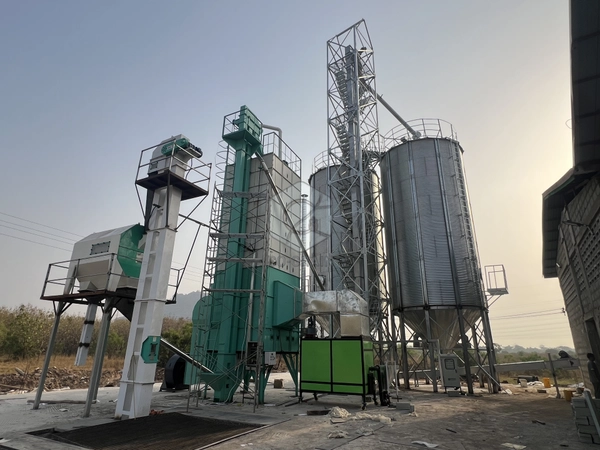
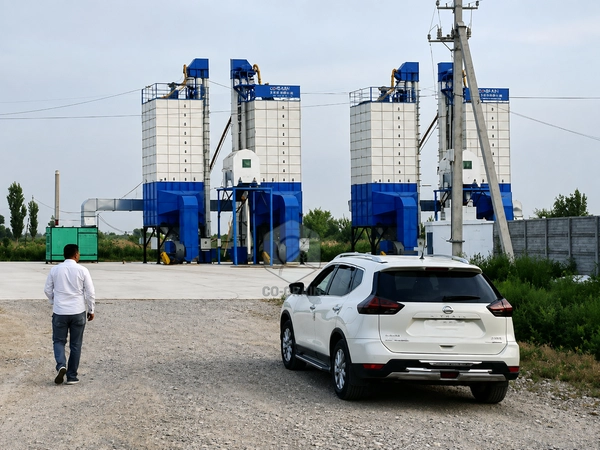
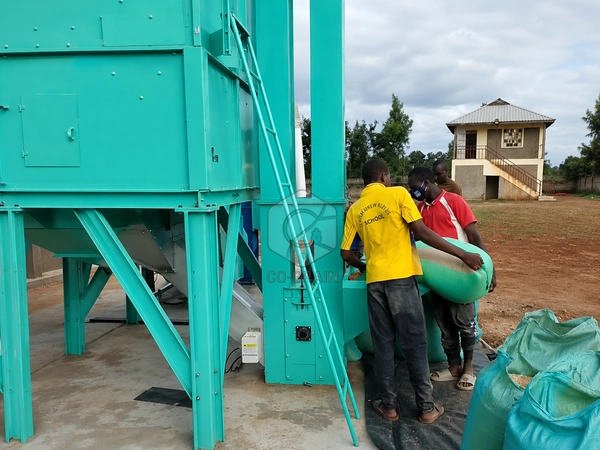
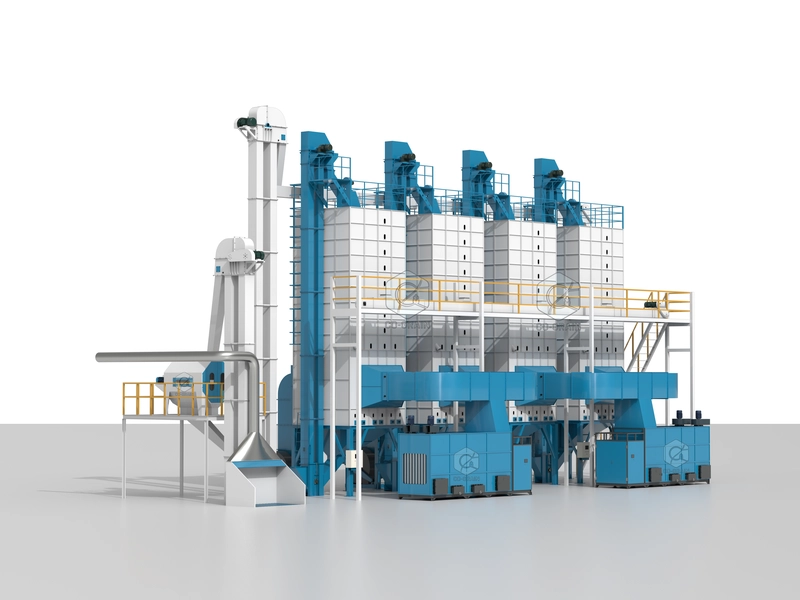
A corn dryer reduces moisture in harvested maize before silo storage or processing. Co-Grain engineers corn drying systems around peak harvest intake, incoming moisture, target storage moisture, daily operating hours, available fuel and silo capacity. Commercial corn projects often require high wet-grain intake, sufficient heat and airflow, stable continuous discharge, cooling and direct connection with storage silos.
Key Product Configuration
- Raw material: Shelled corn / maize
- Main challenge: High and variable harvest moisture
- Dryer options: Continuous-flow, mixed-flow, batch or circulating
- Capacity basis: Wet corn input at stated initial-to-target moisture
- Heating: Gas, LPG, diesel, biomass or another confirmed source
- Downstream: Cooling and grain silo storage
Complete Corn Drying Process
Truck Receiving > High-Capacity Pre-Cleaning > Wet Corn Bin > Corn Drying > Cooling > Moisture Verification > Dry Corn Silo
Match Intake with Dryer Throughput
Harvest deliveries are rarely perfectly uniform. The intake, pre-cleaner and wet-corn bin should absorb peak deliveries while maintaining a stable feed to the dryer.
Control Residence Time through Discharge
In a continuous dryer, discharge speed affects how long corn remains in the drying section. Moisture-control systems may adjust the unload rate using dry-grain moisture, wet-grain moisture and grain-temperature inputs.
Cool Corn before Long-Term Storage
Hot grain entering a cool silo can create condensation and moisture migration. The required cooling arrangement depends on dryer discharge conditions, ambient temperature and silo aeration strategy.
Dryer Options
Continuous-Flow Corn Dryer
Suitable for large, stable wet-corn intake and coordinated silo systems. The line must include correctly sized feeding and dry-grain conveying equipment.
Mixed-Flow Corn Dryer
Air enters through staggered ducts, supporting contact from different directions and comparatively uniform drying across the grain stream.
Batch or Circulating Corn Dryer
Suitable for smaller harvest volumes, multiple crops or operations that prefer separate batches.
Main Product Features
- Continuous or batch operating options
- Adjustable drying-air temperature and discharge rate
- Wet and dry moisture monitoring options
- Grain-temperature monitoring
- High-capacity feeding and discharge coordination
- Cooling-section options
- Multiple heat-source configurations
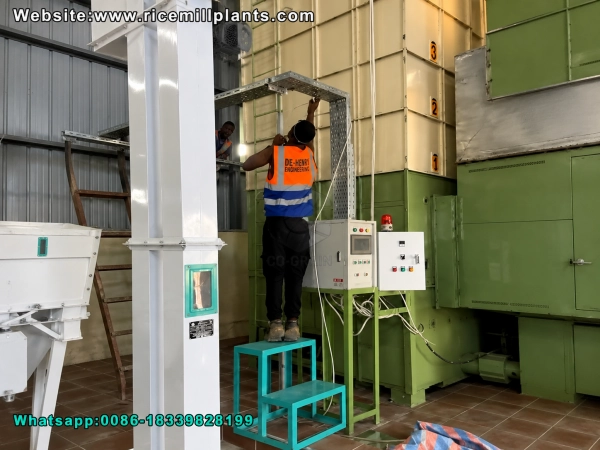
- PLC, touchscreen, alarm and historical-data options
- Integration with wet and dry corn silos
Harvest Peak and Storage Integration
Corn projects are often constrained by a short harvest window and large moisture variation. The dryer should be coordinated with truck intake, wet-grain buffering, pre-cleaning, heat-source duty, cooling, conveyors and silo filling. The design should also define how grain is handled when incoming moisture exceeds the normal basis or when the dryer stops.
- Harvest peak: Maximum wet tonnes per hour and per day
- Moisture range: Normal and highest expected incoming moisture
- Storage target: Required final moisture and discharge temperature
- Wet buffer: Capacity required to separate truck intake from dryer operation
- Silo connection: Conveying rate, cooling/aeration and destination silo sequence
Reliable Operation, Maintenance and Safety
- Pre-clean wet corn to control cob pieces, stalks, fines and restricted airflow.
- Monitor for stalled grain flow, plugged discharge, abnormal exhaust condition and local overheating.
- Confirm burner or furnace interlocks, airflow proving, temperature limits and emergency shutdown logic.
- Manage combustible dust at receiving, conveying, dryer and silo transfer points.
- Cool and verify corn condition before long-term storage; do not rely on dryer outlet moisture alone.
FAQ
How should corn dryer capacity be compared?
Compare wet-corn input under the same initial and target moisture, crop condition, ambient temperature and cooling mode. A capacity stated at five percentage points of moisture removal is not directly comparable with one stated at ten points.
Does higher drying temperature always increase profit?
Not necessarily. Higher temperature may increase throughput but can also increase thermal stress, cracking, over-drying and fuel loss. The correct setting balances capacity and grain condition.
Why is a wet-corn bin important?
It separates irregular truck deliveries from the stable feed required by the dryer and can reduce idle time during harvest peaks.
Can the dryer be monitored remotely?
Remote status, moisture, temperature, alarms and selected controls can be offered when included in the confirmed automation package.