What Is a Flat Bottom Grain Silo?
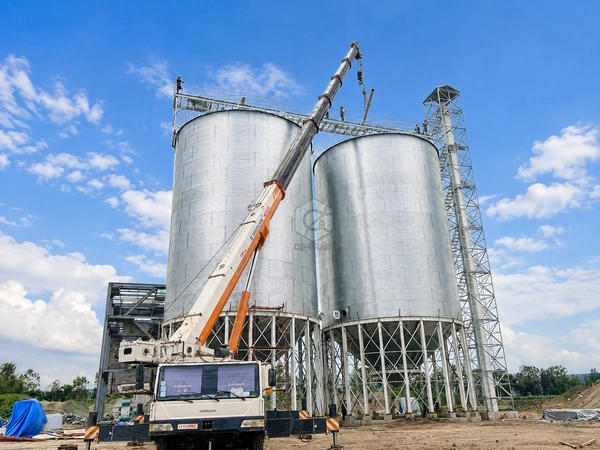
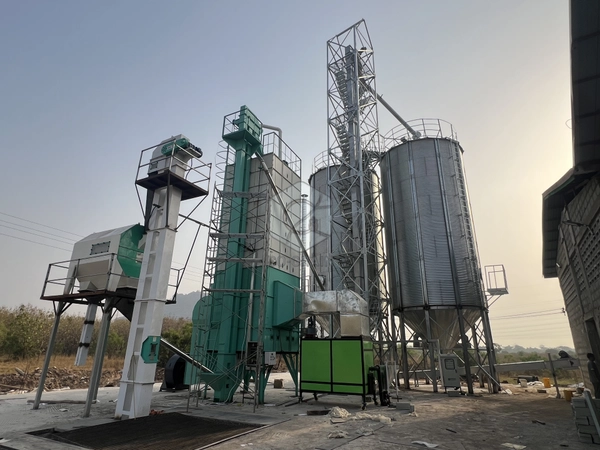
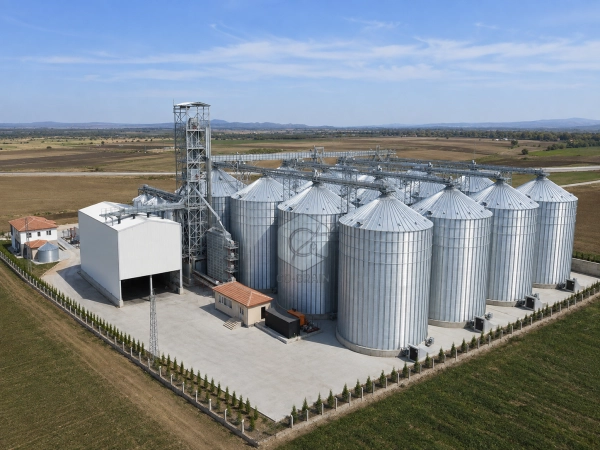
A flat bottom grain silo is a cylindrical steel storage structure installed on a reinforced foundation with a flat or near-flat floor. It is commonly selected for larger storage capacity and longer holding periods in commercial grain depots, drying plants, rice mills, flour mills and feed-material storage projects.
The silo is not only a shell. A complete storage unit includes the roof, stiffeners, foundation interfaces, aeration, temperature monitoring, level instruments, access, inlet, outlets and connection with filling and discharge systems.
Typical Applications
- Dry grain storage after a grain drying plant
- Commercial grain depots and reserve storage
- Paddy storage before rice milling
- Wheat storage before flour milling
- Corn storage for trade or feed processing
- Soybean and other confirmed oilseed storage
- Multi-silo storage projects requiring product separation
Main Structural Components
Corrugated Steel Silo Wall
Bolted wall sheets form the cylindrical shell. Sheet thickness, stiffeners, bolt pattern and coating are determined by silo geometry, stored material and design loads.
Silo Roof
The roof supports confirmed dead, maintenance and equipment-interface loads. Openings may include grain inlet, vents, inspection access and monitoring connections.
Stiffeners and Connections
External or selected structural stiffeners transfer loads to the foundation. Bolts, seals and connections must follow the approved assembly procedure.
Flat Floor and Foundation Interface
The reinforced concrete foundation and floor are designed from silo loads, soil conditions, frost or groundwater where applicable, and the selected discharge/aeration arrangement.
Access and Safety Components
External ladders, platforms, handrails, roof walkways, inspection hatches and access doors are configured according to the project and local regulations.
Storage-System Functions
Aeration
An aeration floor or duct arrangement distributes air through the stored grain according to the design airflow and static pressure.
Temperature Monitoring
Suspended temperature cables or another confirmed system monitor temperature trends at selected locations inside the grain mass.
Level Measurement
High-level alarms and selected continuous-level instruments support filling and inventory management.
Fumigation Interface
Sealing and circulation connections may be included where the project requires fumigation and local regulations permit it.
Filling and Discharge Boundary
Grain normally enters through a roof inlet connected to a bucket elevator, silo-top conveyor or distributor. Main discharge occurs through center and selected intermediate outlets. Residual grain may require a sweep system.
This product page defines openings and structural interfaces. Conveyor working principles, route controls, sweep operation and bulk loading are detailed in the related Conveying Equipment pages.
Design Information Required
- Grain type, bulk density and design capacity
- Single-silo and total project capacity
- Required storage period and turnover rate
- Silo diameter and height preferences
- Local wind, snow, seismic and temperature conditions
- Site altitude, corrosion and rainfall
- Geotechnical report and groundwater information
- Aeration and temperature-monitoring requirements
- Roof loads and equipment connections
- Outlet quantity and cleanout method
- Future expansion and installation scope
- Applicable local structural and safety requirements
Silo Selection and Expansion
A larger-diameter silo is not automatically the lowest-cost solution. Land area, foundation, roof conveying, discharge rate, aeration resistance and future expansion all affect the layout.
Multi-silo projects can separate grain types and provide operational flexibility. The first-phase conveying and control system should include confirmed provisions if future silos will be added.
Structural Safety and Maintenance
Inspection should cover wall sheets, stiffeners, bolts, seals, roof, ladders, platforms, doors, corrosion, foundation condition and water entry. Silo modifications, new roof equipment or additional openings require engineering review.
Personnel must not enter a loaded or partially loaded silo without an approved confined-space and engulfment-control procedure. Filling, discharge and sweep equipment must be isolated.
FAQ
When should a flat-bottom silo be selected?
It is commonly selected for larger capacity and longer storage where gravity discharge alone is not required to remove all grain.
How is residual grain removed?
After approved main gravity discharge, a selected sweep or cleanout system moves remaining grain toward the outlet. Details belong to the discharge-system design.
Is the concrete foundation included?
The contract must define this. Co-Grain may provide equipment loads and foundation-interface information, while local civil work may remain with the project owner or contractor.
Can the silo store paddy, corn and wheat?
It can be designed for multiple confirmed grains, but bulk density, aeration, cleanout and storage management must be checked for each material.
Can additional silos be installed later?
Yes, when the initial site layout, conveying capacity, electrical controls and foundation planning include agreed expansion provisions.