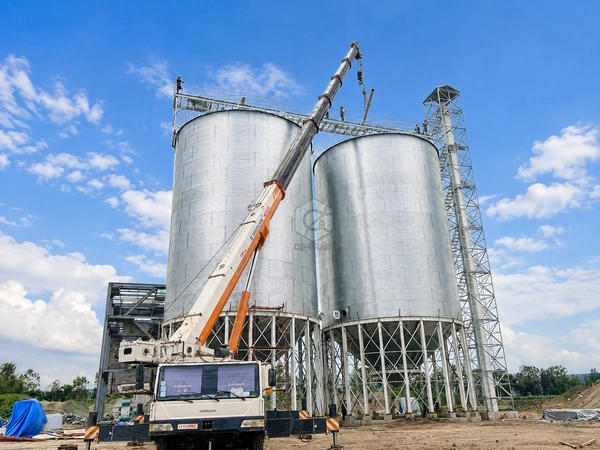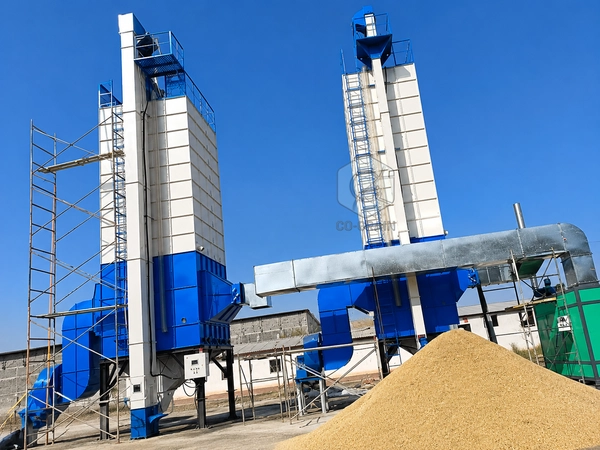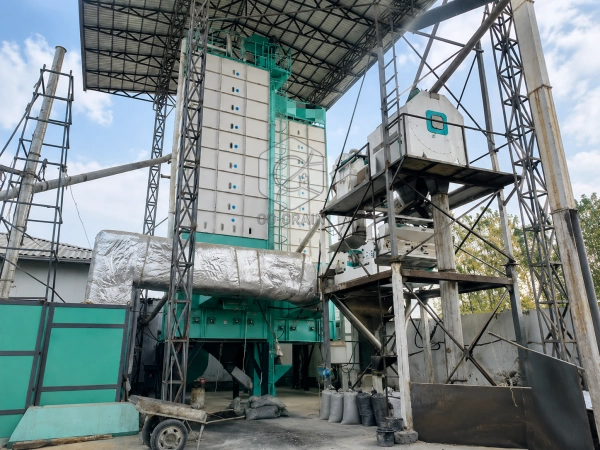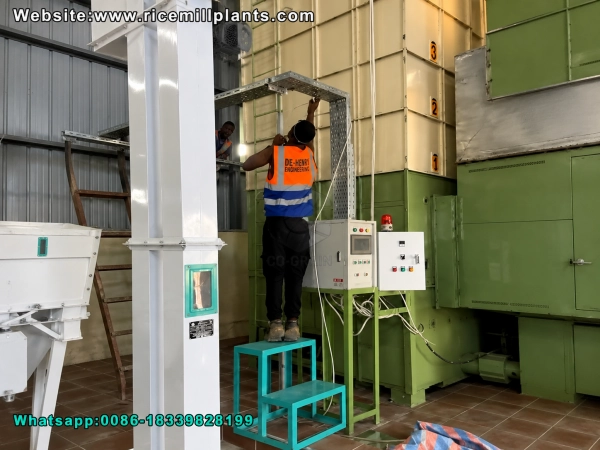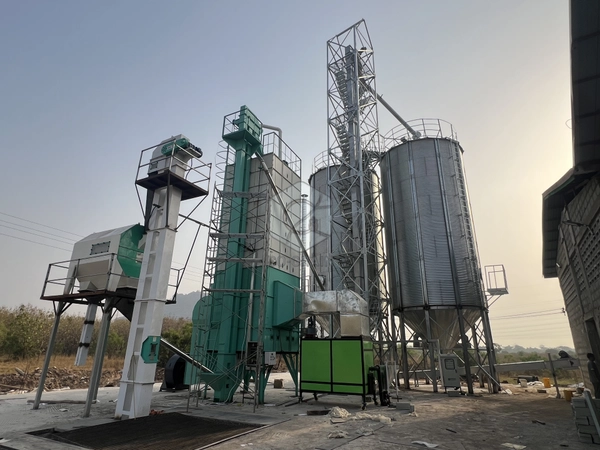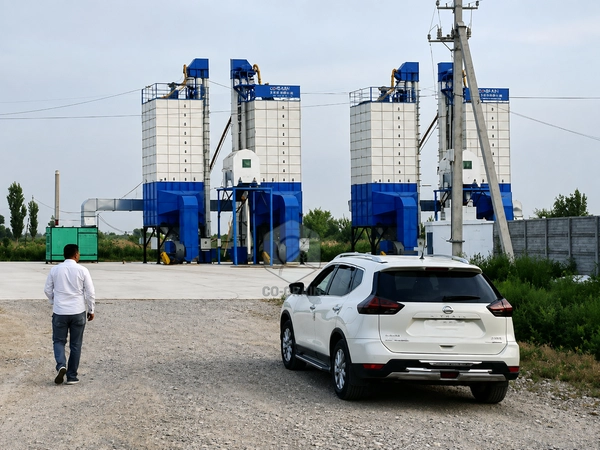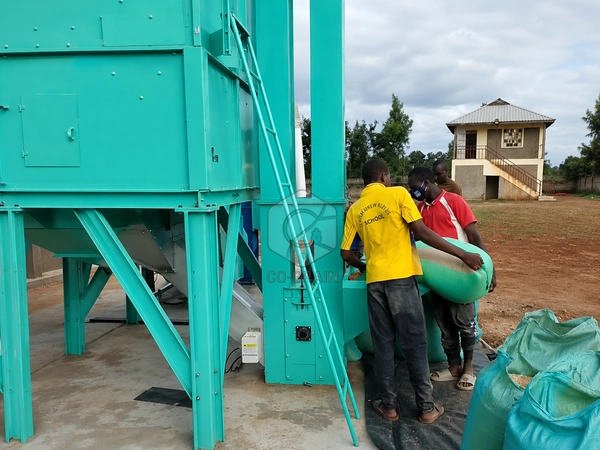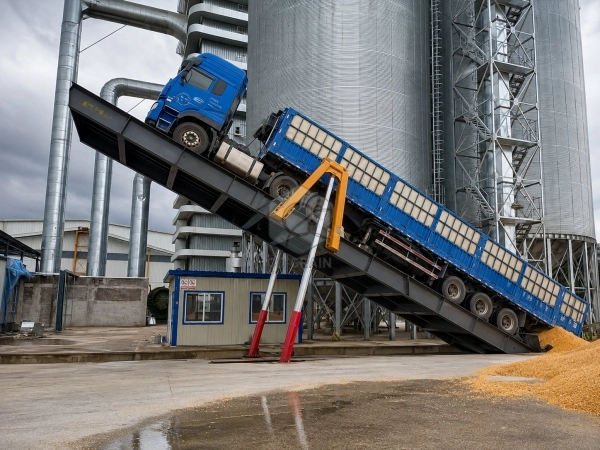
What Is a Grain Receiving and Dryer Feeding System?
A grain receiving and dryer feeding system connects vehicle unloading with pre-cleaning, wet-grain buffering and controlled delivery to the dryer. Its purpose is to handle variable harvest arrivals while maintaining stable grain flow to the drying equipment.
The system is engineered around the grain, peak receiving rate, daily wet-grain volume, impurity level, dryer type, moisture condition and site layout. It is not simply a receiving hopper plus an elevator: the intake rate, cleaning, buffer capacity and dryer feed rate must be balanced as one process.
Typical Process Flow
Process Flow: Truck Unloading > Grain Intake Hopper > Receiving Conveyor > Pre-Cleaning > Bucket Elevator > Wet-Grain Buffer > Controlled Dryer Feeding
Depending on the project, grain may pass directly from cleaning to the dryer or enter one or more wet-grain bins before drying.
Main System Functions
Fast and Controlled Grain Receiving
The unloading area is configured around vehicle type, pit arrangement, peak delivery pattern and downstream capacity. Gates or feeders help prevent sudden overload of conveyors and cleaners.
Removal of Major Impurities
Pre-cleaning removes stalks, clods, large foreign material and part of the dust before the grain enters elevators, buffers and dryers. This helps reduce blockage and uneven airflow downstream.
Wet-Grain Buffering
A buffer bin separates variable truck arrival from the dryer’s more stable operating cycle. Buffer volume should be selected from the receiving peak, dryer throughput and acceptable wet-grain holding time.
Controlled Dryer Feeding
Level signals, gates, feeders and conveyors coordinate the loading of the dryer. Stable feeding supports consistent residence time and reduces repeated stops.
Route Interlocking
The control system can prevent feeding when the cleaner, elevator, buffer or dryer is unavailable. Startup and shutdown sequences move from downstream to upstream and reverse as required by the approved logic.
Typical Equipment Scope
- Truck intake hopper or unloading pit
- Grid and controlled discharge gate
- Receiving belt, chain or screw conveyor
- Grain pre-cleaner
- Dust aspiration and collection interfaces
- Bucket elevator
- Wet-grain buffer bin and level sensors
- Dryer feed conveyor or distributor
- Chutes, valves, supports and platforms
- PLC, local panels and safety interlocks
The final equipment list depends on the project boundary.
Equipment Selection Logic
Bucket elevators are normally used for major vertical lifting. Belt or chain conveyors handle receiving and horizontal transfer according to distance, grain protection and enclosure needs. Screw conveyors may serve compact controlled feeding duties but should not be assumed suitable for every wet-grain route. The pre-cleaner must be sized for the receiving peak, not only the average dryer throughput.
Automation and Safety
The system may monitor grain level, conveyor speed, belt misalignment, blockage, motor load, bearing temperature and dryer readiness. Dust control, guards, emergency stops, safe access and equipment isolation must be designed around the actual layout.
Where wet grain is dusty or contains chaff, housekeeping and fire-risk controls are important around receiving, pre-cleaning and transfer points.
FAQ
How should receiving capacity compare with dryer capacity?
Receiving capacity is often higher because trucks arrive in peaks. The buffer system absorbs the difference so the dryer can operate more steadily.
Is a wet-grain buffer always required?
Not always, but it is recommended when vehicle unloading is intermittent or faster than dryer feeding. The allowable holding time depends on moisture and temperature.
Why is pre-cleaning placed before the dryer?
Large impurities and chaff can block conveying and dryer air passages, increase dust and affect stable grain flow.
Can the system feed several dryers?
Yes, when the distributor, buffer capacity, route control and individual dryer feeding are designed for multiple units.
What information is needed for a system proposal?
Provide the crop, initial moisture, peak and daily intake, dryer capacity, vehicle type, site drawing, power and project country.