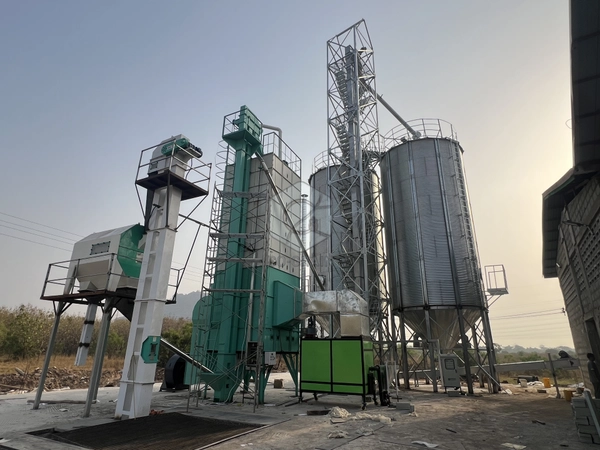
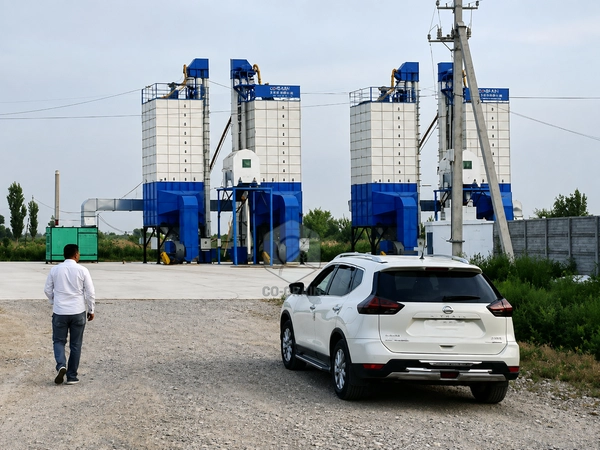
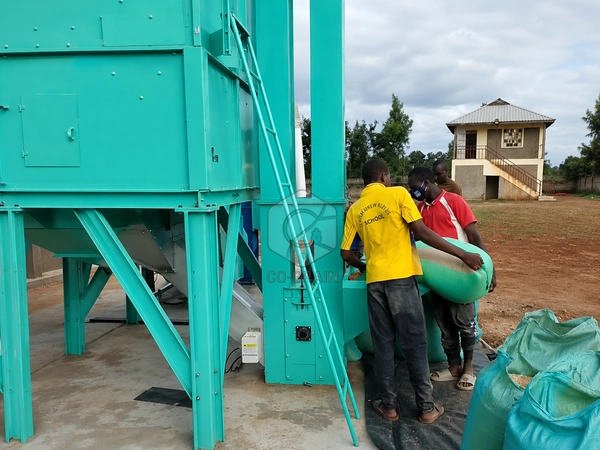
A grain dryer is a machine or integrated system used to reduce moisture in harvested grain before storage, transportation or further processing. It uses controlled airflow, heat and grain movement to remove moisture while managing drying uniformity, product quality and energy use.
Commercial grain drying is rarely an isolated step. The dryer normally works with receiving, pre-cleaning, wet-grain buffering, conveying, cooling and storage equipment. Selecting the right dryer therefore requires an understanding of the complete grain flow, not only the dryer model.
A grain dryer moves controlled drying air through wet grain. Heat supports evaporation, airflow removes the released moisture, and the discharge system manages the time each grain batch or grain layer remains in the drying zone.
Why Does Harvested Grain Need Drying?
Freshly harvested paddy, corn, wheat and other grains may contain more moisture than is suitable for their intended storage or processing conditions. If wet grain is held without adequate moisture and temperature management, the risk of heating, mold development, respiration losses, insect activity and quality deterioration can increase.
Drying brings the grain toward a condition appropriate for its next stage. The required final moisture is not the same for every project. It depends on the grain, storage duration, local climate, storage system, buyer specification and downstream process.
For example, grain intended for short-term holding may be managed differently from grain planned for longer storage. Paddy prepared for milling may also require a different drying strategy from seed that must retain germination performance.
How Does a Grain Dryer Work?
Grain drying is a controlled heat-and-mass-transfer process. Air is heated and moved through the grain. The drying air supplies energy for evaporation, moisture moves from inside the kernel toward its surface, and the airflow carries the resulting water vapor out of the drying section.
The basic sequence is:
Wet Grain > Controlled Heated Air > Moisture Migration and Evaporation > Humid-Air Exhaust > Dried Grain
Successful drying depends on the balance between temperature, airflow, drying time and grain movement. Raising the air temperature alone does not guarantee better results. Drying that is too aggressive or poorly distributed may contribute to uneven moisture, kernel stress, cracking, overdrying or unnecessary energy use.
The operating settings should consider:
- Grain type and variety
- Initial moisture and target moisture
- Required throughput and operating hours
- Ambient temperature and relative humidity
- Air temperature, airflow and air distribution
- Grain depth, residence time and discharge rate
- Heat-source performance and control response
- Required storage or processing quality
The Complete Commercial Grain Drying Process
A commercial drying plant normally includes several coordinated stages.
1. Grain Receiving
Fresh grain arrives from farms, collection points or temporary storage. A receiving pit or hopper accepts the grain and provides controlled feeding into the handling line. The receiving rate should be coordinated with cleaning, buffering and dryer capacity.
2. Pre-Cleaning
Before drying, the grain normally passes through suitable pre-cleaning equipment. The cleaner removes excessive stalks, leaves, clods, dust and other foreign material according to the incoming condition and selected screen or aspiration configuration.
Pre-cleaning helps stabilize grain flow and airflow, reduces unnecessary material entering the dryer and protects downstream elevators and conveyors.
3. Wet-Grain Buffering
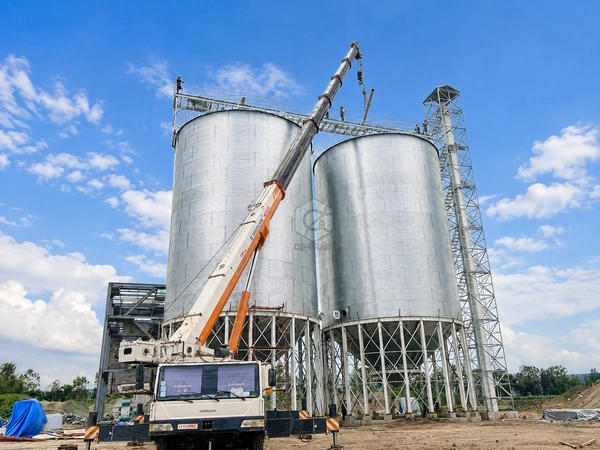
A wet-grain buffer silo or hopper balances irregular intake with the dryer operating schedule. This is useful during harvest periods when trucks may deliver grain faster than the dryer can immediately process it.
Buffer capacity should be selected according to receiving rate, dryer capacity, truck arrival pattern, operating hours, number of dryers and the acceptable holding time for wet grain.
4. Dryer Feeding and Distribution
Bucket elevators, chain conveyors, belt conveyors or other suitable handling equipment transfer cleaned wet grain to the dryer. The feed rate and distribution arrangement must match the dryer type so that grain enters the drying section evenly and at the required rate.
5. Drying
The heat source supplies thermal energy and the air system distributes drying air through the grain. Moisture evaporates from the kernels and leaves with the exhaust air. Sensors and controls help operators manage temperature, grain level, discharge and other confirmed process variables.
6. Tempering and Cooling
Some processes use tempering periods to allow moisture inside the kernel to redistribute before further drying or cooling. Depending on dryer design and project requirements, the dried grain may be cooled in the dryer or in separate equipment before storage.
Cooling is important because storage decisions should consider both grain moisture and grain temperature.
7. Discharge, Conveying and Storage
The discharge system regulates the removal of dried grain. Conveyors and bucket elevators then transfer the grain to a storage silo or the next processing section. Silo aeration and grain-condition monitoring may be integrated according to the storage plan.
The complete process can be summarized as:
Receiving > Pre-Cleaning > Wet-Grain Buffering > Drying > Cooling > Conveying > Storage or Processing
What Are the Main Components of a Grain Dryer?
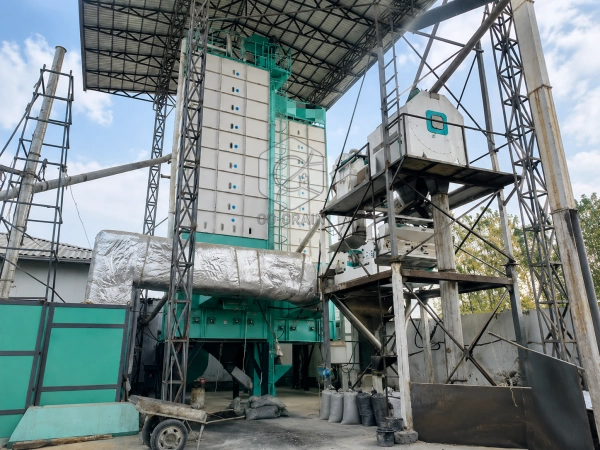
The exact configuration varies by dryer design, but a commercial grain dryer commonly includes the following functional sections.
| Component | Main Function |
| Grain feeding system | Controls the supply and distribution of wet grain entering the dryer. |
| Drying chamber | Holds or moves grain through the drying zone and supports contact with drying air. |
| Heat source | Supplies thermal energy through the confirmed fuel or heating arrangement. |
| Fans and hot-air system | Generate and deliver the required drying airflow. |
| Air-distribution section | Distributes air through the grain mass as evenly as the dryer design allows. |
| Exhaust section | Releases moisture-laden air from the drying process. |
| Discharge system | Controls grain flow, residence time and dried-grain removal. |
| Cooling section | Reduces grain temperature where cooling is included in the process. |
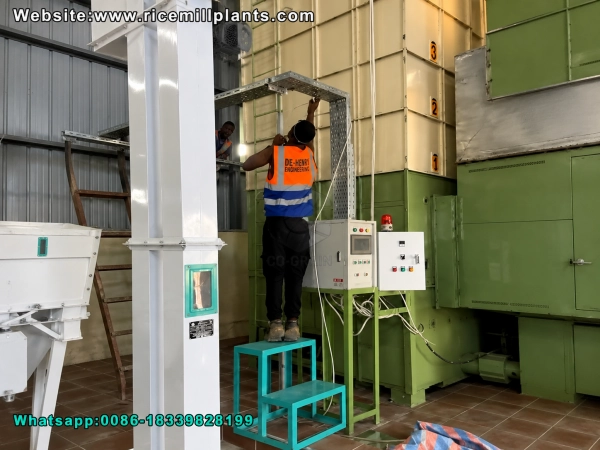
| Sensors and control system | Monitors and controls selected operating conditions and safety signals. |
The dryer is only one part of a complete commercial installation. A project may also require a receiving pit, grain cleaner, wet-grain buffer silo, bucket elevators, conveyors, storage silos, aeration, monitoring and electrical automation.
What Types of Grain Dryers Are Available?
Dryers can be classified by operating mode, airflow pattern, grain movement and heat-transfer arrangement. For commercial grain projects, one of the most important early decisions is whether to use batch or continuous-flow drying.
Batch Grain Dryer
A batch dryer processes a defined quantity of grain during each cycle:
Loading > Drying > Optional Tempering or Cooling > Discharging > Next Batch
Batch drying is useful when grain volume, variety, moisture or production schedules change. Individual batches can be managed separately, making this approach common in rice mills, farms, collection centers, seed applications and flexible small- to medium-scale projects.
Continuous-Flow Grain Dryer
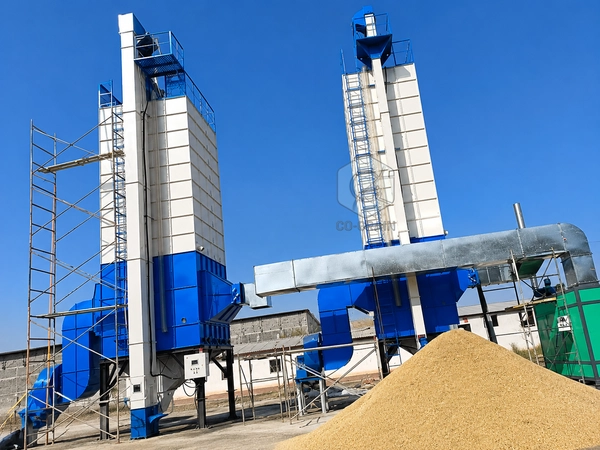
A continuous-flow dryer receives wet grain and discharges dried grain continuously after stable operation is established:
Continuous Feeding > Drying and Optional Cooling > Controlled Continuous Discharge
Continuous-flow dryers are generally considered for larger and more consistent grain intake, longer operating periods and integration with commercial storage or processing systems. Continuous dryers may use mixed-flow, cross-flow or other airflow arrangements depending on the equipment design.
Batch Dryer vs. Continuous-Flow Dryer
| Selection Factor | Batch Dryer | Continuous-Flow Dryer |
| Operating mode | Separate drying cycles | Continuous feeding and discharge |
| Flexibility | Well suited to changing batches and schedules | Best matched to a stable material flow |
| Batch separation | Easier to manage lots separately | Grain moves through a continuous process |
| Typical project scale | Flexible small- and medium-scale projects | Medium- and large-scale commercial projects |
| System integration | Can operate alone or in multiple units | Commonly integrated with larger receiving and storage systems |
| Automation | Available according to configuration | Well suited to centralized process control |
Neither type is automatically better. The suitable choice depends on the required capacity, moisture reduction, operating schedule, grain characteristics, project layout and downstream process.
What Grains Can Be Dried?
A properly configured grain drying system can be used for different grains and seeds, but the operating parameters and handling method must be matched to the material.
Paddy Rice
Paddy drying should manage temperature, airflow, drying rate, tempering and cooling with attention to kernel quality and downstream milling requirements. Excessively rapid or uneven moisture reduction may increase the risk of fissuring or variable milling performance.
Corn or Maize
Commercial corn drying often needs to handle high and variable harvest moisture. Stable grain flow, adequate heat and airflow, controlled discharge and effective cooling are important when the dryer connects directly to silo storage.
Wheat
Wheat may require drying when harvest moisture exceeds the condition suitable for the planned storage or processing period. The drying strategy should be coordinated with pre-cleaning, dust management, cooling and the intended flour-milling, storage or seed application.
Other Grains and Seeds
Depending on equipment design and confirmed project requirements, dryers may also be configured for barley, sorghum, soybeans, rapeseed, sunflower seed and other agricultural materials. Seed drying normally requires gentler temperature and airflow management to protect viability.
Why Is Moisture Control Important?
The objective is not simply to make grain as dry as possible. Overdrying reduces saleable weight and may waste energy, while insufficient or uneven drying can create storage risks.
The target condition should be established from:
- Grain type and end use
- Initial moisture range
- Planned storage duration
- Local temperature and humidity
- Silo aeration and monitoring capability
- Buyer or processor specification
- Milling, feed or seed-quality requirements
Moisture readings should be interpreted with representative sampling and suitable measurement practices. For storage projects, grain temperature and moisture uniformity are also important; one average reading may not describe the condition of the entire grain lot.
Why Is Pre-Cleaning Important Before Drying?
Wet grain from the field may contain straw, husks, leaves, dust, clods and other foreign material. Excessive impurities can interfere with grain movement, airflow and heat distribution. They also add unnecessary load to elevators, conveyors and the dryer.
A typical arrangement is:
Receiving > Pre-Cleaner > Wet-Grain Buffer > Grain Dryer
The cleaner should be selected according to the grain, impurity type, capacity and required separation result. Aspiration and dust-control connections should be considered where light material and dust are significant.
Why Use a Wet-Grain Buffer Silo?
Receiving and drying rates are rarely perfectly synchronized. During harvest, multiple trucks may arrive within a short period, while the dryer must operate through a controlled loading or continuous feeding schedule.
A wet-grain buffer provides temporary process storage between cleaning and drying. It can stabilize dryer feeding, reduce truck waiting and allow the receiving line to continue operating for a period when the dryer cannot accept grain immediately.
Wet grain should not be treated as stable stored grain. The allowable holding time depends on its moisture, temperature, cleanliness and local conditions, so buffer sizing and operating rules should be confirmed for the project.
How Is a Grain Dryer Connected to Storage Silos?
After drying and cooling, grain is normally transferred through a conveying and distribution system:
Grain Dryer > Conveyor > Bucket Elevator > Silo-Top Conveyor or Distributor > Selected Storage Silo
For multiple silos, route-control equipment directs grain to the required storage unit. The system may also include dry-grain buffering, weighing, aeration, temperature monitoring, level detection and PLC control.
The capacity of the post-dryer handling line should match the dryer discharge strategy. Undersized conveying or storage interfaces can interrupt dryer operation even when the dryer itself has adequate capacity.
How to Choose the Right Grain Dryer
Before requesting a quotation or system proposal, confirm the following project information.
1. Grain Type and End Use
Identify the grain and whether it will be stored, milled, sold, used as feed or retained as seed. Different materials and end uses require different temperature, airflow and handling strategies.
2. Required Capacity
State whether capacity means tons per batch, tons per hour or tons per day. Also provide expected peak intake, daily operating hours and seasonal volume. Nameplate loading capacity alone does not define daily throughput.
3. Initial and Target Moisture
Dryer output depends strongly on the amount of moisture that must be removed. Capacity claims should therefore be compared on the same grain, initial moisture, target moisture and operating conditions.
For wet-basis moisture values expressed as decimals, an approximate mass balance is:
Water removed = Wet grain mass x (Initial moisture – Final moisture) / (1 – Final moisture)
This calculation estimates the water mass removed; it does not determine the required dryer size by itself.
4. Heat Source
Possible project-specific heat sources may include biomass, natural gas, liquid fuel, steam or other available thermal-energy systems. Selection depends on local availability, operating cost, emissions requirements, required air temperature and dryer design.
5. Local Climate and Site Conditions
Ambient temperature, humidity, altitude, wind, electrical supply, fuel logistics and site space can influence equipment selection and actual drying performance.
6. Operating Schedule
Confirm daily working hours, harvest duration, truck arrival pattern, number of shifts and whether continuous operation is required. These factors affect dryer quantity, buffer capacity and standby planning.
7. Storage and Downstream Processing
Dryer capacity should be coordinated with wet-grain buffering, dry-grain storage, aeration and downstream rice milling, flour milling, feed processing or dispatch requirements.
8. Quality and Automation Requirements
Confirm whether the project requires automatic moisture control, batch records, centralized PLC control, remote monitoring, seed-quality protection or other specific operating functions.
Example: Matching a Paddy Dryer to a Rice Mill
Consider a rice mill with a planned paddy-processing rate. It may be tempting to select a dryer only by matching one nominal dryer capacity to the mill’s daily output. In practice, the drying section must also account for initial moisture, target moisture, cycle duration, batches per day, harvest intake peaks, buffer capacity, storage strategy and local weather.
A possible system may combine:
Paddy Receiving + Pre-Cleaning + Wet-Grain Buffering + Batch Paddy Drying + Paddy Storage + Rice Milling
The dryer, storage and milling sections should be sized as a coordinated process. A bottleneck in receiving, conveying, heating, cooling or storage can limit the output of the complete plant.
Grain Dryer or Complete Grain Drying System?
A grain dryer is the machine that performs moisture reduction. A grain drying system connects that machine with the equipment required to receive, prepare, move, heat, cool and store the grain.
A complete system may include:
- Grain receiving and controlled feeding
- Pre-cleaning and dust-management connections
- Wet-grain buffering
- Batch or continuous-flow drying
- Heating and hot-air generation
- Tempering and cooling
- Bucket elevators and conveyors
- Grain storage silos
- Aeration and grain-condition monitoring
- Electrical control and automation
For commercial facilities, system integration can be as important as the dryer itself. Each section should be matched to the required grain flow and operating sequence.
Frequently Asked Questions
What is a grain dryer used for?
A grain dryer reduces excess moisture in harvested grain so it can be prepared for its intended storage, transportation or processing conditions.
How does a grain dryer remove moisture?
Controlled drying air passes through the grain. Thermal energy supports evaporation, moisture moves from inside the kernels toward the surface, and airflow carries the water vapor out of the drying section.
What is the difference between a batch and continuous grain dryer?
A batch dryer processes a defined quantity during separate cycles. A continuous-flow dryer receives wet grain and discharges dried grain continuously after stable operation is established.
Can the same dryer be used for paddy, corn and wheat?
Some dryers can process several grains, but temperature, airflow, residence time, discharge, screen or duct configuration and control settings must be suitable for each material. Multi-grain capability should be confirmed with the supplier.
Does grain need to be cleaned before drying?
Pre-cleaning is generally recommended when incoming grain contains significant straw, dust or foreign material. Suitable cleaning can improve flow, reduce unnecessary load and support more stable drying conditions.
How is grain dryer capacity calculated?
Capacity selection depends on wet-grain intake, initial and target moisture, required water removal, drying time, operating hours, dryer type and process schedule. Capacity values should always be compared using the same stated conditions.
Can a grain dryer connect directly to storage silos?
Yes. Commercial systems commonly use conveyors, bucket elevators and silo-filling or distribution equipment to transfer cooled, dried grain to selected silos.
What information is needed before selecting a grain dryer?
Provide the grain type, end use, required capacity, initial and target moisture, project location, heat source, operating hours, storage requirement and available site layout.
How Co-Grain Approaches Grain Drying Projects
Co-Grain plans grain drying as part of the wider grain-handling and storage process. Depending on the confirmed project scope, the system can integrate receiving, pre-cleaning, wet-grain buffering, drying, heating, cooling, conveying, silo storage, monitoring, automation and downstream grain processing.
The objective is to match the equipment to the grain characteristics, moisture reduction, required capacity, local operating conditions and future plant workflow.