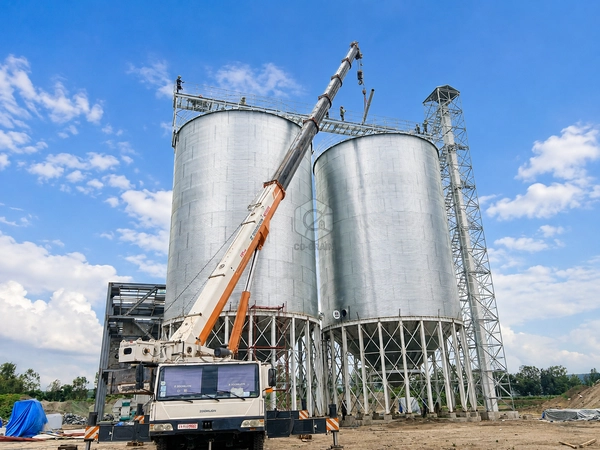
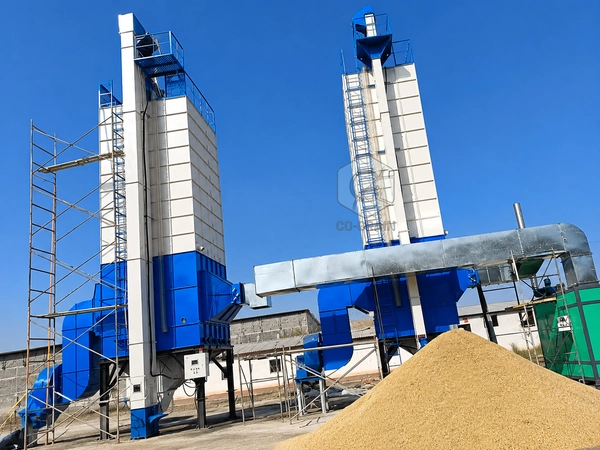
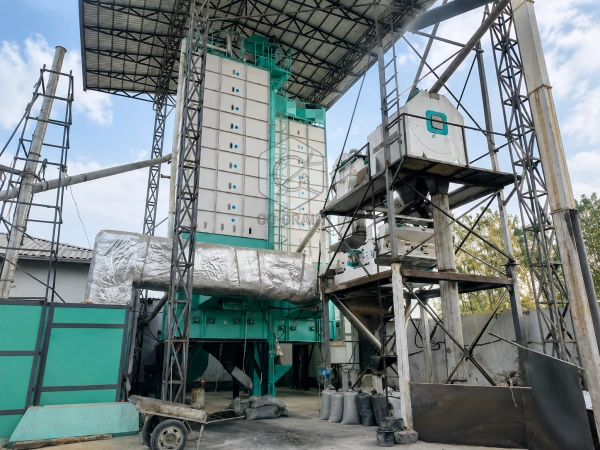
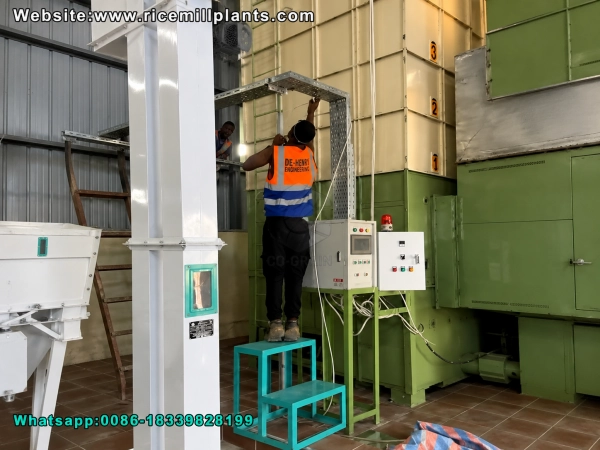
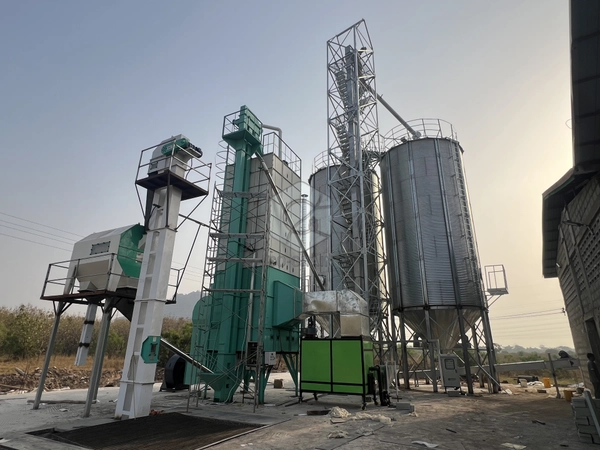
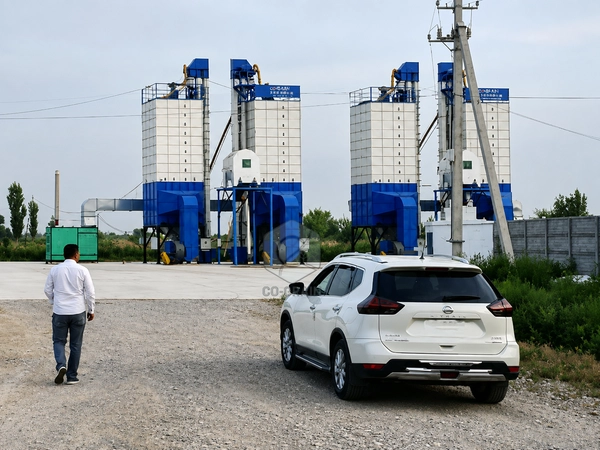
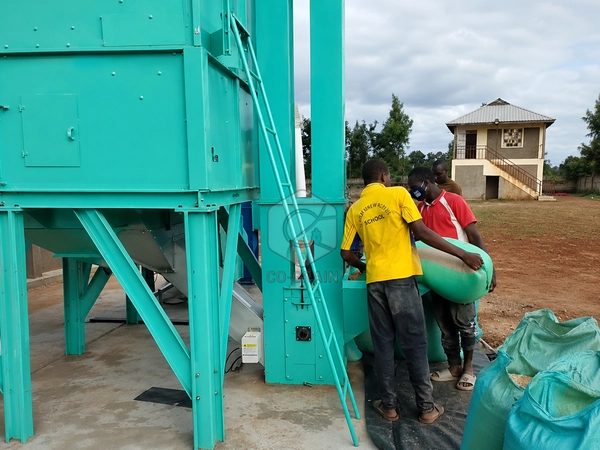
A complete grain drying and storage system connects grain receiving, pre-cleaning, wet grain buffering, drying, conveying and silo storage into one coordinated process. Instead of operating each machine independently, the system balances irregular harvest-season intake with controlled drying and safe downstream storage.
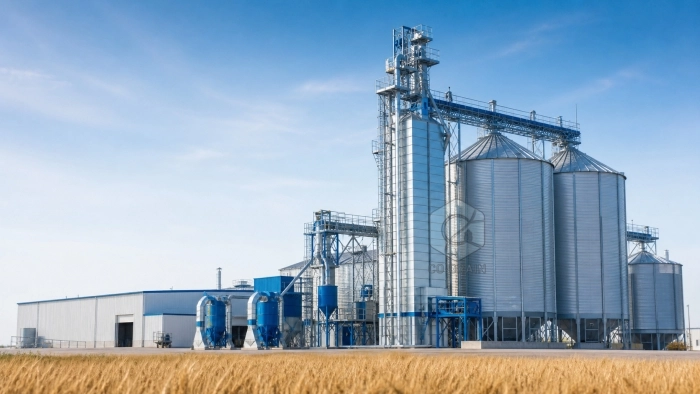
Complete Grain Drying and Storage Flow
Depending on the project, the system can also integrate aeration, temperature monitoring, silo discharge and automation, or connect directly with a rice mill, flour mill, feed mill or other processing plant.
What Is a Grain Drying and Storage System?
It is an integrated post-harvest handling system designed to receive wet grain, remove impurities, reduce moisture and transfer dried grain into suitable storage.
Receiving
Accepts grain from trucks, tractors, trailers or other bulk transport during harvest peaks.
Cleaning
Removes straw, dust, chaff and foreign material before drying.
Buffering
Separates irregular receiving from controlled dryer feeding.
Drying
Uses controlled airflow and heat to reduce moisture to the required condition.
Conveying
Moves wet and dry grain between process sections using elevators and conveyors.
Storage
Maintains grain condition with aeration, monitoring, discharge and route control.
How the Complete System Works
Wet grain is received and pre-cleaned. The cleaned grain enters a wet grain buffer silo, which balances irregular truck arrivals with the dryer’s controlled processing rate. Grain then enters a batch or continuous dryer, where airflow and thermal energy reduce moisture.
After drying, bucket elevators and conveyors transfer the grain to selected storage silos. Aeration and monitoring help manage grain condition until it is discharged for processing or shipment.
1. Grain Receiving
Freshly harvested grain may arrive by truck, tractor or farm trailer. A commercial plant normally uses a receiving pit or hopper, where feeding equipment transfers grain toward pre-cleaning.
The receiving system should be sized according to peak intake, not only average daily dryer capacity. Several trucks may arrive within one hour while the dryer processes grain continuously over many hours.
2. Grain Pre-Cleaning
Fresh grain can contain straw, leaves, stalks, chaff, dust, large impurities and other foreign material. These materials should normally be reduced before drying.
Cleaner options
- Rotary cleaner
- Vibrating cleaner
- Drum cleaner
- Aspiration system
Why pre-clean?
- More stable grain flow
- Better airflow through the grain
- Reduced unnecessary drying load
- Cleaner downstream storage
Preferred sequence
Receiving → Pre-Cleaning → Buffering → Drying
This is generally more reliable than sending freshly harvested grain directly into the dryer.
3. Wet Grain Buffer Silo
The Wet Grain Buffer Silo separates irregular receiving from controlled dryer feeding. Trucks may arrive unevenly, while the dryer operates according to a batch cycle or continuous throughput.
| Without a buffer | With a buffer |
|---|---|
| Truck unloading and dryer feeding must be synchronized closely. | Receiving can fill the buffer while the buffer feeds the dryer independently. |
| A receiving delay can interrupt dryer operation. | The buffer helps maintain dryer feeding and reduce start-stop operation. |
Buffer capacity should be calculated according to peak receiving, dryer capacity, number of dryers, truck arrival pattern, grain moisture, operating hours and maximum acceptable wet-grain holding time.
4. Conveying Before Drying
Bucket Elevator
Used for vertical grain lifting, such as receiving to cleaner or buffer silo to dryer inlet.
Drag Chain Conveyor
Used for enclosed horizontal or slightly inclined transfer, including receiving pits and shared buffer routes.
Belt Conveyor
Suitable for longer horizontal conveying where gentle handling or distance is important.
Screw Conveyor
Useful for appropriate short-distance feeding or selected hopper and silo discharge duties.
Equipment selection should consider:
5. Grain Drying
After pre-cleaning and buffering, wet grain enters the dryer. Controlled airflow and thermal energy reduce moisture according to grain type, initial moisture, target moisture, dryer design, ambient conditions, heat source and required final quality.
Batch Dryer
Loading → Drying → Cooling → Discharge
Suitable for paddy, variable intake, multiple grain varieties and small or medium plants.
Continuous Dryer
Provides continuous grain flow through controlled drying zones and is suitable for larger commercial intake and storage projects.
Dryer control
Feed rate, residence time, airflow, heat source and moisture target must work together.
6. Dry Grain Conveying and Storage
Grain Drying and Storage for Different Grains
Paddy
Receiving → Pre-Cleaning → Wet Paddy Buffer → Paddy Dryer → Paddy Storage → Rice Mill. Grain quality and downstream milling requirements should guide the drying design.
Corn / Maize
Commercial projects often emphasize high receiving capacity, continuous drying, large silo storage and automated conveying.
Wheat
Receiving → Cleaning → Drying when required → Storage → Flour Mill or Shipment. Drying depends on harvest moisture and planned storage conditions.
Example: 60 T/D Rice Mill Project
Raw material: paddy
Paddy dryer: 15 T/batch
Storage: 2 × 100 T silos
Rice mill: 60 T/D
Fresh Paddy → Pre-Cleaning → 15 T/Batch Drying → 2 × 100 T Paddy Storage → 60 T/D Rice Milling
Storage buffers separate dryer cycles from rice-mill production demand.
This illustrates that dryer capacity and rice-mill capacity do not need to match instantaneously when suitable storage buffers are available.
Automation and Monitoring
A centralized control system may monitor or control:
- Grain receiving
- Conveyor and Bucket Elevator status
- Buffer silo level
- Dryer operation
- Grain temperature and moisture information
- Silo selection and level
- Alarm conditions
The objective is to coordinate material flow between machines, rather than automate each machine in isolation.
How to Design the Plant
Common Design Mistakes
- Starting with the dryer model instead of the complete grain flow
- Ignoring harvest-season receiving peaks
- Providing no wet grain buffer
- Undersizing the pre-cleaner or conveying equipment
- Providing insufficient dry storage
- Ignoring silo aeration and temperature monitoring
- Ignoring silo discharge requirements
- Selecting the heat source too late
- Designing each machine independently
Frequently Asked Questions
What equipment is needed for a complete grain drying system?
A commercial system may include receiving equipment, pre-cleaner, Bucket Elevators, wet grain buffer silo, grain dryer, conveyors, storage silos, aeration, monitoring and automation.
Why should grain be cleaned before drying?
Pre-cleaning removes straw, dust and other impurities that can interfere with grain flow and drying conditions.
Does every grain drying plant need a wet grain buffer silo?
Not every project requires one, but it is particularly useful when receiving is irregular or faster than dryer throughput.
Can a grain dryer feed directly into storage silos?
Yes. Dried grain can be transferred through conveyors and Bucket Elevators into a silo filling and distribution system.
What is the difference between a dryer and silo aeration?
A dryer removes substantial moisture. Silo aeration primarily manages grain temperature and storage conditions.
Can one Bucket Elevator fill multiple silos?
Yes. One elevator can feed a silo-top conveyor that distributes grain to several silos.
Should receiving capacity equal dryer capacity?
No. Receiving may be higher because truck arrivals are concentrated. Wet grain buffering balances the difference.
Can the system connect to a rice mill?
Yes. A typical paddy project can use Receiving → Cleaning → Drying → Storage → Rice Milling.
Key Takeaway
A complete grain drying and storage project should be designed as one connected material-flow system:
The objective is to balance receiving capacity, dryer capacity, conveying capacity, storage capacity, grain quality, aeration, monitoring, discharge and automation from wet-grain intake to safe storage.
Co-Grain can integrate receiving, pre-cleaning, buffering, drying, elevators, conveyors, silo filling, storage, aeration, discharge and PLC control into a complete grain-handling solution.
Discuss Your Project
Need a Complete Grain Drying & Storage Solution?
Co-Grain provides turnkey grain drying plants, grain storage silos, cleaning, conveying, and automation systems for modern grain handling facilities. Our equipment includes batch and continuous grain dryers, paddy dryers, grain cleaners, bucket elevators, chain conveyors, and belt conveyors.
From engineering design and equipment manufacturing to installation and commissioning, we deliver reliable, customized solutions for paddy rice, maize, wheat, barley, sorghum, and other grains.
Talk to Co-Grain
Planning a new project or upgrading an existing facility? Contact us for a customized solution and free quotation.
Henan Co-Grain Machinery Engineering Co., Ltd.
Email: info@ricemillplants.com
WhatsApp: 0086 18339828199