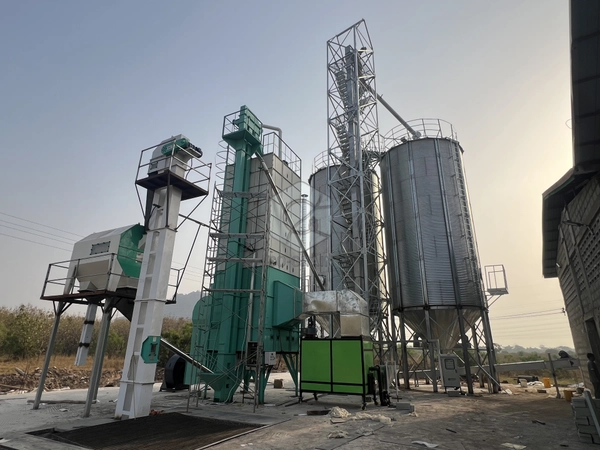
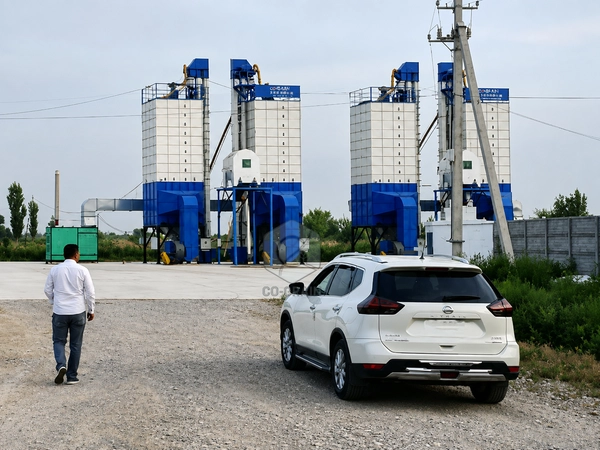
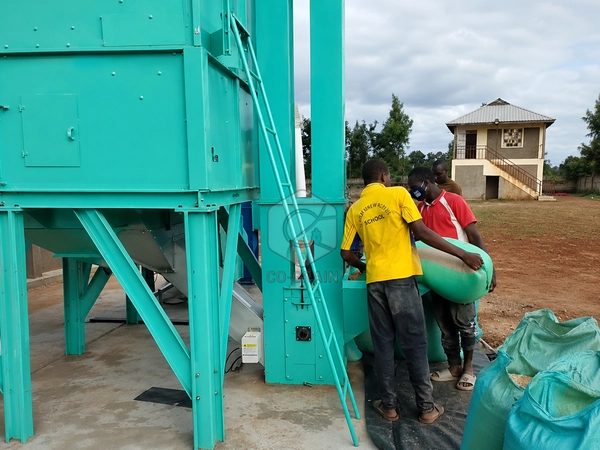
Discover why wet grain buffer silos are essential in modern grain drying systems, providing temporary storage for high-moisture paddy rice, corn, wheat, and other grains before drying. Learn how they balance grain receiving capacity and dryer throughput, ensure a steady grain supply, and improve operational efficiency. Explore key selection factors, including silo capacity, grain moisture, storage duration, ventilation, and discharge systems, and how wet grain buffer silos integrate with grain cleaners, bucket elevators, grain dryers, and storage silos to protect grain quality and support reliable operation.
A wet grain buffer silo provides temporary holding between grain receiving and drying. It separates irregular truck arrivals from the controlled operating rate of the grain dryer, helping the plant receive faster, feed steadily and operate continuously during harvest peaks.
What Is a Wet Grain Buffer Silo?
A wet grain buffer silo is a temporary grain holding bin positioned before the dryer. It receives wet, pre-cleaned grain and holds it for a limited period before controlled discharge into the drying system.
It is process storage, not a replacement for drying or long-term dry-grain storage. Typical materials include paddy, corn, wheat, barley, sorghum and other technically confirmed grains.
Why Is a Buffer Silo Used Before Drying?
Truck arrivals are irregular, while a dryer normally operates at a more controlled rate. A buffer separates these two conditions so receiving and drying can work more independently.
With a buffer: Truck receiving → Buffer storage → Controlled dryer feeding
| Plant condition | What the buffer provides |
|---|---|
| Peak receiving rate is higher than dryer rate | Temporary capacity to absorb the difference |
| Several trucks arrive together | Fewer unloading interruptions and shorter truck waiting time |
| Dryer needs stable flow | Reserve grain for controlled feeding |
| Harvest-season operation is variable | Better coordination between receiving, drying and conveying |
For example, a receiving system may handle 40 T/H during a peak while the dryer processes 10 T/H. The buffer does not increase dryer capacity; it allows the plant to receive faster and dry more steadily.
Typical Process Layout
Pre-cleaning should normally occur before the buffer. Straw, leaves, chaff, dust, clods and other impurities can reduce flowability, cause bridging and make cleanout more difficult if they enter the bin directly.
One buffer and one dryer
A compact arrangement for a single drying line with controlled discharge to one dryer.
Several buffers and dryers
Larger projects may use multiple bins and dryers for batch separation, route flexibility and scheduling.
Wet Grain Buffer Silo Design
Wet grain behaves differently from dry grain. Depending on moisture and impurities, it may have reduced flowability, more adhesion, a greater tendency to bridge and higher biological activity during holding.
Hopper-bottom or flat-bottom?
A hopper-bottom silo is often worth evaluating because its sloped floor supports gravity discharge and frequent turnover.
- Cylindrical silo body
- Conical hopper and central outlet
- Slide gate, feeder or conveyor
- Level monitoring and access for inspection
Flat-bottom silos may be suitable for larger capacities, but short-term wet buffering should prioritize fast filling, controlled holding, reliable discharge and frequent turnover. Final selection depends on capacity, grain condition, structural loads and discharge rate.
Controlled Discharge to the Dryer
Discharge equipment can include a slide gate, screw feeder, chain conveyor, belt conveyor or another confirmed metering device.
The discharge rate must match dryer capacity. Feeding too quickly can cause overloading, unstable residence time, uneven drying and blockage. Feeding too slowly can starve the dryer and reduce throughput.
How to Select Buffer Silo Capacity
Capacity should be based on the actual operating pattern rather than a standard catalog size.
- Peak receiving rate and truck arrival pattern
- Dryer throughput and number of dryers
- Grain type, moisture and bulk density
- Daily receiving and drying hours
- Acceptable wet-grain holding time
- Minimum and maximum operating levels
- Silo geometry, discharge capacity and emergency reserve
This is only an initial planning method. Final sizing should be checked against real truck schedules, control strategy, grain condition and the required operating margin.
Holding Time and Aeration
There is no universal safe holding time for wet grain. The acceptable period depends on grain type, moisture, grain temperature, ambient temperature, humidity, impurity level, aeration and initial condition.
The wetter and warmer the grain, the more carefully holding time must be managed. A buffer silo should therefore be treated as temporary process storage. Aeration may assist short-term condition management, but it does not replace the dryer or turn the bin into long-term storage.
Level Monitoring and Automation
Project-specific monitoring can coordinate receiving, buffer discharge and dryer readiness.
Useful signals
High-level, low-level or continuous-level measurement, temperature where appropriate, gate position, conveyor status and dryer-ready signal.
Basic control logic
Confirm the dryer and downstream conveyor are ready, check buffer level, verify gate position and release grain at the required feed rate.
A high-level alarm can reduce or stop receiving. A low-level signal can warn that dryer supply is running low. Automation should support correct equipment sizing rather than compensate for poor layout or undersized discharge equipment.
Wet Buffer Silo vs Dry Storage Silo
| Item | Wet grain buffer silo | Dry grain storage silo |
|---|---|---|
| Position | Before the dryer | After the dryer |
| Grain condition | Wet or freshly received | Dried and prepared for storage |
| Main purpose | Process balancing | Longer-term storage |
| Holding time | Short and controlled | Longer, project-specific |
| Main concern | Flow, turnover and dryer feeding | Safe storage condition and quality |
A wet buffer should also not be confused with a tempering silo. Buffering balances receiving and dryer feeding; tempering allows moisture redistribution between drying stages.
Applications by Grain and Project
Paddy rice
Paddy receiving → pre-cleaning → wet paddy buffer → paddy dryer → dry storage → rice mill. Short holding is especially important during harvest peaks.
Corn and maize
Truck receiving → pre-cleaning → multiple wet corn buffers → continuous dryer. Several bins can absorb seasonal intake peaks.
Wheat
Buffering can help when trucks arrive in peaks, cleaning is faster than drying or several grades need to remain separate.
Rice mill project
A 15 T/batch paddy dryer, two 100 T silos and a 60 T/D rice mill may use a wet buffer to separate truck receiving from batch dryer cycles.
Common Design Mistakes
- Skipping pre-cleaning before wet grain enters the silo
- Using long-term storage logic for a short-term process bin
- Undersizing the outlet or discharge conveyor
- Ignoring bridging, adhesion and poor wet-grain flowability
- Calculating capacity from average daily tonnage only
- Ignoring maximum holding time and grain condition
- Installing no level monitoring
- Designing the buffer without the dryer and conveying route
Frequently Asked Questions
What is a wet grain buffer silo?
It is a temporary silo or bin before the dryer that holds wet, pre-cleaned grain and provides controlled dryer feeding.
Does a buffer silo dry grain?
No. It only holds and feeds grain. Aeration may assist short-term management but does not replace drying.
How big should a wet grain buffer be?
Capacity depends on peak receiving rate, dryer throughput, truck schedules, grain moisture and acceptable holding time.
Can one buffer silo supply two dryers?
Yes, when outlet capacity, conveying routes, total dryer demand, level control and automation are properly designed.
Can wet grain be stored overnight?
This depends on grain type, moisture, temperature and operating conditions. No universal holding time should be assumed.
Should grain be cleaned before entering the buffer?
Pre-cleaning is generally recommended to remove large impurities and improve flow through the silo and dryer.
Key Takeaway
A wet grain buffer silo does not make the dryer dry faster. Its value is that it allows receiving and drying to operate at different rates, creating faster unloading, stable dryer feeding and better process continuity.
Co-Grain coordinates the buffer around grain type, moisture, peak receiving capacity, dryer throughput, holding time, silo geometry, discharge equipment, conveying route, number of dryers and automation requirements.
Discuss Your Project
Need a Complete Grain Drying & Storage Solution?
Co-Grain provides turnkey grain drying plants, grain storage silos, cleaning, conveying, and automation systems for modern grain handling facilities. Our equipment includes batch and continuous grain dryers, paddy dryers, grain cleaners, bucket elevators, chain conveyors, and belt conveyors.
From engineering design and equipment manufacturing to installation and commissioning, we deliver reliable, customized solutions for paddy rice, maize, wheat, barley, sorghum, and other grains.
Talk to Co-Grain
Planning a new project or upgrading an existing facility? Contact us for a customized solution and free quotation.
Henan Co-Grain Machinery Engineering Co., Ltd.
Email: info@ricemillplants.com
WhatsApp: 0086 18339828199