Batch and continuous grain dryers both reduce moisture in paddy, corn, wheat and other confirmed grains, but they organize grain flow differently. A batch dryer processes a defined quantity through separate cycles, while a continuous-flow dryer receives wet grain and discharges dried grain continuously after stable operation is established.
Neither type is automatically better. Batch dryers generally offer greater flexibility for changing lots and variable intake. Continuous dryers are generally better suited to sustained, higher-throughput plants with stable grain supply and coordinated storage.
Choose the dryer that best matches how your plant receives, buffers, dries, stores and processes grain. Compare both systems on the same grain, moisture reduction, operating hours and complete project scope.
What Is the Main Difference?
The main difference is how grain moves through the dryer.
A batch dryer works in separate cycles:
Loading > Drying or Circulation > Tempering or Cooling > Discharge > Next Batch
A continuous dryer works with an ongoing material flow:
Continuous Feeding > Drying and Optional Cooling > Controlled Continuous Discharge
This difference affects capacity calculation, start-and-stop operation, lot separation, buffer requirements, automation, staffing and connection with receiving and storage equipment.
Quick Comparison
| Selection Factor | Batch Grain Dryer | Continuous Grain Dryer |
| Material flow | Defined batches | Continuous feeding and discharge |
| Capacity basis | Tons per batch plus complete cycle time | Tons per hour under stated moisture conditions |
| Intake flexibility | Well suited to variable supply | Best with stable, sustained supply |
| Lot or variety changes | Easier to separate | Requires coordinated production planning |
| Start and stop | Flexible for seasonal or intermittent operation | Most effective during longer stable runs |
| Wet-grain buffer | Useful for balancing intake and loading | Important for stable continuous feeding |
| Automation | Available according to configuration | Well suited to centralized plant control |
| Expansion strategy | Additional units can be added | Larger modules or parallel lines may be required |
| Typical project fit | Farms, rice mills and flexible collection centers | Commercial storage and high-throughput processing plants |
The table is a planning guide, not a capacity guarantee. Final selection requires actual grain, moisture, climate and operating data.
What Is a Batch Grain Dryer?
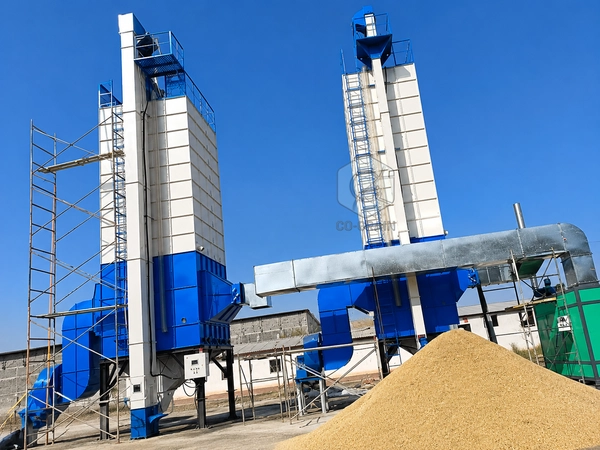
A batch grain dryer processes a predetermined quantity of wet grain during each operating cycle. After loading, the dryer applies controlled airflow and heat until the batch reaches the confirmed process condition. The grain is then tempered or cooled where required and discharged before the next batch begins.
Depending on the equipment design, grain may remain relatively static, circulate within the dryer or move through internal drying and tempering stages. The operating method should be confirmed with the supplier.
How a Batch Grain Dryer Works
1. Loading
Pre-cleaned wet grain is transferred from receiving or wet buffering into the dryer. The feeding equipment must deliver the required quantity and maintain suitable grain distribution.
2. Drying
Controlled drying air passes through the grain. Settings are selected from grain type, initial moisture, target moisture, temperature, airflow and quality requirements.
3. Moisture Equalization or Tempering
Depending on the process, circulation or resting periods allow moisture inside kernels and across the batch to redistribute. This can support more uniform final moisture.
4. Cooling
Cooling may occur inside the dryer or in separate equipment. Storage decisions should consider grain temperature as well as moisture.
5. Discharge
The completed batch is transferred to storage or downstream processing, and the dryer is prepared for the next load.
Advantages of a Batch Grain Dryer
Flexible Lot Management
Different batches can be managed separately when moisture, variety, origin, quality or harvest time changes. Operators can adjust the next cycle without affecting grain already dried.
Suitable for Variable Intake
A batch system can be practical where truck arrivals and daily grain volume vary or the dryer operates seasonally rather than at a constant hourly rate.
Multi-Unit Flexibility
Projects can use several batch dryers instead of one large unit. Multiple dryers may operate in parallel or in stages, separate grain lots and retain partial drying capability during planned inspection or maintenance.
Useful for Paddy and Quality-Sensitive Lots
Batch management can support paddy projects where variety changes, moisture variation and individual lot control are important. Final rice quality still depends on dryer design, settings, handling and operation.
Limitations of Batch Drying
Non-Drying Time Is Part of the Cycle
Loading, tempering, cooling and discharge may all consume time. Nominal tons per batch therefore do not equal daily drying capacity.
Daily Output Depends on Workable Cycles
Multiplying batch loading by an assumed number of cycles is only valid if those complete cycles can actually be achieved under the required moisture reduction and operating conditions.
Scheduling Requires Coordination
Operators must coordinate wet-grain supply, dryer loading, cycle completion, discharge, storage availability and the next batch. Suitable buffering and conveying reduce avoidable waiting.
Multiple Units Add Interfaces
A multi-unit batch system may require additional distribution, conveying, valves, controls and operating coordination. These items must be included in the project comparison.
What Is a Continuous Grain Dryer?
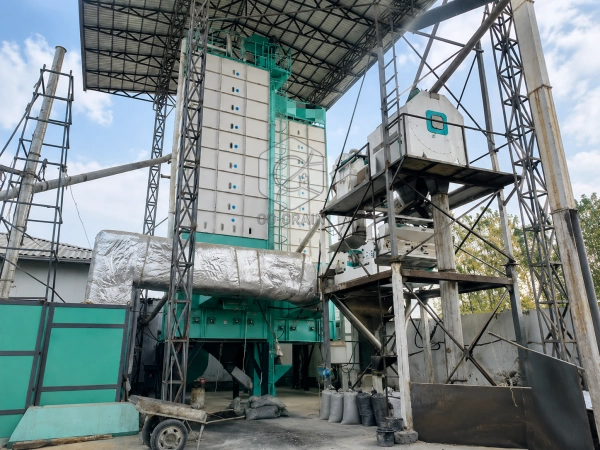
A continuous grain dryer, also called a continuous-flow dryer, receives wet grain continuously and discharges dried grain continuously after stable operation begins. Grain moves progressively through one or more drying, tempering or cooling zones according to the dryer design.
The discharge mechanism regulates grain residence time and throughput. Stable feeding, heat supply and downstream conveying are important because interruption in one section can affect the entire line.
How a Continuous Grain Dryer Works
1. Stable Wet-Grain Supply
Receiving and pre-cleaning supply a wet-grain buffer. The buffer converts irregular truck deliveries into a more controlled flow toward the dryer.
2. Controlled Feeding
Feed equipment maintains the required grain flow and grain level. Uneven feeding can affect residence time and drying uniformity.
3. Continuous Drying
Grain moves through the drying section while controlled air removes moisture. Continuous dryers may use mixed-flow, cross-flow or other airflow arrangements depending on the equipment design.
4. Cooling or Conditioning
The dryer may include a cooling zone or connect to separate cooling and tempering equipment according to the process.
5. Controlled Discharge
The discharge system controls throughput and directs dried grain to a bucket elevator, silo-filling system, storage silo or downstream process.
Advantages of a Continuous Grain Dryer
Sustained Commercial Throughput
Continuous operation is well suited to plants that receive and handle large grain volumes for extended periods.
Integration with Large Grain Facilities
A continuous dryer can connect naturally with high-capacity receiving, cleaning, wet buffering, automated conveying, multiple storage silos and centralized route control.
Reduced Batch Changeover
The dryer does not need to complete a full empty-and-reload sequence between every quantity of grain during stable production.
Centralized Automation
Level, temperature, moisture, feeding, discharge, conveying and silo-routing signals can be coordinated through a plant control system according to the confirmed scope.
Limitations of Continuous Drying
Stable Feeding Is Important
Continuous equipment performs best with a reasonably stable wet-grain supply. Adequate buffering becomes important when truck arrivals are irregular.
More Plant-Level Coordination
Receiving, pre-cleaning, buffering, heating, dryer discharge, conveying and dry storage must all support the continuous flow. A bottleneck can reduce utilization of the entire line.
Frequent Small Lot Changes Can Be Difficult
Plants that regularly switch between small quantities, varieties or moisture conditions need a clear transition, separation and clean-out strategy.
Longer Stable Runs Usually Provide Better Utilization
Repeated short runs and stops may reduce the operational advantage of a continuous dryer compared with a plant designed for sustained harvest-season operation.
Understand Capacity Before Comparing Dryers
One of the most common purchasing mistakes is comparing unlike capacity units.
| Capacity Term | What It Describes | What Must Also Be Confirmed |
| Tons per batch | Nominal loading for one batch | Complete cycle time, moisture reduction and workable batches per day |
| Tons per hour | Hourly wet-grain flow under stated conditions | Initial and target moisture, grain type, ambient conditions and cooling basis |
| Tons per day | Planned daily project throughput | Operating hours, downtime, buffering, conveying, storage and process schedule |
For wet-basis moisture values expressed as decimals, approximate water removal can be estimated as:
Water removed = Wet grain mass x (Initial moisture – Final moisture) / (1 – Final moisture)
This mass balance helps explain why the same dryer can have different effective throughput when moisture reduction changes. It does not determine equipment size by itself.
Detailed Selection Factors
Required Throughput
Batch systems are often effective for moderate or variable demand. Continuous drying becomes increasingly relevant when high throughput, long operating hours and stable intake occur together. Capacity alone should not decide the dryer type.
Grain and Lot Variation
Batch operation simplifies separate treatment of changing grains or lots. Continuous systems can also respond through controls, but transitions and mixed material must be planned.
Initial Moisture Variation
Batch settings can be adjusted between loads. A continuous system can adjust feed and discharge, but stable, representative moisture information supports better control.
Operating Schedule
Seasonal plants running only when grain arrives may value batch flexibility. Large terminals operating for long harvest-season shifts may benefit more from continuous flow.
Wet and Dry Buffering
Both systems benefit from buffering. Wet storage balances receiving with dryer input, while dry storage separates dryer discharge from milling, shipment or further processing.
Automation and Staffing
Both dryer types can use automation. Continuous systems typically require stronger plant-wide coordination. Batch systems may require more cycle scheduling, especially when several units operate together.
Project Layout
Available height, footprint, foundations, traffic routes, silo positions and conveying distances can affect the practical choice. Dryer selection should follow a confirmed process layout.
Maintenance and Availability
One continuous line may concentrate production in a single main dryer. Multiple batch units can provide partial availability, but also add components and maintenance points. Buyers should compare the actual redundancy strategy.
Which Dryer Is Better for Different Grains?
Paddy Rice
Both types can dry paddy when properly configured. Batch drying may suit changing varieties, variable intake and flexible rice-mill operation. Continuous drying may suit large, stable intake with suitable wet and dry storage. In both cases, airflow, temperature, tempering, cooling and handling should support milling-quality objectives.
Corn or Maize
Large corn collection and storage projects often evaluate continuous-flow drying because of harvest volume and silo integration. Batch drying can still suit farms or facilities with smaller, intermittent or variable intake.
Wheat and Other Grains
A large terminal with sustained receiving may favor continuous flow, while smaller plants or operations handling separate lots may value batch control. The decision follows the grain-handling strategy, not the grain name alone.
Multi-Unit Batch System vs. One Continuous Dryer
Several batch dryers can sometimes meet a project’s required throughput while providing flexible scheduling and separate lot control. One continuous dryer may offer simpler continuous material flow and centralized control.
Compare the two concepts at system level:
- Total installed drying capacity under the same moisture conditions
- Wet-buffer and dry-storage requirements
- Number of elevators, conveyors, valves and distribution points
- Heat-source sizing and distribution
- Automation and operator workload
- Maintenance access and partial operating availability
- Civil works, plant height and footprint
- Future expansion and seasonal utilization
A multi-unit batch layout is not automatically cheaper or more reliable, and a continuous dryer is not automatically more efficient. The complete design determines the result.
How Storage Affects Dryer Selection
The dryer normally operates between two process buffers:
Receiving > Wet-Grain Buffer > Dryer > Dry-Grain Storage > Processing or Dispatch
The wet buffer absorbs variation in truck receiving. Dry storage separates dryer output from downstream demand. Without adequate buffers, every section must operate at closely matched rates, increasing the risk of waiting and production interruption.
Storage capacity, allowable wet-grain holding time, silo-filling capacity and dry-grain discharge strategy should therefore be planned together with dryer capacity.
Compare Total Project Cost, Not Only Dryer Price
The purchase price of the dryer is only one part of the investment. A complete comparison may include:
- Dryer equipment and heat source
- Receiving and pre-cleaning equipment
- Wet-grain buffer silos or hoppers
- Elevators, conveyors and distribution equipment
- Dry-grain storage silos
- Electrical control and automation
- Civil works, installation and commissioning
- Fuel, electricity, labor and routine maintenance
- Spare parts and planned downtime
- Grain losses, overdrying and quality objectives
The lowest equipment price may not produce the lowest lifecycle cost or the best plant utilization.
Practical Selection Guide
| Project Condition | Direction to Evaluate First | Why |
| Variable daily intake and separate lots | Batch dryer | Flexible cycle and lot management |
| Several grain varieties or frequent changes | Batch dryer | Easier separation and setting changes |
| Moderate rice mill with seasonal paddy intake | Batch or multiple batch units | Flexible scheduling and modular capacity |
| High, stable grain intake for long shifts | Continuous dryer | Sustained material flow and high utilization |
| Large receiving center with multiple silos | Continuous dryer | Strong integration with automated handling and storage |
| Need for partial capacity during maintenance | Multiple batch units or parallel dryer lines | Availability depends on the confirmed redundancy plan |
This guide identifies a direction for evaluation; it does not replace engineering calculations.
Project Example: Batch Dryer with Rice Milling in Ghana
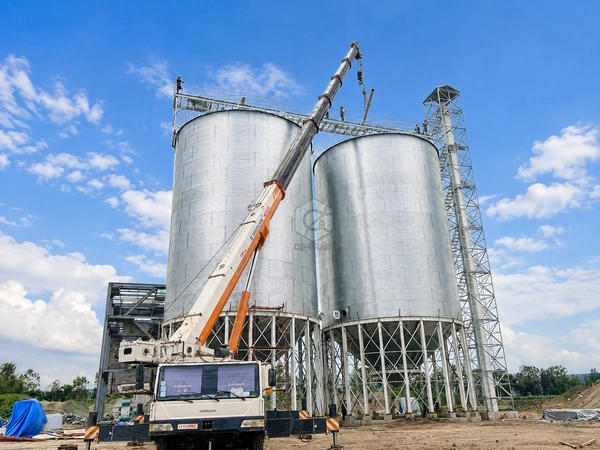
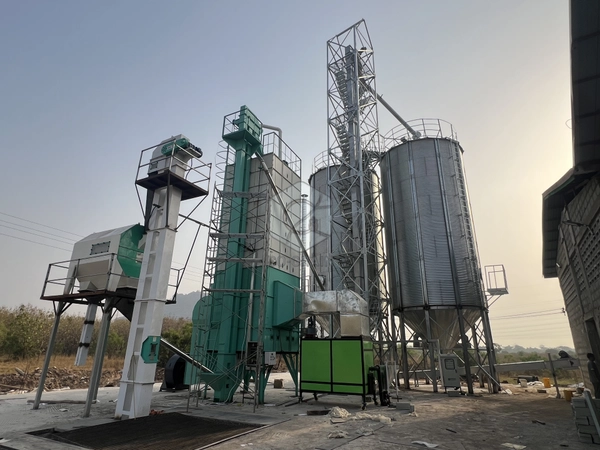
A documented Co-Grain project in Ghana combines a 15-ton-per-batch paddy dryer, two 100-ton grain silos and a 60-ton-per-day rice mill.
The system relationship is:
Wet Paddy > Batch Drying > Paddy Storage > Rice Milling
The two silos create a buffer between drying and milling, so the dryer and rice mill do not need to operate at the same instantaneous rate. This is a project example, not a universal rule that one 15-ton batch dryer always supplies every 60-ton-per-day rice mill. Actual output depends on moisture reduction, cycle time, operating hours and site conditions.
Example: High-Capacity Storage Plant
A large seasonal grain facility may instead use:
Truck Receiving > Pre-Cleaning > Wet-Buffer Silos > Continuous Dryer > Bucket Elevator > Silo Distribution > Multiple Storage Silos
Here, the main objective is stable, continuous flow from intake to storage. This contrast shows why dryer selection must follow the project process rather than a standard machine preference.
Common Mistakes When Comparing Grain Dryers
Comparing Tons per Batch with Tons per Hour
These are different capacity concepts and cannot be compared without cycle time, moisture reduction and operating hours.
Ignoring Moisture Reduction
Effective throughput changes when more or less water must be removed.
Ignoring Loading, Tempering, Cooling and Discharge
These stages are especially important when calculating batch dryer daily output.
Ignoring Buffer Capacity
A dryer can be underutilized when wet grain cannot reach it consistently or dried grain has nowhere to go.
Assuming One Type Always Uses Less Energy
Energy use depends on water removal, dryer design, airflow, heat management, loading, ambient conditions and operation – not only the words batch or continuous.
Choosing Only by Purchase Price
Compare complete investment, operating cost, grain quality, plant utilization and future expansion.
Frequently Asked Questions
Is a continuous grain dryer always better than a batch dryer?
No. Continuous dryers suit high and stable throughput, while batch dryers can provide greater flexibility for changing lots and variable intake.
Which dryer is better for a small or medium rice mill?
A batch paddy dryer is often worth evaluating because it supports flexible cycles and lot management. Final selection still depends on moisture reduction, operating hours, storage and mill demand.
Which dryer is better for a large storage facility?
A continuous-flow dryer is often suitable when the facility has high receiving capacity, adequate wet buffering, long operating periods and multiple storage silos.
Can a batch dryer operate for extended hours?
Yes, repeated cycles can run for extended periods when the equipment and supporting system are designed accordingly. Actual daily output depends on complete cycle time and operating conditions.
Does a continuous dryer need a wet-grain buffer?
It is highly useful where truck receiving is irregular. The buffer provides a more stable feed to the dryer.
Can one dryer handle paddy, corn and wheat?
Some dryers can process multiple grains, but settings and sometimes equipment configuration must be suitable for each material. Confirm multi-grain capability with the supplier.
Which type uses less energy?
There is no universal answer. Compare energy consumption on the same grain, moisture reduction, throughput and ambient conditions, including the complete heating and airflow system.
Which type produces better grain quality?
Both can produce suitable dried grain when correctly designed and operated. Quality depends on grain characteristics, temperature, airflow, residence time, moisture uniformity, handling and cooling.
Can several batch dryers replace one continuous dryer?
Yes, in some projects. Compare system capacity, equipment quantity, controls, labor, maintenance, layout, heat supply and storage connections before deciding.
Batch or Continuous? Start with the Complete System
The better question is not simply which dryer is better. It is:
Which drying system best matches the way my plant receives, buffers, dries, stores and processes grain?
One project may use:
Receiving > Cleaner > Buffer > Batch Dryer > Silo > Rice Mill
Another may require:
High-Capacity Receiving > Cleaner > Wet-Buffer Silos > Continuous Dryer > Silo Distribution > Large Storage System
The dryer should be selected as part of the complete grain flow.
How Co-Grain Approaches Grain Dryer Selection
Co-Grain evaluates grain type, moisture reduction, required capacity, receiving pattern, operating hours, heat source, local climate, site layout, storage and downstream processing before recommending a dryer configuration.
Depending on the confirmed scope, the system can integrate receiving, pre-cleaning, wet buffering, batch or continuous drying, heating, cooling, conveying, silo storage, aeration, monitoring, automation and rice milling or other processing.